A difference-equation formalism for the nodal domains of separable billiards
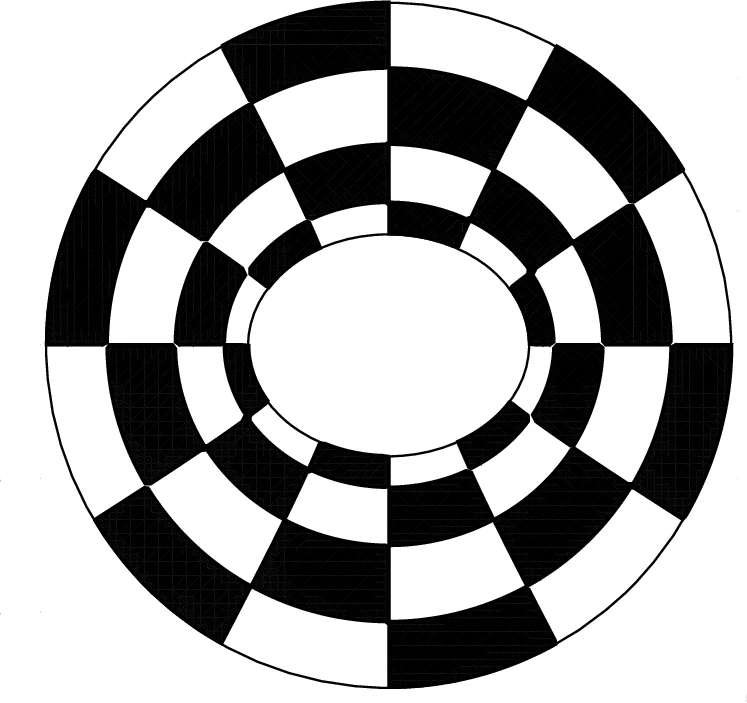
Recently, the nodal domain counts of planar, integrable billiards with Dirichlet boundary conditions were shown to satisfy certain difference equations in [Ann. Phys. 351, 1-12 (2014)]. The exact solutions of these equations give the number of domains explicitly. For complete generality, we demonstrate this novel formulation for three additional separable systems and thus extend the statement to all integrable billiards.
💡 Research Summary
The paper develops a unified difference‑equation formalism for counting nodal domains (ν) in two‑dimensional separable quantum billiards with Dirichlet boundary conditions. Building on earlier work that identified a simple recurrence relation for rectangular and triangular integrable billiards, the authors extend the approach to three additional separable geometries: circular annuli, elliptical billiards (including their annular slices), and confocal parabolic billiards. In each case the Helmholtz equation separates in the appropriate coordinate system, yielding eigenfunctions expressed in terms of Bessel, Mathieu, or Kummer hypergeometric functions. By imposing the Dirichlet conditions on the relevant boundaries, the authors derive explicit first‑order difference equations of the form Δₖⁿν(m,n)=ν_{m+kn,n}−ν_{m,n}=Φ(n), where k=1 for all separable systems and Φ(n) depends only on the geometry and symmetry class. For the full circle and its annular counterpart, they find Δₙν=2n² and ν_{m,n}=2mn; when the angular coordinate is restricted (a sector), the recurrence reduces to Δₙν=n² and ν_{m,n}=mn, mirroring the rectangular case. In the elliptical billiard, four symmetry sectors (++,+−,−+,−−) each possess distinct Φ(n) functions, summarized in Table 1, and the same formulas hold for elliptical annuli regardless of the inner and outer radii. For the confocal parabolic billiard, two parity cases are examined. In the even‑even case the recurrence is Δₙν=2n²−n with ν_{m,n}=2mn−m−n+1; in the odd‑odd case it simplifies to Δₙν=n² and ν_{m,n}=mn. Annular sections of the parabolic billiard again obey ν_{m,n}=mn. The authors validate these analytical results with numerical nodal‑count tables (Table 2), showing that for a fixed n the first difference of ν is constant across all m belonging to the same equivalence class (m mod n), confirming the linear dependence ν∝m. The paper argues that the existence of such simple difference equations is a signature of integrability, providing a powerful diagnostic that relies solely on nodal‑domain counts rather than spectral statistics. It also offers a practical method for obtaining closed‑form expressions for ν in any separable planar billiard, and suggests that the framework can be extended to three dimensions. Overall, the work unifies and generalizes the nodal‑domain counting problem across all planar integrable billiards, highlighting a hidden algebraic structure that underlies quantum integrability.
Comments & Academic Discussion
Loading comments...
Leave a Comment