Diversity improves performance in excitable networks
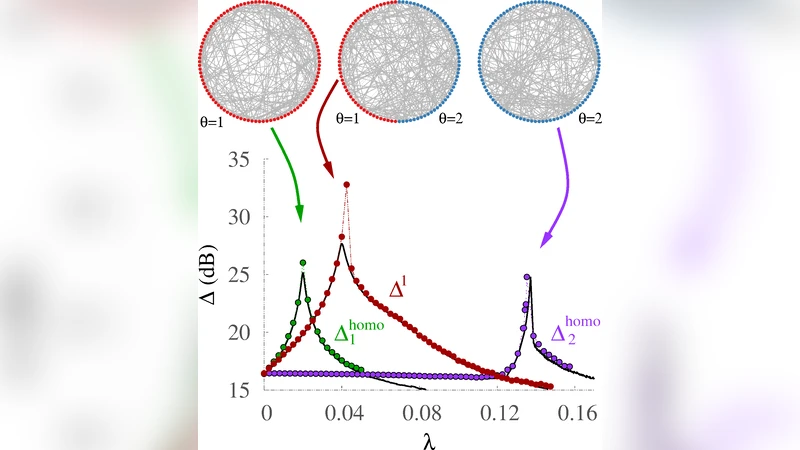
As few real systems comprise indistinguishable units, diversity is a hallmark of nature. Diversity among interacting units shapes properties of collective behavior such as synchronization and information transmission. However, the benefits of diversity on information processing at the edge of a phase transition, ordinarily assumed to emerge from identical elements, remain largely unexplored. Analyzing a general model of excitable systems with heterogeneous excitability, we find that diversity can greatly enhance optimal performance (by two orders of magnitude) when distinguishing incoming inputs. Heterogeneous systems possess a subset of specialized elements whose capability greatly exceeds that of the nonspecialized elements. Nonetheless, the behavior of the whole network can outperform all subgroups. We also find that diversity can yield multiple percolation, with performance optimized at tricriticality. Our results are robust in specific and more realistic neuronal systems comprising a combination of excitatory and inhibitory units, and indicate that diversity-induced amplification can be harnessed by neuronal systems for evaluating stimulus intensities.
💡 Research Summary
In this paper the authors investigate how heterogeneity in the excitability of network nodes—specifically, differences in the activation threshold θ—affects the ability of an excitable system to encode a wide range of input intensities. Using a discrete‑time SIRS (susceptible‑infected‑refractory‑susceptible) model on Erdős‑Rényi random graphs (N = 5 000, mean degree K = 50), each node can be in one of three states (quiescent, active, refractory). A quiescent node becomes active either by receiving an external Poisson input of rate h or by receiving at least θ excitatory contributions from its neighbors, each transmitted with probability λ. The authors explore several threshold distributions: a bimodal mixture of integrators (θ = 2) and non‑integrators (θ = 1), uniform distributions ranging from θ = 1 to a maximum θmax, and continuous gamma distributions parameterized by shape a and scale b. They also test robustness by adding 20 % inhibitory nodes.
The central performance metric is the dynamic range Δ, defined as 10 log10(h0.9/h0.1), where h0.1 and h0.9 are the input rates that produce 10 % and 90 % of the maximal firing rate, respectively. Δ quantifies how many decades of stimulus intensity can be reliably distinguished by the network’s output firing rate.
Key findings:
-
Heterogeneity dramatically expands Δ. In homogeneous networks (all θ = 1 or all θ = 2) the maximal Δ is modest. When half the nodes are integrators and half are non‑integrators, the non‑integrator subpopulation alone achieves a Δ about 15 dB larger than the integrator subpopulation. More importantly, the whole mixed network attains a Δ that exceeds the best homogeneous case by up to two orders of magnitude. The low‑threshold nodes amplify weak inputs, while the high‑threshold nodes delay the onset of self‑sustained activity, keeping the system near criticality over a broader λ range.
-
Critical coupling λc depends on the composition. Each subpopulation has its own λc at which a phase transition from quiescent to self‑sustained activity occurs. The λc curves for integrators and non‑integrators intersect at a tricritical point. At this point the transition changes from continuous (second‑order) to discontinuous (first‑order). The susceptibility χ peaks at λc, and the peak of χ coincides with the peak of Δ, confirming that maximal information transmission occurs at criticality.
-
Tricriticality yields optimal coding. By varying the fraction of integrators, the authors map a phase diagram where the two λc curves merge. At the tricritical composition the network exhibits the largest Δ (≈ 40 dB), roughly 100‑fold improvement over the homogeneous case. This demonstrates that the coexistence of two distinct critical behaviors can be exploited for superior stimulus discrimination.
-
Multiple percolation in uniform and gamma distributions. For uniform threshold distributions, each θ class has its own λc, leading to several percolation thresholds. The whole network shows two dominant susceptibility peaks, reflecting a hierarchy where low‑θ nodes dominate early activation and high‑θ nodes dominate later. Gamma‑distributed thresholds, which encompass exponential, chi‑square, and Erlang families, also produce large Δ values; the whole network can outperform any individual subpopulation, especially for shape a ≈ 3 and scale b ≈ 1.5.
-
Robustness to inhibition. Adding inhibitory nodes (20 % of the population) does not destroy the enhancement. Inhibition tempers the rapid rise of firing for weak inputs, preventing early saturation, while still allowing the mixed excitatory population to achieve high Δ at an optimal λ.
Overall, the study establishes that intrinsic diversity in neuronal excitability is not a source of noise but a functional resource that, through the interplay of specialized and non‑specialized units, pushes the network toward a regime of maximal sensitivity. The identification of a tricritical point as the sweet spot for dynamic range suggests that biological neural circuits may exploit heterogeneity to operate near optimal information processing conditions. These insights have implications for understanding sensory coding in the brain, for designing artificial neural systems with heterogeneous units, and for broader complex‑system theories where diversity can enhance collective computation.
Comments & Academic Discussion
Loading comments...
Leave a Comment