Day of the week effect in paper submission/acceptance/rejection to/in/by peer review journals
This paper aims at providing an introduction to the behavior of authors submitting a paper to a scientific journal. Dates of electronic submission of papers to the Journal of the Serbian Chemical Society have been recorded from the 1st January 2013 t…
Authors: Marcel Ausloos, Olgica Nedic, Aleks
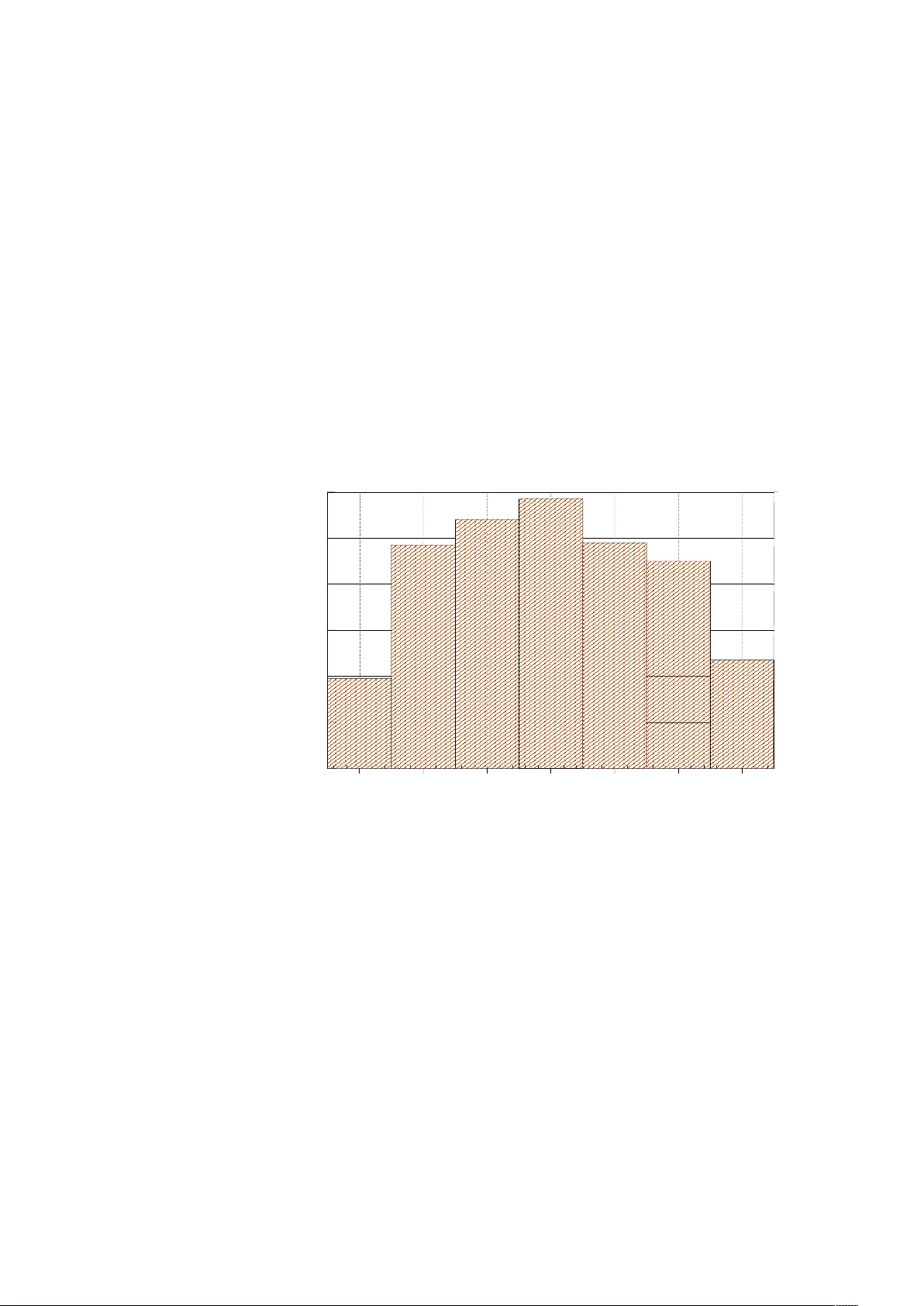
Da y of the w eek effect in pap er submission/acceptance/rejection to/in/b y p eer review journals Marcel Auslo os 1 , 2 , 3 , Olgica Nedic 4 , Aleksandar Dek anski 5 1 Sc ho ol of Managemen t, Universit y of Leicester, Univ ersit y Road, Leicester LE1 7RH, UK; e - mail addr ess : ma683@le.ac.uk 2 eHumanities group ∗ , Ro yal Netherlands Academ y of Arts and Sciences (NKV A), Joan Muysk enw eg 25, 1096 CJ Amsterdam, The Netherlands e - mail addr ess :marcel.ausloos@ehumanities.kna w.nl 3 GRAPES † , rue de la Belle Jardiniere 483, B-4031, Angleur, Belgium e - mail addr ess : marcel.auslo os@ulg.ac.be 4 Institute for the Application of Nuclear Energy (INEP), Univ ersit y of Belgrade, Banatsk a 31b, Belgrade-Zem un, Serbia e - mail addr ess : olgica@inep.co.rs 5 Institute of Chemistry , T ec hnology and Metallurgy , Departmen t of Electro c hemistry , Universit y of Belgrade, Njegosev a1 2, Belgrade, Serbia e - mail addr ess : dek anski@ih tm.bg.ac.rs ∗ Asso ciate Researc her † Group of Researc hers for Applications of Ph ysics in Econom y and So ciology 1 Abstract This pap er aims at pro viding an in tro duction to the b eha vior of authors submitting a pap er to a scien tific journal. Dates of electronic submission of pap ers to the Journal of the Serbian Chemical So ciet y ha ve b een recorded from the 1st Jan uary 2013 till the 31st December 2014, th us o ver 2 years. There is no Monda y or F rida y effect like in financial markets, but rather a T uesda y-W ednesday effect o ccurs: pa- p ers are more often submitted on W ednesda y; ho w ever, the relative n umber of going to b e accepted pap ers is larger if these are submitted on T uesday . On the other hand, week end days (Saturda y and Sun- da y) are not the b est da ys to finalize and submit manuscripts. An in terpretation based on the t yp e of submitted work (”exp erimental c hemistry”) and on the influence of (senior) coauthors is presen ted. A thermo dynamic connection is prop osed within an entrop y context. A (new) en tropic distance is defined in order to measure the ”opaque- ness” = disorder) of the submission pro cess. Keyw ords : scien tific agen t b ehavior; submission da y; acceptance rate; rejection rate; en tropy; senior coauthors 1 In tro duction Human b eha vior is controlled by many externalities. Muc h difficulty for selecting and analysing them resides in the complexit y of establishing ex- p erimen tal schemes, in a lab oratory , in view of mimicking the real world. Comparison betw een lab oratory outputs and ”common sense exp ectations” is often impaired b y the lac k of reliable (and un biased) data on the latter. F or so cio-ph ysicists, one basic question ab out b ehavior is geared to ward finding whether there is some unforced regularity in b eha vior, e.g. w eekly , monthly , seasonal or with longer time scales. F or example, one finds quantitativ e con- siderations on h uman asp ects of sync hronized behavior or cyclic rh ythms, lik e menstruation, heart beat or birth rates [1]-[5]. It is well known that there is a da y-of-week effect in financial mark ets [6]-[13] Here, we explore the b eha vior of agen ts submitting pap ers for p eer re- view and publication in a scien tific journal. W e find that, in the case at hand, more papers are submitted on T uesday , but relativ ely (to the total n um b er of submitted pap ers) more pap ers are accepted for publications if submitted on W ednesda y b y the author(s). On the other hand, the highest rejection rate o ccurs for papers submitted on Saturday . Statistical tests are pro vided to ensure the v alidity of the findings. These w ere hardly predictable, whence it seems w orth rep orting them, ev en though they suggest further questions 2 and in vestigations. While it w ould b e in teresting to compare our results with those obtained b y studying other journals, such data is not easily a v ailable. W e admit that it might b e often p ossible through IT infrastructure to re- triev e dates of submissions of accepted pap ers. How ev er, the case of rejected pap ers is rather hop eless: such ”trade secrets” are not shared with external researc hers. W e hav e b een fortunate to get access to such data in the presen t case 1 . Our rep ort is a case study . In order to go b ey ond our observ ation, we are a ware that more data m ust b e made a v ailable b y editors and/or publishers. Nev ertheless, the outlined findings and subsequent hypotheses, short of a mo del we also agree on this, on b eha viors of scientific authors, tak e in to accoun t their work en vironment. The results suggest some p ossibly universal feature for submitted man uscripts in so called ”hard core science ”. As an introduction to our aim, recall that ”agen ts” can b e considered as either rational or irrational, but are also influenced by ”external fields”, in a so cio-physics sense [4], e.g. in sto ck market returns [14] or b o ok or record sales [15], resp ectively . It is logical to admit that an agen t b ehavior is often influenced by the action of others, but could also b e in trinsic due to so cietal constrain ts or habit, - and memory experience as w ell [16]. F or example, it has b een shown that an in vestor b eha vior is different, on Monday and F riday with resp ect to other days of the week, as noticed in man y economist rep orts [6]-[13], ab out sto ck exc hange returns on mark ets in dev elop ed coun tries. F or completeness, let us ackno wledge that some debate go es on ab out such a b eha vior for stock mark ets p ertaining to ”emerging coun tries” [17, 18]. Here, w e fo cus some atten tion on similar b eha vioral questions outside the financial and economic sphere, but rather in a scientometrics framework. The b est metho dology should consider strict in v estigation rules on whether a ”submission weekda y b eha vior effect” exists and is confirmed, using sp ecific data and p ertinen t quantitativ e metho ds, through questions as: • can one observe and analyze (scien tific) agen t (b ehavior) effects? • can one find out whether there is an y daily difference in b ehavior? • can one test whether the findings are reliable? Thereafter some discussion is exp ected, together with suggestion for further in vestigations. Due to the bac kground of the presen t researchers, they were able to obtain v ery reliable data, see Sect. 2, on the submission of pap ers to a scien tific jour- nal. Moreov er, the outcome, acceptance or rejection, w as provided. Whence 1 ON and AD are Journal of the Serbian Chemical So ciety Sub-Editor and Journal of the Serbian Chemical So ciet y Manager, resp ectiv ely 3 w e are able to measure whether some ”day of the w eek” effect exists through statistical tests, - see Sect. 3, not only on the most p opular day for submis- sion, but also on the da y for which the outcome will b e the most p ositive (and the most negative) one. Since the v arious probabilities of interest are empirically known, it is easy to connect the data description with the notion of entrop y , thereby measuring and discussing the disorder of author submis- sion of pap ers, as in Sect. 4. An interpretation of the findings is prop osed in Sect. 5; a short conclusion is made in Sect. 6. 2 Data W e ha ve obtained data ab out ho w man y pap ers ( N = 596, in fact) were electronically submitted to The Journal of the Serbian Chemical So ciet y (JSCS) 2 for the years 2013 and 2014. (The journal con tains v arious sub- sections.) JSCS had an impact factor= 0.912 in 2012. A histogram of the da y of the week submission is sho wn in Fig. 1. Next, let us call the n umbers of pap ers later accepted ( N a ) and those rejected ( N r ); the da y-of-the week v alues are giv en in T able 1. Among those 596, N a = 262 w ere finally accepted for publication. A t this time of writing, 2 are still under review, and 38 are not yet published. F or completeness, let it be recorded that N nrr = 23 w ere rejected because the authors did not reply to the review ers remarks in due time, while 7 submissions w ere withdrawn ( N w = 7). (Th us, N a + N r 6 = N ). The relative n um b er (expressed in p ercentages) of pap ers accepted or rejected after submission ( N a / N and N r / N ) on a sp ecific day of the w eek is sho wn in T able 1 and, for ha ving a go o d visual insp ection, in Fig. 2. It app ears that, in con trast to the (more often o ccurring) submission day (W ednesday , day 3), - the next one b eing T uesda y , the pap ers are more often accepted when (or if ) submitted on T uesda y (da y 2). How ever, the largest n umber of rejected pap ers are those apparently submitted on W ednesday (da y 3). Ho w ever, when expressed in relative terms (in p ercen tages of the submitted pap ers on a giv en day), - unexp ectedly , the greatest prop ortion of man uscripts gets rejected if submitted on Saturday (da y 6), - also on Sunday (da y 0). A T uesda y submission still prop ortionally remains the b est day for a p ositiv e outcome. Consider the N r / N a ratio which actually emphasizes this rate of rejec- tion. The ratio decreases from 1.79 (Sunda y), to 1.26 (Monda y), go es to a minim um 0.77 (T uesda y), then increases 1.25, 1.26, 1.32 and 2.36 (Satur- da y); see T able 1. It seems that a Sunday-Saturda y effect can be extracted, 2 h ttp://shd.org.rs/JSCS/ 4 N N a N r N a / N N r / N N nrr N w N r / N a 0 Sunda y 39 14 25 0.359 0.641 - - 1.786 1 Monda y 97 42 53 0.433 0.546 6 2 1.262 2 T uesday 108 60 46 0.556 0.426 5 1 0.767 3 W ednesday 117 51 64 0.436 0.547 4 2 1.255 4 Th ursday 98 43 54 0.439 0.551 3 - 1.256 5 F rida y 90 38 50 0.422 0.556 4 2 1.316 6 Saturda y 47 14 33 0.298 0.702 2 - 2.357 T otal: 596 262 325 0.437 0.543 24 7 1.240 χ 2 62.354 49.260 22.868 - - 3.488 5 - T able 1: Number N of papers submitted on a giv en week day to JSCS in 2013 and 2014, among whic h are the num b ers of pap ers later accepted ( N a ) or rejected ( N r ). The relativ e p ercen tages (p er day) are also giv en. N nrr is the n umber of pap ers rejected b ecause the authors did not reply to the review ers’ remarks in due time. N w are withdra wn submissions. The 95% confidence of a n ull hypothesis (uniform distribution) for the 6 degrees of freedom χ 2 = 12.592. N N a N r N a / N N r / N N r / N a Min. 39 14 25 0.298 0.426 0.767 Max. 117 51 64 0.556 0.702 2.357 Sum 599 262 325 2.92 3.93 9.998 Mean 85.6 37.4 46.4 0.418 0.562 1.428 Median 98 42 50 0.429 0.551 1.262 Std Dev. 29.7 17.5 13.3 0.082 0.0807 0.505 Sk ewn. -0.694 -0.383 -0.464 0.113 -0.0986 0.758 Kurt. -1.12 -1.15 -0.864 -0.275 -0.218 -0.138 T able 2: Statistical characteristics of the distribution of the Num b er N of pap ers submitted on a given week day to JSCS in 2013 and 2014, and num- b er of pap ers later accepted ( N a ) or rejected ( N r ). The characteristics of the p ercen tage distributions are also given. 5 if we w an t to judge the odds on rejection/acceptance probabilit y , while a T uesday-W ednesda y effect is prominent for a pap er later acceptance. 3 Data analysis First, observe that the summary statistics in T able 2 sho w that the distri- bution of the daily submission, later accepted or not pap ers, are negativ ely sk ewed, - which has to b e exp ected. The kurtosis of each distribution is also negativ e. Ho wev er, the sk ewness of the distribution of p ercentages is not alw ays negative. The results of the Do ornik-Hansen test (based on the sk ewness and the kurtosis) [19] show that the empirical distributions of all the v ariables are non-Gaussian. Next, recall also that the χ 2 v alue at 0.95% confidence is 18.5476 for 6 degrees of freedom for a uniform distribution. Supp osing that the distribution of submitted pap ers is week day indep enden t, the calculated χ 2 is 62.354, - see T able 1, thereby indicating that the distribution is far from uniform, i.e. there are significant differences ab out the day of the w eek. There is a mark edly significan t prop ensity to submit on W ednesda y (da y 3 of the w eek). Supp osing that the distribution of the accepted or rejected pap ers is w eek da y indep enden t, the calculated χ 2 are found to b e equal to 49.260, and 22.868, resp ectiv ely for N a , and N r , thereb y indicating that the distribution is far from uniform, i.e. there are significant differences ab out the da y of the w eek p ositive (or negative) outcomes. 4 En trop y connection The ratio b et ween the n um b er of pap ers submitted on a giv en da y ( N ( j ) s / N T ) with j indicating a day of the week = 0 , ..., 6, and N T the total num b er of submitted pap ers can b e considered to b e a c haracteristic (empirical) measure of the daily probability p ( j ) s of submission. Similarly N ( j ) a / N a (and N ( j ) r / N r ) can b e considered to b e a c haracteristic (empirical) measure of the probability of acceptance (or rejection) for the pap er submitted on a given day , i.e. p ( j ) a and p ( j ) r resp ectiv ely .. Thereafter, one can obtain something which looks like a con tribution to a Shannon information en tropy [20, 21] for a giv en day j , e.g. for submission: H ( j ) s ≡ − p ( j ) s l n ( p ( j ) s ) , (4.1) leading to H ≡ P 6 j =0 H ( j ) . One obtains: H s = 1 . 8880, H a = 1 . 8393, and H r = 1 . 9082, resp ectively . Suc h v alues ha v e to b e compared to the 6 en tropy of full disorder H = ln (7) = 1 . 9459, mark edly higher than the others. Indeed, to estimate the v alidit y of an empirical distribution, it is practical to compare eac h ( H ( j ) ) measure to their related maxim um disorder num b er, i.e. l n ( N ( j ) ). Th us, we define the relativ e ”distance” to the maximum en tropy (full disorder) as 3 d ( j ) = 1 − H ( j ) l n ( N ( j ) ) (4.2) Eq.(4.2) measures the information loss if the empirical probabilit y ( p ( j ) ) is tak en as an approximation to that arising from the uniform distribution. Then, d ( j ) con tributes to a correct ev aluation of the en tity of the deviation of the set of data. Therefore, d ( j ) can b e interpreted as a proxy of the degree of opaqueness (or of disorder) of the ”paper submission mark et”. The d ( j ) ’s are resp ectiv ely equal to 0.02975, 0.05478, and 0.01937 for the submitted, accepted and rejected cases. 5 In terpretation Some reasoning on the findings can b e prop osed. Much is due to the type of journal, type of pap ers, and type of authors! Recall that the journal is rather sp ecialized, - in chemistry . It can b e exp ected (and it is observ ed) that most pap ers are rep orting rather exp erimental data, and are often co-authored. It should b e of common kno wledge that m uch work is pro duced every da y of the w eek in an active lab oratory , but muc h writing (after data analysis) o c- curs often during w eek-ends. Moreo v er, y oung researchers are not expected to b other their advisor during the week-end. Thus, muc h discussion b et ween them o ccur at the b eginning of the w eek. The senior author is prone to request some revision of the writing, inducing a delay in the submission pro- cess, thereby leading to a more frequen t submission of pap ers on the middle of the w eek. The higher frequency of acceptance of pap ers for the T uesda y submission is conjectured to o ccur b ecause the pap er is b etter written and do es not need an extra da y of revision b efore submission. Concerning the effect of week-end submission, it can b e conjectured that researc hers who submit on Saturday or Sunday do so less willingly during the w eek b ecause they w ork under pressure (someone or themselv es exp ect a manuscript to b e sent b y Monday , - an unwilling task for a w eekend). Ma yb e these scien tists are less eager to read very carefully once again their man uscript or are less inspired to draw imp ortan t conclusions or to demon- 3 The astute reader observes that this definition is different from the ”Kullback-Leibler div ergence” measure [22]; the presen t one is closer to a thermo dynamic in terpretation. 7 strate significan t relations in the results. Moreov er, since it is remark able that the probability of a pap er (later) acceptance ( N a / N r ) is higher when the pap er is submitted on T uesday , it seems that it is not worth while to wait an extra da y (or more) to p olish a pap er. If necessary , w e re-emphasize to the reader that the role of the author is the concern: the role of the editor is irrelev ant. F or example, one might ha ve imagined that the editor pla ys some role in the rejection of pap ers, y et electronically submitted b y an author on a given day . On this remark, it can b e observ ed that the n umber of desk rejected pap ers, i.e. N dr is equal to 161. Their da y of submission distribution is quasi uniform, as depicted on Fig. 4; statistically , a χ 2 test leads to χ 2 ' 9 . 74, quite b elow the χ 2 = 12 . 59, corresp onding to the 95% confidence of a null hypothesis (uniform distribution) for the 6 degrees of freedom. 6 Conclusion In summary , there is quite a n umber of studies on the ”day of the w eek” effect on financial markets. T o the b est of our knowledge, this is the first time that one quan tifies submission of scientific pap ers, thus the b ehavior of scien tific agents in such a pro cess, i.e. considering some author’s brain w ork and scien tific activity conten t. Moreov er, to take into a sp ecific outcome (later acceptance or rejection) do es not seem to ha ve b een studied. It has also b een sho wn that the analysis should tak e in to accoun t the rela- tiv e size of daily submissions within a w eek. This normalization is relev ant in order to observ e whether the acceptance and rejection rates (= probabilities) will differ dep ending on the da y of submission. According to our results, it seems that week end days (Saturday and Sun- da y) are not the b est time to finalize and submit man uscripts; it w ould b e further intriguing to see ho w many of suc h pap ers are desktop rejected com- pared to peer-review rejected. Of course, the fate of the man uscript highly dep ends on other participants in the peer-review and publishing pro cess [23], namely editors and review ers. In order to rev eal (p ossible) ”da y of the week” effect in the entire pro cess of scien tific publication, it w ould b e of interest to inv estigate when review ers are informed that they should review a pap er, when they accept (or refuse) to review the submission, when they commen t on the paper, and when editors finally accept or reject pap ers during the w eek, but such data for the JSCS are alas not a v ailable. Moreo ver, this type of inv estigation on editors and reviewers b ears up on other sets than the one here in vestigated in the p eer review pro cess comm u- nit y . In fact, the role of editors and review ers in slowing don or sp eeding 8 up a review pro cess (indep endently of the day of submission) can b e stud- ied. In [24], we discuss that the p eer review pro cess can b e separated into distinguished stages for going through the peer review pro cess. W e hav e in- tro duced the notion of completion rate, - a measure of the probability that an in vitation sen t to a p oten tial review er results in a finished review. Using empirical transition probabilities and probability distributions of the dura- tion of eac h stage, a directed weigh ted netw ork can b e created. Its analysis allo ws to obtain the theoretical probability distributions of review time for differen t classes of reviewers. Through these simulations, w e test the impact of some mo difications of the editorial p olicy on the efficiency of the whole review pro cess. Practically , the results ma y act as a guide in determining the optimal num b er of review ers [24]. Ho wev er, it should b e noticed that this data analysis and subsequen t modeling pertain to reviewers and editors b e- ha viors, - not to authors as examined in the presen t pap er. Nevertheless, da y of w eek b eha vior of editors and reviewers migh t b e interesting complemen- trary sub jects to b e considered for a better transparency of the p eer review pro cess. In conclusion, let us to offer a few sp ecific suggestions for further research lines on authors. It w ould be in teresting to see: (i) whether, in other types of journal, there is a general trend in authors’ b ehaviour when c ho osing the submission day of the w eek, also (ii) whether single author pap ers ”behav e” differen tly of co-authored pap ers, (iii) if ”more theoretical” or ”more exp eri- men tal” pap ers ”b eha ve” differently , and (iv) whether the da y of submission of a revised version is p ertinent. Moreov er, if the acceptance rate is due to a fine writing quality (and in teresting results), do es the num b er of citations b y others dep end on the day of submission? has a da y of submission (and necessarily acceptance) a real impact on science ? Ac knowledgemen ts. This pap er is part of scientific activities in COST Action TD1306 New F rontiers of Pee r Review (PEERE). 9 0 20 40 60 80 100 120 0 1 2 3 4 5 6 Count day of week Figure 1: Number of pap ers submitted to JSCS according to the week da y of submission in 2013 and 2014. 10 0.2 0.3 0.4 0.5 0.6 0.7 0 1 2 3 4 5 6 N a / N N r / N percentage day of week Figure 2: Percen tages of accepted and rejected pap ers (with resp ect to the n umber of pap ers submitted on a given da y) according to the w eek day of submission to JSCS in 2013 and 2014. 11 0.4 0.6 0.8 1 1.2 1.4 0 1 2 3 4 5 6 N a / N r day of the week Figure 3: Ratio of accepted to rejected pap ers according to the week day of submission to JSCS in 2013 and 2014. 12 0 5 10 15 20 25 30 35 0 1 2 3 4 5 6 Number of desk rejected papers week day of submission Figure 4: Distribution of desk rejected pap ers according to the w eek da y of (electronic) submission to JSCS in 2013 and 2014. The χ 2 test confirms the quasi uniform distribution. 13 References [1] P . Bak, How Natur e Works : The scienc e of self-or ganize d critic ality , (Cop ernicus, New Y ork, 1996) [2] P .Ch. Iv anov, L.A.N. Amaral, A.L. Goldb erger, S. Havlin, M.G. Rosen- blum, Z. Struzik, and H.E. Stanley , Multifractalit y in human heartb eat dynamics, Nature 399 (1999) 461-465. [3] L. Glass, Synchronization and rhythmic pro cesses in ph ysiology , Nature 410 (2001) 277-284 [4] B. M. Ro ehner, Driving forces in ph ysical, biological and so cio-economic phenomena: a net work science inv estigation of so cial b onds and inter- actions, (Cam bridge Universit y Press, 2007). [5] C. Herteliu, B. V. Ilean u, M. Ausloos, and G. Rotundo, Effect of religious rules on time of conception in Romania from 1905 to 2001, Human Repro duction 30 (2015) 2202-2214. [6] K.R. F renc h, Sto c k submissions and the w eekend effect, Journal of Fi- nance and Economic 8 (1980) 55-69. [7] M. Smirlo ck and L. Starks, Day-of-the-w eek and in tra-day effects in sto c k submission, Journal of Financial Economics 17 (1986) 197-210. [8] A. Abu Bak ar, A. Siganos, and E. V agenas-Nanos, Do es mo o d explain the Monda y effect?, Journal of F orecasting 33 (2014) 409-418. [9] D. S. Rystrom and E. D. Benson, Inv estor psyc hology and the da y-of- the-w eek effect, Financial Analysts Journal 45 (1989) 75-78. [10] Ph.H. F ranses and R. Paap, Mo delling day-of-the week seasonality in the S&P 500 index, Applied Financial Economics 10 (2000) 483-488 [11] H. Berumen t and H. Kiymaz, The da y of the week effect on sto ck market v olatility , Journal of Economics and Finance 25 (2001) 181–193. [12] H. Kiymaz and H Berumen t, The da y of the w eek effect on sto ck mar- k et v olatilit y and volume: International evidence, Review of Financial Economics 12 (2003) 363–380. [13] R. Cellini and T. Cuccia, Seasonal pro cesses in the Euro-US Dollar daily exc hange rate, Applied Financial Economics 24 (2014) 161174. 14 [14] G. Dhesi, M. Shak eel, and L. Xiao, Modified Brownian Motion Approac h to Mo delling Returns Distribution, to b e published in Wilmott Magazine (2016); ar xiv 1507 . 02203. [15] R. Lam biotte and M. Ausloos, Endo- vs. Exo-genous sho cks and relax- ation rates in bo ok and m usic sales, Physica A 362 (2006) 485-494 [16] A. Lip owski, K. Gon tarek, and M. Auslo os, Statistical mechanics ap- proac h to a reinforcement learning mo del with memory , Ph ysica A 388 (2009) 1849-1856. [17] S. Saadi and A. Rahman, Day-of-the-w eek in submissions and Condi- tional V olatility: A F act or A Fiction? Evidence from Sp ot CAD/USD F oreign Exc hange Rates//6th Global Conference on Business and Eco- nomics, Cam bridge, MA (2006). [18] G. Kohers, N. Kohers, and V. P andey , The disapp earing day-of-the-w eek effect in the world’s largest equit y mark ets, Applied Economics Letters 11 (2004) 167-171. [19] J.A. Do ornik and H. Hansen, An Omnibus test for univ ariate and m ul- tiv ariate normality , Oxford Bulletin of Economics and Statistics 70 (2008)927-939. [20] C. Shannon, A mathematical theory of communications, Bell System T echnical Journal 27 (1948) 379-423. [21] C. Shannon, Prediction and entrop y of printed English, Bell System T echnical Journal 30 (1951) 50-64. [22] S. Kullbac k, R.A. Leibler, On Information and Sufficiency , Annals of Mathematical Statistics 22 (1951) 79-86. [23] L.L. Hargens, Sc holarly Consensus and Journal Rejection Rates, Amer- ican So ciological Review 53 (1988) 139-151. [24] M.J. Mrowinski, A. F ronczak, P . F ronczak, O. Nedic, and M. Auslo os, Review times in p eer review: quantitativ e analysis and mo delling of editorial w orkflows, ar X iv : 1508 . 01134 15
Original Paper
Loading high-quality paper...
Comments & Academic Discussion
Loading comments...
Leave a Comment