Using network science and text analytics to produce surveys in a scientific topic
The use of science to understand its own structure is becoming popular, but understanding the organization of knowledge areas is still limited because some patterns are only discoverable with proper computational treatment of large-scale datasets. In this paper, we introduce a network-based methodology combined with text analytics to construct the taxonomy of science fields. The methodology is illustrated with application to two topics: complex networks (CN) and photonic crystals (PC). We built citation networks using data from the Web of Science and used a community detection algorithm for partitioning to obtain science maps of the fields considered. We also created an importance index for text analytics in order to obtain keywords that define the communities. A dendrogram of the relatedness among the subtopics was also obtained. Among the interesting patterns that emerged from the analysis, we highlight the identification of two well-defined communities in PC area, which is consistent with the known existence of two distinct communities of researchers in the area: telecommunication engineers and physicists. With the methodology, it was also possible to assess the interdisciplinary and time evolution of subtopics defined by the keywords. The automatic tools described here are potentially useful not only to provide an overview of scientific areas but also to assist scientists in performing systematic research on a specific topic.
💡 Research Summary
The paper presents an integrated framework that combines citation network analysis with text‑analytics to automatically map the structure of scientific fields and to assist researchers in producing literature surveys. The authors motivate their work by pointing out the cognitive limits and biases of human reviewers when faced with the ever‑growing volume of scholarly publications. To overcome these challenges they propose a two‑stage pipeline: (1) construction of large‑scale citation graphs from the Web of Science for two case studies—Complex Networks (CN) and Photonic Crystals (PC)—and (2) extraction of community‑level keywords and hierarchical relationships using novel importance metrics.
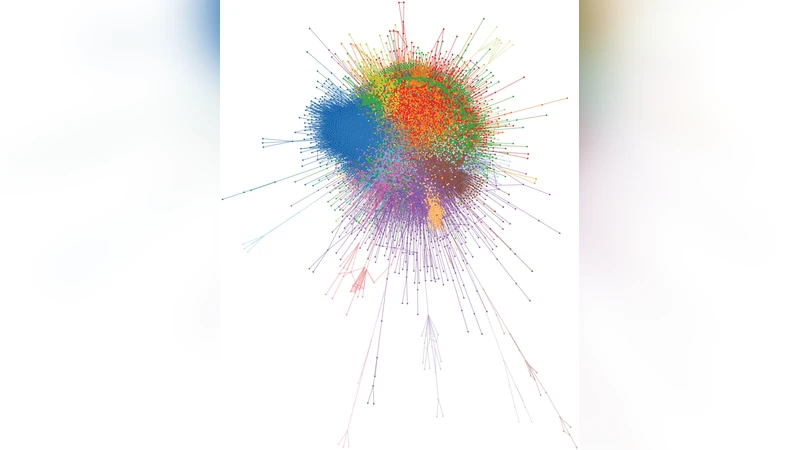
Data collection involved querying the Web of Science with the terms “complex network” and “photonic crystal”, retrieving thousands of records. For each record the title, abstract, publication year, citation count, and reference list were stored. An undirected citation graph was built by linking two papers whenever one cites the other; papers not present in the original query set were excluded to avoid dangling nodes that could distort community detection. The resulting graphs were visualized using a three‑dimensional Fruchterman‑Reingold force‑directed layout, providing an intuitive picture of the underlying knowledge structure.
Community detection was performed with the multilevel modularity optimization algorithm introduced by Blondel et al. (2008), commonly known as the Louvain method. This approach yields a high‑modularity partition while keeping computational costs modest. Each detected community corresponds to a sub‑topic within the broader field. To study inter‑community relationships, the authors generated a coarse‑grained graph where each community is represented by a single node; edges between community nodes are weighted by
Wαβ = Eαβ / (|α|·|β|)
where Eαβ is the number of citation links between the two communities and |α|, |β| are their sizes. This weighting captures the stochastic probability of connections between topics.
Because only abstracts were available for text analysis, the authors devised a custom importance index that goes beyond the traditional TF‑IDF, which is known to be unstable for short texts. Their metric compares the frequency of a term within a community to its frequency across the entire network, producing a ratio that highlights words that are unusually prevalent in a given community. The top‑ranked terms are taken as representative keywords, effectively labeling each community with a concise semantic tag.
The paper also employs the accessibility metric—a node‑centric measure based on the heterogeneity of random‑walk reachability—to distinguish central from peripheral communities. Low accessibility indicates peripheral, highly specialized sub‑fields, whereas high accessibility points to core topics that bridge many other areas.
Temporal dynamics were examined by tracking the yearly distribution of publications and the emergence or decline of specific keywords. In the Complex Networks domain, terms such as “community detection”, “scale‑free”, and “synchronization” show steady growth, while “epidemic spreading” peaks early and then wanes. In the Photonic Crystals domain, early‑2000s research focused on “band gap” and “waveguide”, whereas recent years have seen a surge in “topological photonics” and “metamaterials”. These trends illustrate how the framework can identify emerging research fronts and fading topics.
The empirical results reveal distinct structural patterns. The CN citation network splits into seven well‑connected communities, each characterized by its own keyword set, reflecting the field’s multidisciplinary nature. The PC network, by contrast, resolves into two clearly separated communities that correspond to the known split between telecommunications engineers and physicists. This validation demonstrates that the combined network‑text approach can recover established disciplinary boundaries without manual intervention.
Overall, the proposed methodology offers three major contributions: (i) a scalable way to generate science maps from citation data, (ii) an automated, community‑level keyword extraction technique that provides semantic labeling of sub‑topics, and (iii) a hierarchical dendrogram and temporal analysis that together support the construction of systematic literature surveys. The authors suggest future extensions such as incorporating full‑text analysis, applying more sophisticated topic‑modeling (e.g., LDA), and integrating interactive visualization tools to further aid scholars in navigating and summarizing large bodies of scientific literature.
Comments & Academic Discussion
Loading comments...
Leave a Comment