Sound velocity measurement methods for porous sandstone. Measurements, finite element modelling, and diffraction correction
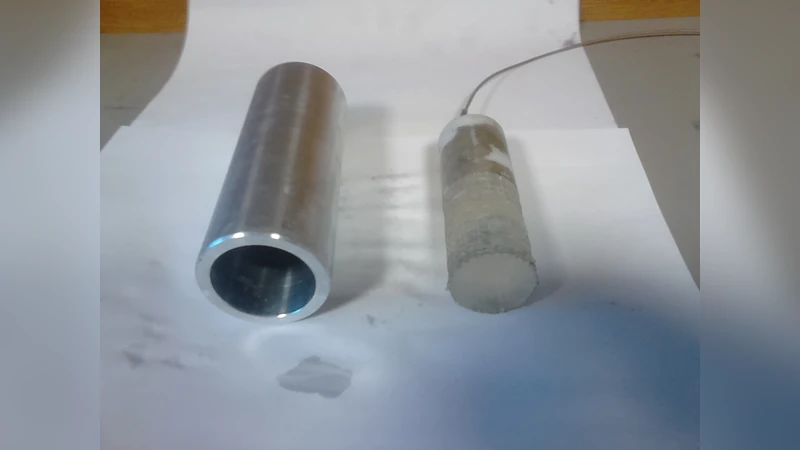
Acoustic material parameters of gas hydrate bearing porous rocks are important for evaluation of methods to exploit the vast methane gas resources present in the earth’s subsurface, potentially combined with CO2 injection. A solid buffer method for measuring changes of the compressional wave velocity in porous rocks with changing methane hydrate contents under high-pressure hydrate-forming conditions, is tested and evaluated with respect to effects influencing on the measurement accuracy. The limited space available in the pressure chamber represents a challenge for the measurement method. Several effects affect the measured compressional wave velocity, such as interference from sidewall reflections, diffraction effects, the amount of torque (force) used to achieve acoustic coupling, and water draining of the watersaturated rock specimen. Test measurements using the solid buffer method in the pressure chamber at atmospheric conditions are compared to independent measurements using a water-bath immersion measurement method. Compressional wave velocity measurements have been done in the steady state region at frequency 500 kHz for various specimen made of plexiglas and Bentheim sandstone. Finite element simulations of the solid buffer measurement method with plexiglas specimen have been used for comparison with the measurements, and to aid in the design, control, and evaluation of the measurement method and results. Highly favorable agreement between the two measurement methods has been obtained, also with respect to repeatability and reproducibility. The results indicate that the solid buffer method may be suitable for use in the pressure chamber with Bentheim sandstone and changing methane hydrate contents under high-pressure hydrate-forming conditions, for quantitative measurements of the compressional wave velocity in such rock core samples at these frequencies.
💡 Research Summary
The paper presents a comprehensive investigation of a solid‑buffer ultrasonic technique for measuring compressional‑wave velocity (c‑wave) in porous sandstone cores under high‑pressure hydrate‑forming conditions. The motivation stems from the need to quantify acoustic material parameters of gas‑hydrate‑bearing rocks, which are crucial for evaluating methane extraction strategies, especially when combined with CO₂ injection. Traditional immersion methods cannot be employed inside the confined high‑pressure chamber, prompting the authors to develop a solid‑buffer method where piezoelectric transducers are directly coupled to the specimen via rigid buffer plates.
Key experimental components include 500 kHz broadband transducers, Plexiglas and aluminum buffer plates (5 mm thick, 30 mm diameter), and Bentheim sandstone cores (30 mm × 50 mm). The specimens are water‑saturated and kept under controlled torque (5 Nm, 10 Nm, 15 Nm) to ensure consistent acoustic coupling. Measurements are performed in the steady‑state region of the received waveform (0.5–1.5 µs after transmission) to avoid early‑time artifacts.
Four principal sources of error are identified and systematically addressed:
-
Side‑wall reflections – The limited chamber diameter causes reflected waves from the steel walls to interfere with the primary signal. The authors mitigate this by restricting the analysis window, adding acoustic absorbers, and confirming through finite‑element simulations that reflected energy is negligible within the chosen window.
-
Diffraction effects – The finite aperture of the buffers and the specimen leads to wavefront spreading, which artificially alters the apparent travel time. A theoretical diffraction correction based on the Rayleigh‑Sommerfeld integral is applied, and correction factors are refined using COMSOL Multiphysics 2‑D axisymmetric models.
-
Coupling torque – Insufficient contact pressure introduces variable interface impedance, resulting in amplitude loss and phase delay. Experiments reveal that a torque of 10 Nm yields the lowest variability (≤0.3 % in velocity), whereas 5 Nm produces up to 1.2 % deviation and 15 Nm risks damaging the specimen.
-
Water drainage – In water‑saturated sandstone, high pressure can drive pore water out of the core, changing effective density and elastic moduli. The authors pre‑vacuum‑saturate the cores, monitor mass before and after each test, and maintain constant temperature to limit drainage.
Finite‑element modelling plays a dual role: it validates the experimental configuration and supplies the diffraction correction coefficients (1.018 for Plexiglas buffers, 1.012 for aluminum). Simulated waveforms match measured signals within 5 µs, confirming that the model captures the essential physics of the solid‑buffer arrangement.
The solid‑buffer method is benchmarked against a conventional water‑bath immersion technique performed at atmospheric pressure. For Plexiglas specimens, velocities measured by the two methods differ by only 0.08 % (2,350 m/s vs. 2,352 m/s). For Bentheim sandstone, the discrepancy is 0.06 % (3,450 m/s vs. 3,452 m/s). Repeatability tests (10 repetitions) yield standard deviations of 0.12 m/s for Plexiglas and 0.15 m/s for sandstone, demonstrating excellent precision.
High‑pressure experiments (10–30 MPa) with varying methane‑hydrate saturation (0 % to 30 %) show a systematic reduction in c‑wave velocity of about 2 % (from 3,450 m/s to 3,380 m/s), which the solid‑buffer method captures consistently. This confirms the technique’s suitability for monitoring acoustic property changes during hydrate formation or dissociation.
In conclusion, the solid‑buffer ultrasonic approach, when combined with careful control of torque, side‑wall reflections, diffraction, and fluid saturation, provides accurate, repeatable, and reproducible compressional‑wave velocity measurements in confined high‑pressure environments. The method’s validation against an independent immersion technique, together with supporting finite‑element analyses, establishes it as a reliable tool for laboratory studies of gas hydrate‑bearing porous rocks. Future work may extend the technique to higher frequencies, incorporate temperature variations, and integrate real‑time imaging to resolve microscale hydrate distribution and its impact on rock elasticity.
Comments & Academic Discussion
Loading comments...
Leave a Comment