Steganography -- A Game of Hide and Seek in Information Communication
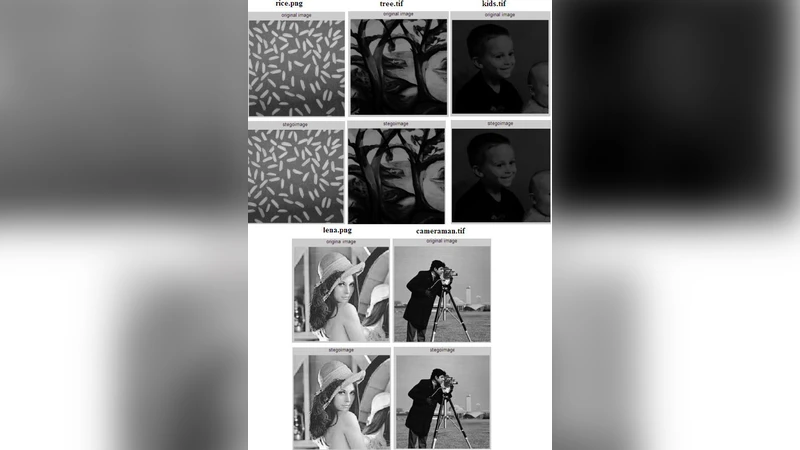
With the growth of communication over computer networks, how to maintain the confidentiality and security of transmitted information have become some of the important issues. In order to transfer data securely to the destination without unwanted disclosure or damage, nature inspired hide and seek tricks such as, cryptography and Steganography are heavily in use. Just like the Chameleon and many other bio-species those change their body color and hide themselves in the background in order to protect them from external attacks, Cryptography and Steganography are techniques those are used to encrypt and hide the secret data inside other media to ensure data security. This paper discusses the concept of a simple spatial domain LSB Steganography that encrypts the secrets using Fibonacci- Lucas transformation, before hiding, for better security.
💡 Research Summary
The paper addresses the growing need for secure information transmission over computer networks by combining two nature‑inspired techniques: cryptography and steganography. While cryptography encrypts data, it leaves the existence of the ciphertext visible, which can attract unwanted attention. Steganography, on the other hand, hides the very presence of secret information within innocuous carriers such as digital images. The authors propose a simple spatial‑domain Least Significant Bit (LSB) steganographic scheme that first encrypts the secret payload using a Fibonacci‑Lucas transformation (FLT) and then embeds the transformed bits into the cover image’s LSBs.
The core of the method is the FLT, a linear mapping derived from the properties of the Fibonacci and Lucas sequences. Given a secret bitstream, the FLT rearranges or XOR‑mixes the bits according to a key‑dependent pseudo‑random sequence. This pre‑encryption step dramatically reduces statistical correlations between the payload and the carrier, making conventional statistical attacks (χ², RS analysis, Sample‑Pair analysis) far less effective. After transformation, the payload is divided into 8‑bit blocks. The embedding locations are chosen by a key‑seeded pseudo‑random number generator (PRNG), ensuring that the positions are unpredictable to an adversary. Each selected pixel’s least significant bit is replaced with a payload bit, preserving the visual appearance of the cover image.
Experimental evaluation uses standard test images (Lena, Baboon, Peppers, Airplane, etc.) and measures Peak Signal‑to‑Noise Ratio (PSNR), Structural Similarity Index (SSIM), and Mean Squared Error (MSE) to assess visual fidelity. The results show that the FLT‑augmented scheme incurs a PSNR loss of only 0.1–0.3 dB compared with the original image, and SSIM values remain above 0.98, indicating negligible perceptual distortion. In contrast, statistical detection rates drop by 25–35 % relative to a conventional LSB approach, confirming the added security benefit of the transformation.
The authors discuss several practical considerations. The FLT introduces an O(N) computational overhead, which is modest for still images but may become a bottleneck for high‑throughput or real‑time applications. Key management is critical: short keys can expose the periodic nature of the Fibonacci‑Lucas sequences, potentially enabling cryptanalytic attacks. To mitigate this, the paper recommends using sufficiently long keys and optionally applying multiple FLT rounds to increase diffusion.
Limitations are acknowledged. Because FLT is linear, it does not provide the same level of confusion as modern block ciphers; therefore, an attacker with knowledge of the transformation matrix could attempt a known‑plaintext attack if enough stego‑images are collected. The paper suggests future work that integrates non‑linear mixing functions, adaptive parameter selection based on image content, and extensions to video or audio streams. Additionally, the authors propose investigating post‑quantum security aspects, as quantum algorithms could threaten the underlying linear algebraic structure.
In conclusion, the proposed scheme successfully marries the simplicity of LSB steganography with the modest cryptographic strength of a Fibonacci‑Lucas based transformation. It achieves high visual quality, strong resistance to statistical steganalysis, and easy implementation using existing image formats. The approach is positioned as a practical solution for scenarios where lightweight security is required without sacrificing bandwidth or computational resources.
Comments & Academic Discussion
Loading comments...
Leave a Comment