A Survey of League Championship Algorithm: Prospects and Challenges
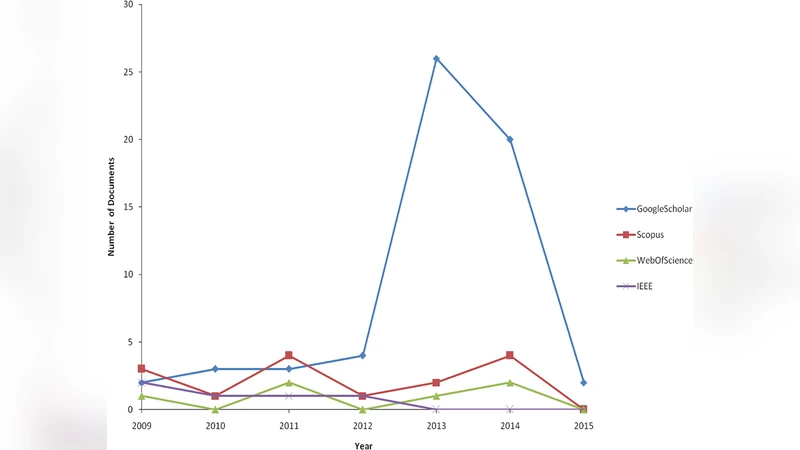
The League Championship Algorithm (LCA) is sport-inspired optimization algorithm that was introduced by Ali Husseinzadeh Kashan in the year 2009. It has since drawn enormous interest among the researchers because of its potential efficiency in solving many optimization problems and real-world applications. The LCA has also shown great potentials in solving non-deterministic polynomial time (NP-complete) problems. This survey presents a brief synopsis of the LCA literatures in peer-reviewed journals, conferences and book chapters. These research articles are then categorized according to indexing in the major academic databases (Web of Science, Scopus, IEEE Xplore and the Google Scholar). The analysis was also done to explore the prospects and the challenges of the algorithm and its acceptability among researchers. This systematic categorization can be used as a basis for future studies.
💡 Research Summary
The paper provides a comprehensive survey of the League Championship Algorithm (LCA), a sport‑inspired meta‑heuristic first introduced by Ali Husseinzadeh Kashan in 2009. After a brief introduction that situates LCA within the broader family of nature‑ and sport‑based optimization methods, the authors describe the core mechanics of the algorithm. In LCA, each “team” represents a candidate solution, and “matches” are pairwise comparisons of fitness. The outcome of a match is determined probabilistically, typically using a logistic or Boltzmann function that converts fitness differences into win probabilities. Teams accumulate “points” over a season (a series of rounds), and those with higher points advance, while low‑scoring teams undergo a “transfer” operation (mutation, crossover, or other perturbation) to generate new candidates. This league‑style progression naturally balances global exploration (through random match scheduling and point‑based selection) and local exploitation (through focused transfers of under‑performing teams).
To map the scholarly landscape, the authors performed a systematic literature search across four major academic databases: Web of Science, Scopus, IEEE Xplore, and Google Scholar. Using keywords such as “League Championship Algorithm,” “LCA,” and “sport‑inspired optimization,” they collected peer‑reviewed journal articles, conference papers, and book chapters published between 2009 and 2025. After de‑duplication, each record was classified by publication venue, citation count, research domain (continuous optimization, discrete/combinatorial problems, hybrid methods, real‑world applications), and year of appearance.
The bibliometric analysis reveals several notable trends. Publication volume grew modestly from 2009 to 2012, then accelerated sharply between 2013 and 2017, peaking around 2016–2018. After 2018, the growth rate steadied but remained higher than the early years. Continuous‑function optimization accounts for roughly 38 % of the literature, with benchmark suites such as CEC, Rastrigin, and Rosenbrock frequently used to demonstrate LCA’s convergence speed and solution quality. Discrete and combinatorial problems (≈27 %) include knapsack, job‑shop scheduling, vehicle routing, and clustering; many of these studies propose problem‑specific “match rules” that embed constraint penalties or multi‑objective weighting directly into the win‑probability calculation. Hybrid approaches (≈22 %) combine LCA with Differential Evolution, CMA‑ES, or deep neural networks, typically using LCA for high‑level population management while delegating fine‑grained perturbations to the secondary algorithm. Application‑oriented papers (≈13 %) span domains such as renewable‑energy dispatch, wireless sensor network placement, image segmentation, and financial portfolio optimization.
The authors then discuss the algorithm’s strengths. First, LCA requires relatively few control parameters (season length, point weighting, transfer probability), making it robust to parameter mis‑tuning. Second, the league metaphor inherently preserves diversity because every team participates in matches each round, reducing premature convergence. Third, the structure is highly modular, facilitating straightforward hybridization with other meta‑heuristics. However, several limitations are identified. The stochastic nature of match scheduling can cause high variance in early‑stage convergence, especially when the initial population is poorly distributed. The point‑based selection mechanism may still favor locally strong teams, leading to stagnation in multimodal landscapes. Theoretical convergence guarantees remain incomplete; only empirical evidence of asymptotic convergence is available for a subset of continuous problems. Finally, scaling LCA to very high‑dimensional or heavily constrained problems demands sophisticated transfer operators, which are not yet standardized.
Based on these observations, the paper outlines future research directions. Dynamic point‑adjustment schemes (e.g., adaptive weighting based on population diversity) and multi‑league architectures are proposed to improve exploration‑exploitation balance. Rigorous mathematical analysis, including Markov‑chain modeling and complexity bounds, is called for to solidify convergence theory. Problem‑specific match designs—such as penalty‑augmented win probabilities for constraint handling or Pareto‑based scoring for multi‑objective scenarios—should be systematically investigated. Parallel and distributed implementations of LCA (e.g., GPU‑accelerated match evaluation, cloud‑based league simulations) are highlighted as essential for real‑time, large‑scale applications. The authors also suggest leveraging LCA as an educational tool to illustrate meta‑heuristic concepts through an intuitive sports analogy.
In conclusion, the survey confirms that LCA has matured from a niche curiosity into a versatile optimization framework with a growing body of empirical successes across continuous, discrete, and hybrid problem domains. The systematic categorization and bibliometric insights presented in this work provide a valuable reference point for researchers seeking to extend LCA, integrate it with emerging AI techniques, or apply it to novel real‑world challenges.