Visualizing source code in 3D Maya software
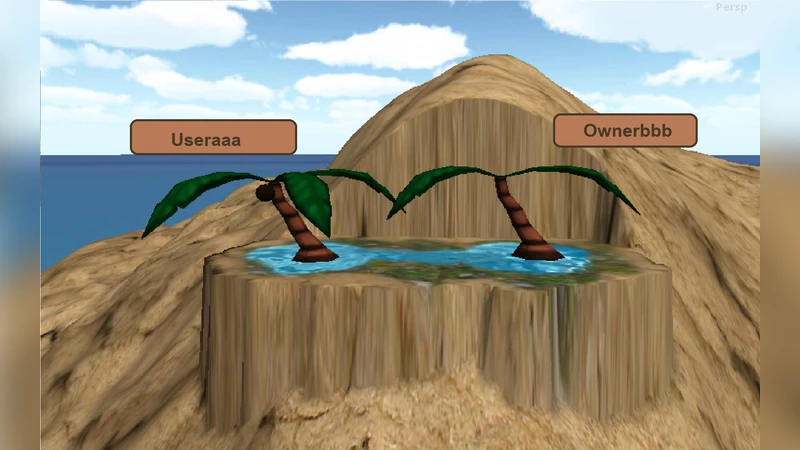
In this paper is clarify the summaries codes for programmers through three-dimensional shapes, and clearly programmers and developers, scholars and researchers in the field of software engineering, as well as researchers from the representative about threedimensional forms. Through a three-dimensional drawing on a Maya scripts which are based on drawing shapes and three-dimensional stereoscopic show every part of the code, for example, classes, methods, coherence and homogeneity , In these drawings and show clearly and useful.
💡 Research Summary
The paper proposes a novel approach to source‑code visualization by leveraging Autodesk Maya, a professional three‑dimensional (3D) modeling environment. The authors argue that traditional two‑dimensional (2D) representations such as textual listings, UML diagrams, or static graphs are insufficient for conveying the full complexity of modern software systems, especially when developers need to understand structural relationships, coupling, cohesion, and other quality metrics at a glance. To address this gap, they design a pipeline that automatically transforms source code into an interactive 3D scene where each logical element of the program is mapped to a distinct geometric primitive.
The pipeline consists of three main stages. First, the source code is parsed using language‑specific ANTLR grammars to produce an abstract syntax tree (AST). From the AST, a language‑agnostic intermediate representation is generated, capturing classes, interfaces, methods, fields, inheritance hierarchies, and call‑graph edges. This representation is serialized as JSON for downstream consumption.
Second, a Maya‑Python script generator reads the JSON and creates corresponding 3D objects via Maya’s Python API. The mapping rules are as follows: a class becomes a large cube whose dimensions reflect the number of methods and total lines of code; each method is rendered as a smaller cube or cylinder placed inside its parent class cube, with height proportional to method length; fields appear as small spheres attached to method surfaces, colored by access modifier; inheritance and interface implementation are visualized as directed arrows (3D lines) connecting class cubes, with line thickness indicating depth of inheritance; method‑call relationships are shown as semi‑transparent tubes whose color encodes call frequency and whose opacity reflects coupling strength.
Third, software quality metrics are encoded into visual attributes. High coupling is represented by warm colors (e.g., red), while high cohesion uses cool colors (e.g., green). Cyclomatic complexity is indicated by surface textures or patterns on method objects. The authors also incorporate a force‑directed layout algorithm that treats edges as springs, allowing related objects to settle near each other while minimizing overlap. This layout provides a spatial metaphor for logical proximity, helping users infer dependency strength from physical distance.
To evaluate the concept, the authors apply their framework to two case studies: a 5,000‑line Java e‑commerce application and a 12,000‑line open‑source game engine. In both scenarios, developers reported faster comprehension of class hierarchies and quicker identification of problematic hotspots (e.g., highly coupled modules). The 3D visualizations were also used in team meetings, where non‑technical stakeholders could grasp system architecture without reading code.
Despite these promising results, the paper acknowledges several practical limitations. Scalability is a major concern: as the number of classes grows into the hundreds or thousands, the scene becomes cluttered, and the current level‑of‑detail (LOD) mechanism only provides a rudimentary abstraction. The reliance on Maya introduces a steep learning curve and licensing costs, making the approach less accessible to typical development teams. Moreover, the system currently produces static snapshots; there is no mechanism for incremental updates as the code evolves, which limits its usefulness in continuous‑integration pipelines. The authors also note the lack of rigorous user studies—no controlled experiments measuring task completion time, error detection rate, or cognitive load were performed.
In conclusion, the paper contributes a creative integration of software engineering artifacts with high‑fidelity 3D graphics, demonstrating that visual encodings of structural and quality attributes can enhance developers’ mental models. For the approach to transition from a research prototype to a practical tool, future work should focus on (1) advanced clustering and abstraction techniques to handle large codebases, (2) migration to open‑source 3D platforms (e.g., WebGL, Unity) to lower entry barriers, (3) development of a real‑time synchronization layer that updates the 3D scene in response to code changes, and (4) systematic empirical evaluation involving developers of varying expertise. If these challenges are addressed, 3D code visualizations could become a valuable complement to existing software analysis and documentation practices.
Comments & Academic Discussion
Loading comments...
Leave a Comment