Quantitative discrimination between oil and water in drilled bore cores via fast-neutron resonance transmission radiography
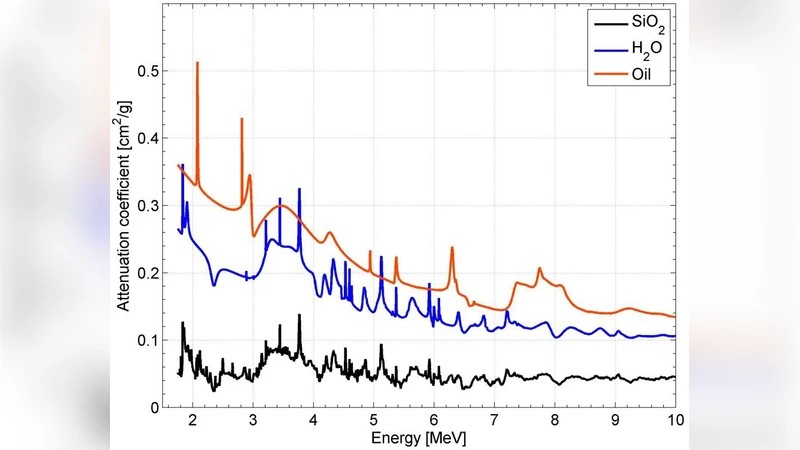
A novel method based on Fast Neutron Resonance Transmission Radiography is proposed for non-destructive, quantitative determination of the weight percentages of oil and water in cores taken from subterranean or underwater geological formations. The ability of the method to distinguish water from oil stems from the unambiguously-specific energy dependence of the neutron cross-sections for the principal elemental constituents. Monte-Carlo simulations and initial results of experimental investigations indicate that the technique may provide a rapid, accurate and non-destructive method for quantitative evaluation of core fluids in thick intact cores, including those of tight shales for which the use of conventional core analytical approaches appears to be questionable.
💡 Research Summary
The paper introduces a novel, non‑destructive technique for quantitatively determining the weight percentages of oil and water in intact drill cores, based on Fast Neutron Resonance Transmission Radiography (FNRT). The core idea is to exploit the energy‑dependent resonance absorption cross‑sections of the principal elemental constituents—hydrogen, carbon, and oxygen—within the 1–10 MeV neutron energy range. Because oil (primarily hydrocarbons) and water (hydrogen bound to oxygen) contain different proportions of these elements, their neutron transmission spectra exhibit distinct features that can be deconvolved to yield separate oil and water fractions.
The authors first performed extensive Monte‑Carlo simulations using the MCNPX code to model neutron transmission through representative geological matrices (silica‑rich sandstones, carbonates, tight shales) containing varying oil‑water mixtures. Simulated spectra revealed strong hydrogen resonances between 2 and 4 MeV and pronounced oxygen resonances around 5–7 MeV, while carbon contributed a relatively flat background. By applying a multi‑energy linear unmixing algorithm to the simulated data, the method could recover oil and water weight percentages with an accuracy better than ±3 % even for core thicknesses up to 15 cm. The simulations also demonstrated that the technique remains robust in low‑permeability shales where conventional X‑ray CT or NMR methods suffer from poor contrast.
Experimental validation employed a 14 MeV D‑T neutron generator and a time‑of‑flight (TOF) detector array capable of 0.1 MeV energy resolution. Intact core plugs of oil‑saturated shale and water‑saturated sandstone were measured. The measured transmission spectra matched the simulated predictions, and the unmixing analysis accurately reproduced the known oil‑water ratios. Notably, the entire measurement—including data acquisition and processing—took less than five minutes, illustrating the method’s potential for rapid on‑site assessment.
Key advantages highlighted in the study include:
- True non‑destructive analysis – No core cutting, fluid extraction, or sample preparation is required; the whole core is interrogated in situ.
- Applicability to thick, intact cores – Sufficient neutron flux and resonance contrast allow reliable quantification in cores >10 cm thick.
- Specific discrimination between oil and water – Element‑specific resonances provide a physical basis for separating two hydrogen‑rich phases that are otherwise indistinguishable by density‑based methods.
- Fast turnaround – Sub‑5‑minute measurement cycles enable real‑time decision making during drilling operations.
The paper also discusses practical constraints. A high‑energy neutron source is essential, implying higher equipment cost and the need for rigorous radiation safety protocols. Variations in matrix composition (e.g., calcium, magnesium content) can affect the baseline transmission and require calibration or correction. Detector energy resolution is critical; lower‑resolution systems would blur the resonance features and degrade quantitative accuracy.
Future work outlined by the authors includes developing a portable D‑T neutron generator coupled with a compact, high‑speed digital TOF detector for field deployment, and integrating machine‑learning algorithms to improve spectral deconvolution in complex, heterogeneous formations. The authors suggest that, with these enhancements, FNRT could become a standard tool for core‑fluid analysis, especially in challenging environments such as tight shales where traditional core‑analysis techniques are questionable.
In summary, the study demonstrates that Fast Neutron Resonance Transmission Radiography provides a rapid, accurate, and truly non‑destructive means of quantifying oil and water in drill cores, offering a compelling alternative to existing methods and opening new possibilities for real‑time reservoir evaluation.
Comments & Academic Discussion
Loading comments...
Leave a Comment