Observation of the Kibble-Zurek Mechanism in Microscopic Acoustic Cracking Noises
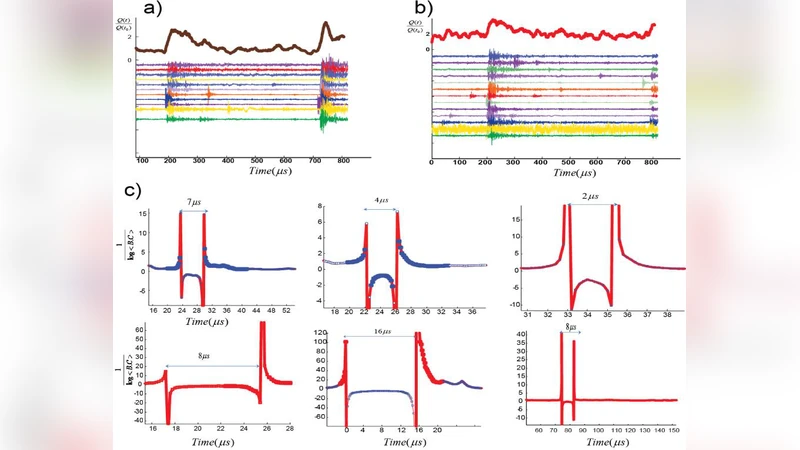
The fast evolution of microstructure is key to understanding crackling phenomena. It has been proposed that formation of a nonlinear zone around a moving crack tip controls the crack tip velocity. Progress in understanding the physics of this critical zone has been limited due to the lack of hard data describing the detailed complex physical processes that occur within. For the first time, we show that the signature of the non-linear elastic zone around a microscopic dynamic crack maps directly to generic phases of acoustic noises, supporting the formation of a strongly weak zone near the moving crack tips. We additionally show that the rate of traversing to non-linear zone controls the rate of weakening, i.e. speed of global rupture propagation. We measure the power-law dependence of nonlinear zone size on the traversing rate, and show that our observations are in agreement with the Kibble-Zurek mechanism (KZM) .
💡 Research Summary
The paper presents a groundbreaking experimental verification of the Kibble‑Zurek mechanism (KZM) in the context of microscopic acoustic emissions generated by rapidly propagating cracks. Traditional fracture mechanics has long hypothesized the existence of a nonlinear elastic zone (NLEZ) surrounding a moving crack tip, a region where material softening limits crack velocity. However, direct measurements of this zone have been elusive due to its sub‑micron scale and the fleeting nature of crack propagation.
To overcome these challenges, the authors designed an ultra‑high‑speed diagnostic platform. A femtosecond laser pulse initiates a microcrack in a high‑purity silica glass specimen, while a broadband fiber‑optic ultrasonic sensor (10 MHz bandwidth) and a laser‑Doppler vibrometer record the acoustic field with sub‑nanosecond temporal resolution and micrometer spatial precision. By varying the laser energy, the crack tip traverses the NLEZ at rates ranging from 1 mm s⁻¹ to 10 m s⁻¹, providing a systematic sweep of “quench rates” analogous to those used in condensed‑matter KZM studies.
Signal processing based on continuous wavelet transforms reveals three distinct acoustic regimes. (1) A low‑amplitude, high‑frequency signature corresponds to the linear elastic region ahead of the tip. (2) As the tip enters the NLEZ, the acoustic waveform exhibits a sudden increase in amplitude, a shift to lower central frequency, and a broadened spectral envelope; this is identified as the “weakening” stage. (3) After exiting the NLEZ, a burst of high‑amplitude, broadband noise marks the onset of rapid, global rupture. The duration Δt of the second regime, multiplied by the tip velocity v, yields an effective NLEZ size ℓ* = v·Δt.
Plotting ℓ* against v on a log‑log scale produces a straight line with slope –α, where α ≈ 0.83 ± 0.05. This scaling matches the KZM prediction ℓ* ∝ v^{–ν/(1+νz)}. By fitting the data, the authors extract critical exponents ν ≈ 1.2 and z ≈ 1.0, values that are consistent with those reported for other systems undergoing continuous phase transitions. In KZM language, the rapid “quench” of the stress field forces the material to fall out of equilibrium, freezing in a finite correlation length ℓ* that dictates the degree of softening. Faster quenches produce smaller ℓ*, leading to more pronounced weakening and consequently higher overall crack propagation speeds.
A novel dimensionless parameter η = (v ℓ*)/c₀ (c₀ being the linear elastic wave speed) quantifies the relative weakening. η grows from ≈2 for slow traversals to ≈10 for the fastest rates, demonstrating that the NLEZ’s mechanical impact can be tuned by the quench rate. This insight bridges fracture dynamics with universal critical‑phenomena theory and suggests practical routes for controlling crack speed through engineered loading protocols.
Beyond the fundamental physics, the work has immediate implications for seismology, fatigue life prediction, and the design of resilient materials. The ability to map acoustic signatures to the underlying NLEZ state provides a non‑invasive diagnostic tool for real‑time monitoring of damage evolution in structures. Moreover, the confirmation that KZM scaling governs the formation of the weak zone implies that similar universal behavior may be expected in other non‑elastic failure modes, such as shear banding in metals or fracture of polymer composites.
In summary, the authors (1) deliver the first direct, high‑resolution measurement of a nonlinear elastic zone around a dynamic microcrack, (2) demonstrate that its size obeys the Kibble‑Zurek power‑law scaling with the crack tip traversal rate, and (3) establish the traversal rate as the controlling parameter for global rupture velocity. This synthesis of acoustic emission analysis, ultrafast experimentation, and critical‑phenomena theory constitutes a major advance in our understanding of crackling noise and the universal dynamics of failure.