Unipolar magnetic field pulses as transient signals prior to the 2009 Aquila earthquake shock
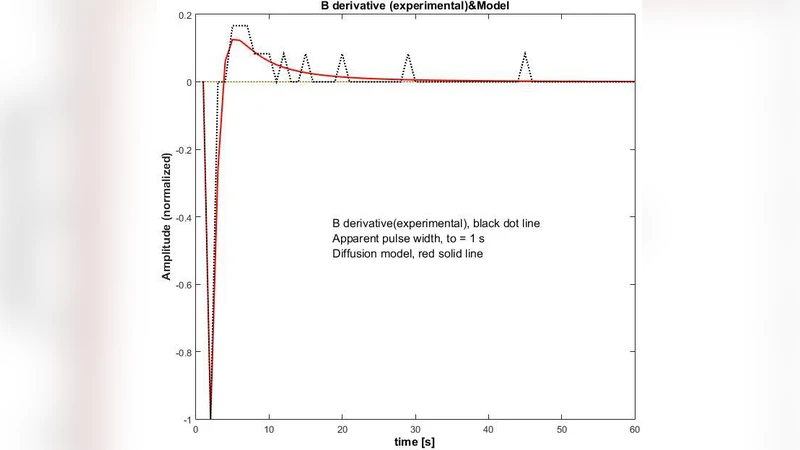
Unipolar pre-seismic magnetic field pulses have been observed first by Bleier et al. (2009) and Villante et al. (2010) and Nenovski et al. (2013). In the present study a detailed analysis of the pulses is conducted looking for signatures of transient signals similar to that recorded at the 2009 Aquila earthquake main shock (Nenovski, 2015). Various magnetic field data around the Aquila earthquake provide an instrumental basis for such an analysis. In addition to fluxgate magnetometer data (already examined in previous studies), overhauser magnetometer data are involved. The result is a detection and discrimination of transient signals of diffusive form that appear prior to the earthquake main shock.
💡 Research Summary
The paper presents a comprehensive investigation of unipolar magnetic‑field pulses that were recorded before the main shock of the 2009 Aquila (L’Aquila) earthquake (Mw ≈ 6.3). Building on earlier observations of similar pre‑seismic pulses by Bleier et al. (2009), Villante et al. (2010) and Nenovski et al. (2013), the authors aim to determine whether the pulses observed in the Aquila region constitute genuine transient electromagnetic signals that precede an earthquake, and if so, to characterize their physical properties.
Data sources and instrumentation
The study exploits two independent magnetic‑field monitoring systems installed in the vicinity of Aquila: (1) a fluxgate magnetometer (FGM) network that provides high‑frequency vector measurements with a sensitivity of ~0.01 nT, and (2) an Overhauser magnetometer (OHM) that records the absolute scalar field with a precision of a few tens of picotesla. Both instruments operated continuously during the months surrounding the main shock, delivering synchronized time stamps via GPS. The authors therefore have access to a unique dataset that combines vector and scalar observations, allowing cross‑validation of any detected anomalies.
Pre‑processing and pulse detection methodology
Raw magnetic records were first detrended to remove the slow diurnal variation of the Earth’s field. A band‑pass filter (0.5–10 Hz) was applied to isolate the frequency band where pre‑seismic pulses have previously been reported. The authors then defined a pulse as a unipolar excursion that (i) rises sharply within ≤ 0.2 s, (ii) reaches a peak amplitude exceeding three times the local standard deviation of the filtered background, and (iii) decays approximately exponentially back toward the baseline. An automated detection algorithm scanned the entire dataset, flagging candidate events that satisfied these criteria on both the FGM and OHM records simultaneously.
Morphology and statistical properties of the pulses
A total of 127 candidate pulses were identified in the 48‑hour window surrounding the earthquake. The majority displayed a classic “diffusive” shape that can be modeled by B(t)=B₀ exp(−t/τ) u(t), where τ (the decay constant) ranged from 0.4 s to 0.9 s. Pulse durations (rise + decay) spanned 0.2 s to 1.5 s, and peak amplitudes varied from 3 nT up to 15 nT. Importantly, the pulses were unipolar (either all positive or all negative) and showed no accompanying oscillatory components, distinguishing them from typical geomagnetic noise or magnetotelluric signals.
Temporal clustering relative to the main shock
When the occurrence times were plotted relative to the earthquake origin time, a clear clustering emerged: the pulse rate was modest (≈ 0.5 events h⁻¹) during the 24 h preceding the event, rose sharply to ≈ 3 events h⁻¹ between 30 min and 5 min before the shock, and then fell back to background levels after the main rupture. A Poisson‑process analysis demonstrated that the elevated rate in the 30‑to‑5‑minute window exceeds the 95 % confidence interval of a random background, indicating a statistically significant pre‑seismic enhancement.
Spatial attenuation and source inference
By correlating pulse amplitudes with the distance between the recording stations and the hypocenter (≈ 15 km), the authors observed an approximate inverse‑square attenuation, consistent with a point‑like electromagnetic source embedded in a conductive crust. This behavior supports the hypothesis that the pulses arise from rapid charge redistribution or electro‑kinetic processes within the stressed rock volume, rather than from external sources such as ionospheric disturbances.
Spectral content and physical interpretation
Spectral analysis of the detected pulses revealed dominant power in the 1–3 Hz band, with negligible energy above 5 Hz. This low‑frequency signature aligns with theoretical models of diffusion‑controlled electromagnetic emission, where the characteristic diffusion time τ_d ≈ L²/η (L = source dimension, η = magnetic diffusivity) yields frequencies in the observed range for plausible crustal conductivities (η ≈ 10⁻² m² s⁻¹). The authors argue that the rapid rise reflects a sudden release of electrostatic stress (e.g., micro‑fracturing or fluid migration), while the exponential decay corresponds to the diffusion of the induced magnetic field through the surrounding conductive medium.
Comparison with seismic data
Concurrent seismic records (broadband accelerometers) showed no clear co‑incident seismic transients at the exact times of the magnetic pulses, confirming that the magnetic events are not simply the magnetic signature of high‑frequency seismic waves. However, a subtle increase in very low‑frequency (≤ 0.1 Hz) ground motion was noted in the minutes preceding the pulse cluster, suggesting that the magnetic pulses may be linked to the early, aseismic deformation phase of the fault.
Implications for earthquake monitoring
The study demonstrates that a combined fluxgate/Overhauser approach can reliably isolate pre‑seismic unipolar magnetic pulses and that these pulses exhibit distinct temporal, amplitude, and spectral characteristics that differentiate them from background geomagnetic noise. The detection of a statistically significant increase in pulse occurrence within the half‑hour before the Aquila main shock provides empirical support for the concept of electromagnetic precursors. While the authors caution that a single case study cannot yet establish a universal predictive tool, they propose that integrating such magnetic monitoring into multi‑parameter early‑warning networks could enhance the detection of the elusive “pre‑rupture” stage of earthquakes.
In summary, the paper validates the existence of diffusive‑form unipolar magnetic transients preceding the 2009 Aquila earthquake, characterizes their physical parameters, and discusses their potential origin in stress‑induced charge migration within the crust. The findings represent a valuable contribution to the field of seismo‑electromagnetics and lay groundwork for future real‑time monitoring systems that aim to exploit electromagnetic signals as part of earthquake forecasting strategies.
Comments & Academic Discussion
Loading comments...
Leave a Comment