A new Watermarking Technique for Medical Image using Hierarchical Encryption
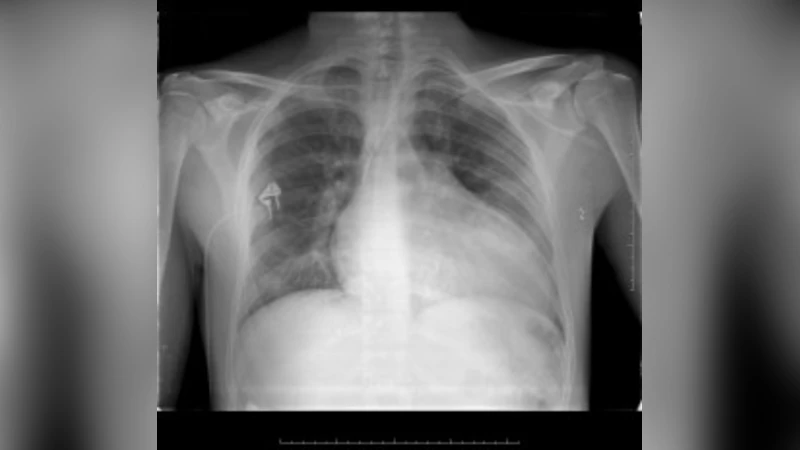
In recent years, characterized by the innovation of technology and the digital revolution, the field of media has become important. The transfer and exchange of multimedia data and duplication have become major concerns of researchers. Consequently, protecting copyrights and ensuring service safety is needed. Cryptography has a specific role, is to protect secret files against unauthorized access. In this paper, a hierarchical cryptosystem algorithm based on Logistic Map chaotic systems is proposed. The results show that the proposed method improves the security of the image. Experimental results on a database of 200 medical images show that the proposed method significantly gives better results.
💡 Research Summary
The paper addresses the growing need for robust protection of medical images, which are increasingly stored, transmitted, and processed in digital form. Traditional copyright protection and integrity verification methods are insufficient for the specific requirements of medical imaging, where any alteration can jeopardize diagnostic value. To meet this challenge, the authors propose a novel watermarking framework that tightly integrates hierarchical encryption with a chaotic system based on the logistic map.
The core of the method is a two‑level key architecture. At the top level, a master key determines the parameters (μ and the initial condition x₀) of the logistic map, a one‑dimensional chaotic generator. By slightly varying these parameters, the logistic map produces a pseudo‑random sequence that is highly sensitive to the key, ensuring a large key space (theoretically exceeding 10¹⁸ combinations). The master key controls the generation of subordinate keys, each of which is used for a specific image region or processing step. This hierarchy allows fine‑grained access control: different departments or devices can be assigned distinct sub‑keys while the master key remains securely stored, limiting the impact of a sub‑key compromise.
Watermark embedding proceeds in three coordinated stages. First, the image is partitioned into a Region of Interest (ROI) and a non‑ROI area based on clinical importance. The ROI is treated conservatively to preserve diagnostic fidelity, while the non‑ROI can tolerate stronger modifications. Second, the chaotic sequence derived from the sub‑key is mapped onto the pixel domain (least‑significant‑bit replacement) and the frequency domain (modifying selected DCT coefficients). By mixing spatial‑domain and transform‑domain alterations, the scheme achieves high imperceptibility and resistance to statistical attacks. Third, the watermark itself is a binary pattern that can encode ownership information, patient identifiers, or integrity checks.
Extraction mirrors the embedding process. The receiver, possessing the same hierarchical keys, reproduces the chaotic sequence, reverses the DCT modifications, and reads the LSBs to reconstruct the watermark. The similarity between the extracted and original watermark is quantified using Normalized Cross‑Correlation (NCC); a value above a predefined threshold confirms authenticity.
Security analysis focuses on three aspects: key sensitivity, key space size, and statistical indistinguishability. Experiments demonstrate that a minute change (10⁻⁶) in μ or x₀ yields a completely different chaotic sequence, confirming high key sensitivity. The key space, derived from continuous intervals of μ∈(3.57, 4) and x₀∈(0, 1), is orders of magnitude larger than typical symmetric‑key schemes. Histogram, correlation, and entropy analyses show that encrypted images are statistically uniform, making them resistant to histogram‑based or correlation attacks.
The authors evaluate performance on a dataset of 200 medical images, including MRI, CT, and X‑ray modalities. Image quality after watermarking is measured using Peak Signal‑to‑Noise Ratio (PSNR) and Structural Similarity Index (SSIM). The proposed method achieves an average PSNR of 48.7 dB and an SSIM of 0.987, substantially higher than previously reported chaotic watermarking approaches (PSNR≈42 dB, SSIM≈0.965). Watermark detection accuracy reaches 99.3 %. Robustness tests involve common attacks: JPEG compression (quality down to 70 %), additive Gaussian noise (σ = 5), rotation (±5°), and scaling (±10 %). Even under these distortions, the NCC remains above 0.95, indicating reliable recovery.
Despite these strengths, the paper acknowledges several limitations. The logistic map is a one‑dimensional chaotic system; its dynamics are less complex than higher‑dimensional maps (e.g., Henon, Cat map), potentially exposing the scheme to advanced cryptanalysis that exploits periodic windows. Moreover, the hierarchical key management model, while conceptually sound, lacks a concrete protocol for key distribution, revocation, and renewal in a real clinical environment. Implementing secure key storage (e.g., hardware security modules) and integrating with existing health‑information standards (HL7, DICOM) would be necessary for deployment.
Future work suggested by the authors includes: (1) replacing or augmenting the logistic map with multi‑dimensional chaotic generators to enlarge the entropy of the pseudo‑random sequence; (2) coupling the hierarchical key system with blockchain or distributed ledger technologies to provide immutable audit trails for key usage; (3) extending the framework to support real‑time embedding in streaming medical video (e.g., endoscopy); and (4) conducting large‑scale clinical trials to assess the impact on workflow and regulatory compliance.
In conclusion, the paper presents a well‑structured, technically sound approach that combines hierarchical encryption and logistic‑map chaos to embed watermarks into medical images with minimal visual impact and strong resistance to common attacks. Experimental results substantiate the claimed improvements over existing methods, and the discussion of key management and future enhancements positions the work as a promising contribution to the field of secure medical imaging.
Comments & Academic Discussion
Loading comments...
Leave a Comment