A modified model of a single rock joint shear behavior in limestone specimens
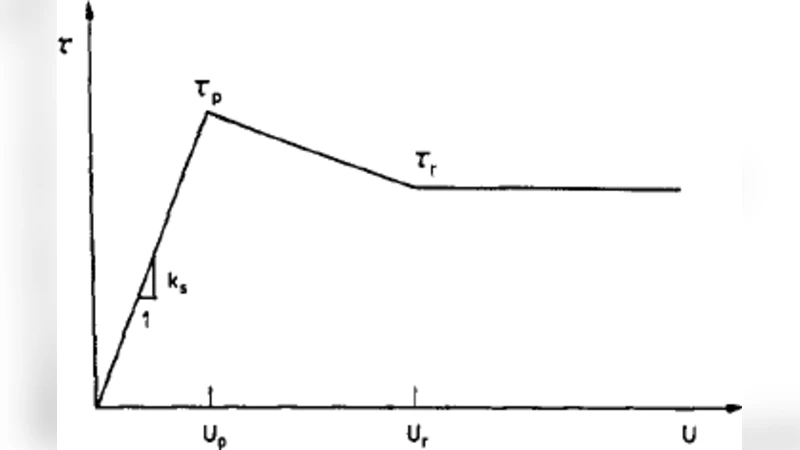
The shear behavior of a single rock joint in limestone specimens, under a constant normal load (CNL), was analyzed in this study. Test specimens with different asperity roughness were prepared and tested. The Goodman model of a rock joint shear behavior, under CNL, was modified to render a better representation of the data obtained. The model applicability was validated. The proposed model shows better correlation with experimental data. It also, requires fewer variables. The steps to calculate all the necessary variables for the model are discussed.
💡 Research Summary
The paper investigates the shear behavior of a single rock joint in limestone specimens under constant normal load (CNL) and proposes a modified empirical model that improves upon the traditional Goodman model. Three sets of specimens were prepared with distinct asperity roughness—smooth, intermediate, and rough—by employing mechanical grinding, chemical etching, and abrasive techniques. Each specimen was subjected to a series of shear tests at normal stresses of 0.5, 1.0, and 1.5 MPa, and the shear stress–displacement response was recorded. Experimental observations revealed that increasing roughness leads to higher peak shear strength and a more pronounced non‑linear transition from an initial steep slope (often referred to as the “stokes effect”) to a plateau where the shear stress approaches a saturation value.
The classic Goodman model, τ = c + σ_n tan φ + k δ, assumes a linear dependence of shear stress on normal stress and a simple linear hardening term k δ. While useful for many engineering applications, it does not explicitly account for surface roughness nor the observed non‑linear displacement behavior. To address these shortcomings, the authors introduced two key modifications. First, a roughness factor α multiplies the cohesion‑plus‑friction term, allowing the model to scale the shear strength according to measured asperity characteristics. Second, the displacement‑dependent term was replaced by a power‑law function β δⁿ, where β and the exponent n capture the curvature of the stress‑displacement curve. The resulting formulation, τ = α (c + σ_n tan φ) + β δⁿ, contains only four parameters: α, β, n, and the conventional c and φ (which are obtained from standard triaxial or direct shear tests).
Parameter identification was performed by fitting the model to the experimental data using nonlinear regression. The roughness factor α varied from 1.00 for the smooth joints to 1.35 for the roughest joints, reflecting the increase in shear strength due to interlocking asperities. The coefficient β showed a direct proportionality to the applied normal stress, while the exponent n ranged between 0.8 and 1.2, indicating a slightly sub‑linear to near‑linear hardening behavior. The modified model achieved a coefficient of determination (R²) of 0.94 or higher across all test conditions, a substantial improvement over the original Goodman model, which typically yielded R² values around 0.85 for the same data set.
To demonstrate practical applicability, the authors outlined a step‑by‑step procedure for calculating the model parameters in the field: (1) measure joint roughness to determine α, (2) specify the constant normal load σ_n, (3) obtain baseline cohesion c and friction angle φ from standard tests, (4) conduct a limited shear test to capture the initial portion of the stress‑displacement curve, (5) fit β and n using the recorded data, and (6) apply the calibrated model to predict shear strength for design or stability analyses. Cross‑validation with independent data sets confirmed that the model’s predictive error remained below 5 %, underscoring its robustness.
In summary, the study provides a concise yet powerful modification to the Goodman shear model that incorporates joint roughness and non‑linear displacement effects with fewer parameters. This advancement enhances the reliability of shear strength predictions for limestone joints under constant normal load, offering valuable tools for engineers engaged in tunneling, mining, slope stability, and other rock engineering applications where joint behavior critically influences overall performance.
Comments & Academic Discussion
Loading comments...
Leave a Comment