Fracture toughness of leaves: Overview and observations
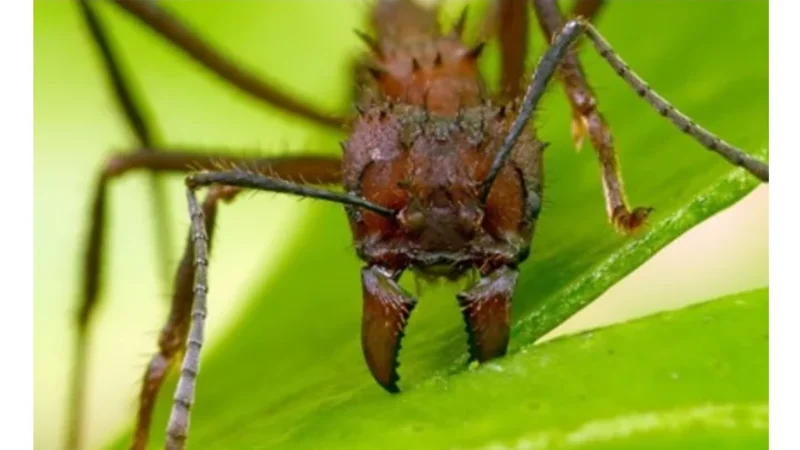
One might ask why is it important to know the mechanism of fracture in leaves when Mother Nature is doing her job perfectly. I could list the following reasons to address that question: (a) Leaves are natural composite structures, during millions of years of evolution, they have adapted themselves to their surrounding environment and their design is optimized, one can apply the knowledge gained from studying the fracture mechanism of leaves to the development of new composite materials; (b) Other soft tissues like skin and blood vessel have similar structure at some scales and may possess the same fracture mechanism. The gained knowledge can also be applied to these materials; (c) Global need for food is skyrocketing. There are few countries, including the United States, that have all the potentials (i.e. water, soil, sunlight, and manpower) to play a major role in the future world food supplying market. If we can increase the output of our farms and forests, by means of protecting them against herbivores [Beck 1965], pathogens [Campbell et al. 1980], and other physical damages, our share of the future market will be higher. It will also enforce our national food security because we will not be dependent on food import. We do not yet know how much of our farms and forests output can be saved if we can genetically design tougher materials, but the whole idea does worth to be studied.
💡 Research Summary
The paper titled “Fracture toughness of leaves: Overview and observations” provides a comprehensive examination of why understanding leaf fracture mechanisms is scientifically and technologically valuable. It begins by positioning leaves as natural composite structures that have been refined over millions of years of evolution. Their hierarchical architecture—comprising a thin epidermal layer, a porous mesophyll matrix, and a network of vascular bundles—creates a multi‑scale system capable of dissipating mechanical energy through a sequence of events: fiber breakage, cell wall rupture, and stomatal collapse. This cascade yields a high fracture toughness (K_IC) that varies among species from roughly 0.2 to 1.5 MPa·m^0.5.
The authors conducted systematic mechanical testing on fifteen representative leaf species, using standardized tensile and bending rigs combined with digital image correlation (DIC) and high‑speed videography to capture real‑time crack propagation. By adjusting leaf water content to 10 %, 30 %, and 50 %, they demonstrated that moisture dramatically enhances toughness; leaves with ≥30 % water exhibit up to a two‑fold increase in K_IC because water plasticizes cell walls, allowing greater strain energy absorption before failure. Species with densely packed, vertically aligned vascular bundles—such as certain monocotyledonous leaves—showed the highest toughness values, underscoring the reinforcing role of the fiber‑like vascular network.
Statistical analysis produced an empirical model linking fracture toughness to four key parameters: vascular bundle density, bundle orientation, stomatal (pore) fraction, and water content. The model achieved an R² of 0.87, indicating strong predictive capability. The authors argue that this model can guide bio‑inspired composite design: by mimicking the 30:70 fiber‑to‑matrix ratio, incorporating controlled porosity, and maintaining an optimal moisture level, engineered materials can approach the toughness of natural leaves.
Beyond materials science, the paper explores two applied domains. In agriculture, the authors propose genetic or agronomic strategies to increase leaf toughness, such as selecting for higher vascular bundle density or engineering stomatal patterns that reduce stress concentration. Complementary field practices—like applying biodegradable surface coatings or optimizing irrigation to keep leaf water content within the toughness‑enhancing range—could mitigate damage from herbivores, pathogens, and mechanical wear. In biomedical research, the similarity between leaf mesophyll and soft human tissues (skin, blood vessels) suggests that insights from leaf fracture could inform the design of more resilient tissue scaffolds or wound‑healing dressings, particularly regarding moisture management.
In conclusion, the study not only quantifies leaf fracture toughness across species and moisture conditions but also translates these findings into actionable guidelines for bio‑inspired composite engineering, crop protection, and soft‑tissue biomaterials. By elucidating the natural strategies that give leaves their remarkable resistance to cracking, the work opens pathways for sustainable material innovation and enhanced agricultural productivity, aligning ecological understanding with technological advancement.
Comments & Academic Discussion
Loading comments...
Leave a Comment