Some extensions of the class of $k$-convex bodies
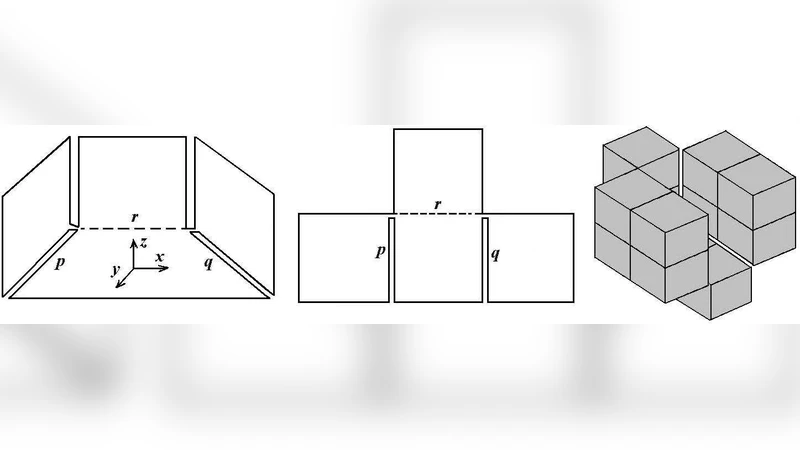
We study relations of some classes of $k$-convex, $k$-visible bodies in Euclidean spaces. We introduce and study \textrm{circular projections} in normed linear spaces and classes of bodies related with families of such maps, in particular, \textrm{$k$-circular convex} and \textrm{$k$-circular visible} ones. Investigation of these bodies more general than $k$-convex and $k$-visible ones allows us to generalize some classical results of geometric tomography and find their new applications.
💡 Research Summary
The paper investigates the relationships among several classes of geometric bodies—specifically, k‑convex and k‑visible bodies—in Euclidean spaces, and then extends these notions to a broader setting by introducing the concept of circular projections in normed linear spaces. The authors begin by recalling the classical definitions: a set is k‑convex if its intersection with any k‑dimensional affine subspace is a convex set, and it is k‑visible if, from any external viewpoint, the orthogonal projection onto any k‑dimensional subspace remains “visible” (i.e., the projection does not create hidden parts). These two families are known to be closely related; for instance, every k‑convex body is automatically k‑visible, while the converse holds only under additional regularity assumptions.
The central novelty of the work is the introduction of circular projections. Unlike the traditional linear (or orthogonal) projection, a circular projection is defined with respect to a chosen norm and a family of “circles” (or spheres) in that norm. For a given point, one draws a norm‑induced circle centered at that point and projects the body onto the tangent hyperplane of the circle. This operation reduces to the usual orthogonal projection when the Euclidean norm is used, but it yields genuinely new behavior for norms such as ℓ₁, ℓ∞, or any smooth strictly convex norm. The authors develop a systematic theory of these projections, proving basic properties such as continuity, affine invariance under norm‑preserving transformations, and a reconstruction formula that parallels the classical Radon transform.
Using circular projections, the authors define two new classes of bodies: k‑circular‑convex and k‑circular‑visible. A set is k‑circular‑convex if its circular projection onto every k‑dimensional “circular” subspace is convex; it is k‑circular‑visible if every external point sees a convex circular projection in each k‑dimensional direction. These definitions naturally generalize the earlier ones: when the underlying norm is Euclidean, k‑circular‑convex coincides with k‑convex, and similarly for visibility. However, for non‑Euclidean norms the new classes contain many non‑convex bodies that nevertheless possess a well‑behaved projection structure. The paper establishes inclusion relations (e.g., every k‑circular‑convex body is k‑circular‑visible) and provides examples illustrating strictness of these inclusions.
A substantial portion of the manuscript is devoted to applications in geometric tomography. The authors show that the classical uniqueness theorems for reconstruction from X‑ray data (which rely on linear projections) can be extended to the circular setting. In particular, they prove a “circular Radon uniqueness theorem”: if two compact bodies have identical circular projection data for all directions in a sufficiently rich family of k‑dimensional circular subspaces, then the bodies are equal. This result holds for any norm that is strictly convex and smooth, thereby covering a wide range of practical measurement models (e.g., Manhattan‑distance sensors). The proof adapts the Fourier slice theorem to the circular context and uses a careful analysis of support functions associated with the norm.
Beyond pure theory, the authors discuss several concrete applications. In image reconstruction, circular projections model sensors that capture data along curved trajectories rather than straight lines, which is relevant for certain medical imaging modalities and for robotics where LIDAR or sonar beams follow non‑linear paths. In optimization, the circular‑convexity property yields new classes of feasible regions that retain convex‑like algorithmic advantages (e.g., projection‑based gradient methods) while allowing more flexible shapes. The paper includes numerical experiments in two and three dimensions that compare reconstruction quality using linear versus circular projection data; the circular approach recovers finer geometric details for bodies that are not linearly convex.
The final sections outline open problems. Extending the circular projection framework to higher‑order tensors, analyzing stability of the reconstruction under noise, and exploring other non‑linear projection families (such as elliptical or hyperbolic projections) are identified as promising directions. The authors also note the computational challenge of efficiently computing circular projections for arbitrary norms, suggesting that future work could develop fast algorithms based on convex optimization or approximation schemes.
In summary, the paper provides a comprehensive generalization of k‑convex and k‑visible bodies through the lens of circular projections, establishes new theoretical results in geometric tomography, and demonstrates the practical relevance of these concepts in imaging and optimization contexts.
Comments & Academic Discussion
Loading comments...
Leave a Comment