Using Tracker as a Pedagogical Tool for Understanding Projectile Motion
This paper reports the use of Tracker as a pedagogical tool in the effective learning and teaching of projectile motion in physics. When computer model building learning processes is supported and driven by video analysis data, this free Open Source Physics (OSP) tool can provide opportunities for students to engage in active inquiry-based learning. We discuss the pedagogical use of Tracker to address some common misconceptions of projectile motion by allowing students to test their hypothesis by juxtaposing their mental models against the analysis of real life videos. Initial research findings suggest that allowing learners to relate abstract physics concepts to real life through coupling computer modeling with traditional video analysis could be an innovative and effective way to learn projectile motion. 2015 Resources: http://iwant2study.org/ospsg/index.php/interactive-resources/physics/02-newtonian-mechanics/01-kinematics/174-projectile-motion
💡 Research Summary
The paper presents an innovative instructional approach that integrates the free, open‑source software Tracker with video‑based data analysis to teach projectile motion. Recognizing that conventional lecture‑centric physics classes often leave students with fragmented, abstract understandings of motion, the authors propose a blended learning environment where learners actively engage with real‑world video footage, extract quantitative position‑time data, and construct computational models that mirror the underlying physics.
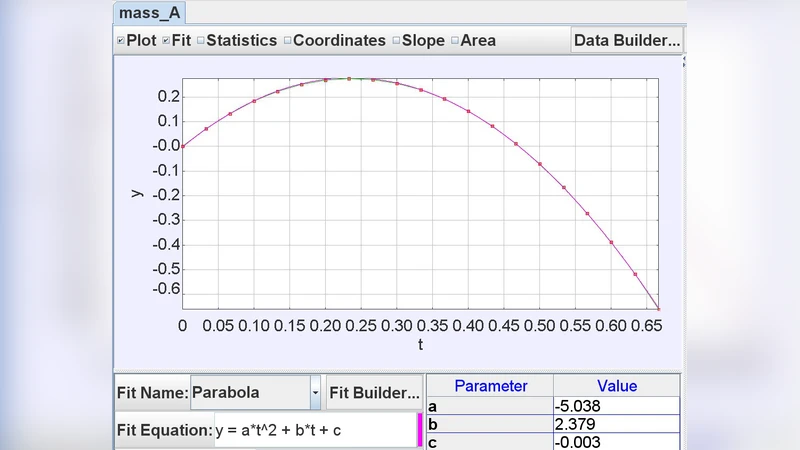
Tracker enables students to import a recorded projectile video, mark the object’s position frame‑by‑frame, and automatically generate horizontal and vertical displacement data. These data are plotted, and standard kinematic equations (x = v₀ cosθ t, y = v₀ sinθ t − ½gt) are fitted to obtain initial speed, launch angle, and the effective gravitational acceleration. By juxtaposing the empirical trajectory with the theoretical curve, students can directly test intuitive hypotheses—such as “a larger launch angle reduces range”—and observe discrepancies that prompt deeper inquiry.
The instructional sequence consists of four stages: (1) observation of a self‑selected real‑life projectile video; (2) extraction of quantitative data using Tracker; (3) hypothesis formulation and verification through comparison of measured data with the idealized model; and (4) model refinement, where learners may introduce air resistance, variable initial speed, or non‑standard gravity to see how the model adapts. This cycle mirrors authentic scientific practice, turning model building itself into a learning objective rather than a mere demonstration.
Methodologically, the study employed a mixed‑methods design with pre‑ and post‑concept tests, self‑efficacy surveys, and semi‑structured interviews. An experimental group (n ≈ 30) received four weeks of Tracker‑based instruction, while a control group (n ≈ 30) followed a traditional textbook/lecture curriculum. Statistical analysis revealed a significant gain for the experimental cohort: post‑test scores rose from an average of 60 % to 78 % (≈ 18 % absolute improvement), whereas the control group showed only marginal change. Qualitative data indicated heightened motivation, a stronger sense of agency (“I can actually see the physics in action”), and improved data‑driven reasoning.
Limitations include variability in video quality (lighting, background, frame rate) that affected tracking accuracy, and differing levels of software proficiency among students, which introduced performance noise. The relatively short intervention period also precludes conclusions about long‑term retention.
In conclusion, coupling video analysis with computational modeling via Tracker proves to be an effective pedagogical strategy for projectile motion. It bridges the gap between abstract equations and tangible phenomena, corrects common misconceptions, and cultivates inquiry skills. The authors recommend further work on automated tracking enhancements, teacher professional development, and extending the approach to other mechanics topics such as pendulums and collisions to assess broader applicability.