Growing Multiplex Networks with Arbitrary Number of Layers
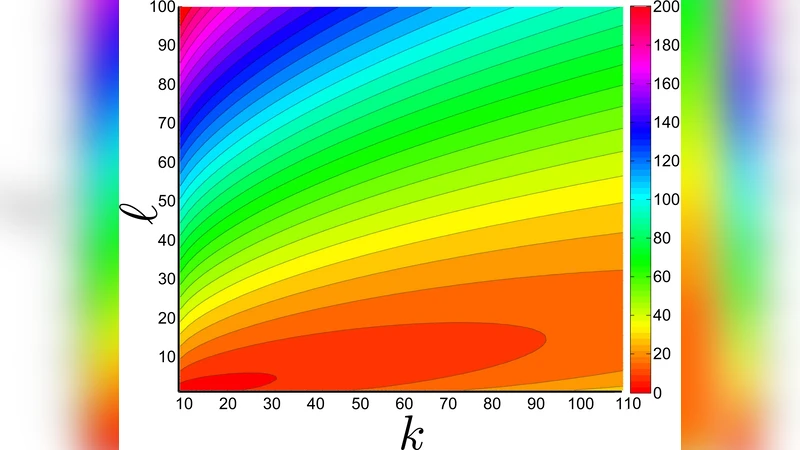
This paper focuses on the problem of growing multiplex networks. Currently, the results on the joint degree distribution of growing multiplex networks present in the literature pertain to the case of two layers, and are confined to the special case of homogeneous growth, and are limited to the state state (that is, the limit of infinite size). In the present paper, we obtain closed-form solutions for the joint degree distribution of heterogeneously growing multiplex networks with arbitrary number of layers in the steady state. Heterogeneous growth means that each incoming node establishes different numbers of links in different layers. We consider both uniform and preferential growth. We then extend the analysis of the uniform growth mechanism to arbitrary times. We obtain a closed-form solution for the time-dependent joint degree distribution of a growing multiplex network with arbitrary initial conditions. Throughout, theoretical findings are corroborated with Monte Carlo simulations. The results shed light on the effects of the initial network on the transient dynamics of growing multiplex networks, and takes a step towards characterizing the temporal variations of the connectivity of growing multiplex networks, as well as predicting their future structural properties.
💡 Research Summary
The manuscript tackles a fundamental gap in the theory of multiplex (multilayer) network growth. While previous studies have derived joint degree distributions only for two‑layer systems under homogeneous growth (the same number of links added per layer) and only in the infinite‑size (steady‑state) limit, this work extends the analysis to an arbitrary number of layers (M) and to heterogeneous growth, where each new node creates a possibly different number of links β₁, β₂,…, β_M in each layer.
Two attachment mechanisms are considered. In the preferential‑attachment case, the probability that an existing node receives a new link in layer k is proportional to its current degree in that layer. In the uniform‑attachment case, all existing nodes are equally likely to be chosen. For both mechanisms the authors write a generalized rate (master) equation for the expected number N_t(𝐤) of nodes with degree vector 𝐤 = (k₁,…,k_M) at time t. By normalising with the total number of nodes N(0)+t they obtain an equation for the fraction n_t(𝐤).
In the steady‑state limit (t → ∞) the time derivative disappears and the authors derive a recursion relation for n(𝐤). Using induction and generating‑function techniques they solve this recursion in closed form. The resulting joint degree distribution (eq. 6 and the equivalent factorial form eq. 7) contains products of beta‑function terms and combinatorial factors that explicitly involve the β_k parameters. When all β_k are equal, the expression collapses to the known two‑layer result, confirming consistency.
Beyond the steady state, the paper provides a full time‑dependent solution for the uniform‑attachment model. By introducing a multivariate generating function G(𝐱,t) and solving the associated partial differential equation, the authors obtain n_t(𝐤) for any initial condition (initial number of nodes N(0) and initial link counts L_k(0) in each layer). This analysis shows how the initial network influences the transient evolution and quantifies the rate at which the system forgets its seed.
The authors also compute several derived quantities of interest. The conditional expected degree of layer j given the degree k_i in layer i is shown to be 𝔼
Comments & Academic Discussion
Loading comments...
Leave a Comment