A Monte Carlo method for the spread of mobile malware
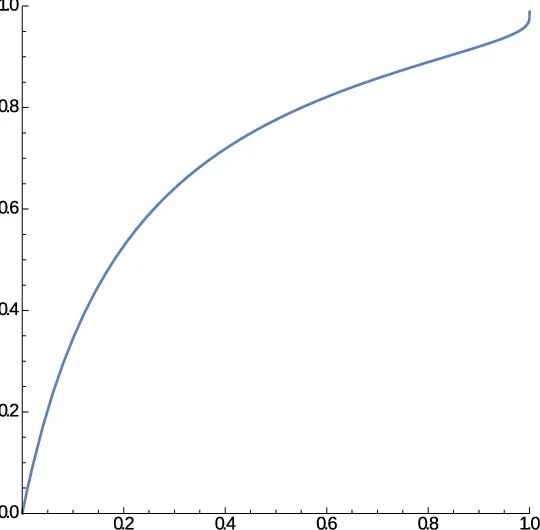
A new model for the spread of mobile malware based on proximity (i.e. Bluetooth, ad-hoc WiFi or NFC) is introduced. The spread of malware is analyzed using a Monte Carlo method and the results of the simulation are compared with those from mean field theory.
💡 Research Summary
The paper introduces a stochastic lattice‑based model for the spread of mobile malware that propagates through proximity‑based communication channels such as Bluetooth, ad‑hoc Wi‑Fi, and NFC. The authors argue that existing epidemiological models for mobile devices often ignore the mobility of devices, treating them as static nodes on a graph. To capture mobility in a tractable way, they place N devices on a two‑dimensional square lattice of size L×L and let each device perform a discrete‑time random walk, moving with equal probability to one of the four nearest‑neighbour sites at each time step. Periodic boundary conditions are used so that the walk occurs on a torus, avoiding the complications of agents leaving and re‑entering the simulation area.
Each device can be in one of two states: healthy (H) or infected (I). When two or more devices occupy the same lattice site, an infected device attempts to infect each healthy co‑resident with probability p. The infection attempts are independent for each infected‑healthy pair, so a healthy device surrounded by multiple infected neighbours receives multiple infection trials. Independently, each infected device recovers (becomes healthy again) with probability q at each time step. Thus the model is a SIS (susceptible‑infected‑susceptible) process with three control parameters: the device density d = N/L², the infection probability p, and the recovery probability q.
The authors first discuss the theoretical underpinnings. The full system is a Markov chain with 2ᴺ possible configurations, which is computationally intractable for large N. To obtain analytical insight they develop a mean‑field approximation. In this approximation a single “average” device experiences, on average, d·f contacts with infected devices per time step, where f is the fraction of infected devices in the population. The probability that the average device becomes infected in a given step is therefore p′ = 1 – (1 – p)^{f d}. Treating the device as a two‑state Markov chain with transition probabilities derived from p′ and q, they compute the stationary distribution. The resulting equilibrium infected fraction f_MF satisfies the transcendental equation
f_MF = 1 – q /
Comments & Academic Discussion
Loading comments...
Leave a Comment