Network Structure and Biased Variance Estimation in Respondent Driven Sampling
This paper explores bias in the estimation of sampling variance in Respondent Driven Sampling (RDS). Prior methodological work on RDS has focused on its problematic assumptions and the biases and inefficiencies of its estimators of the population mea…
Authors: Ashton M. Verdery, Ted Mouw, Shawn Bauldry
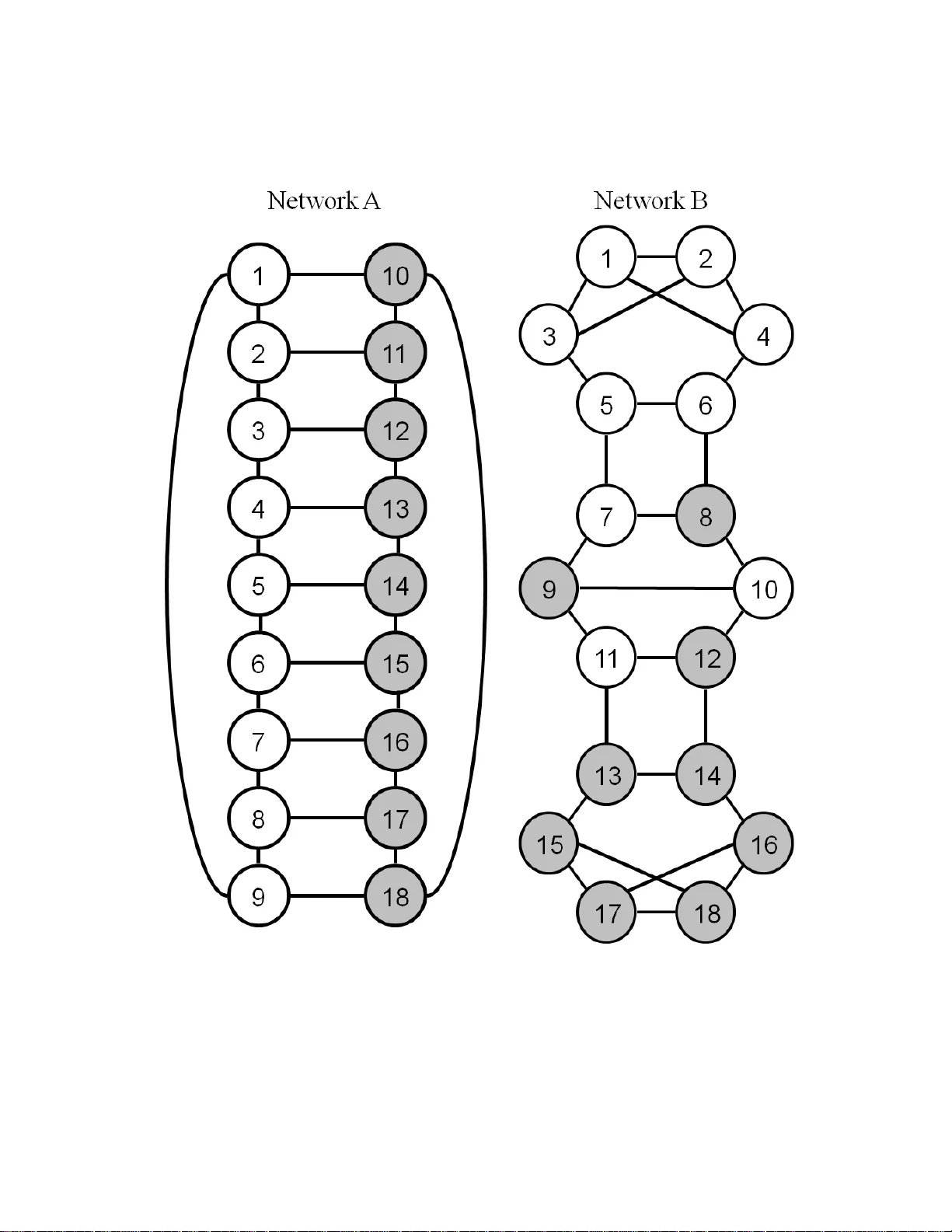
1 Network Structure and Biased Variance Estim ation in Respondent Driven Sampling* 10-20-2015 Ashton M. Verdery a Ted Mouw b Shawn Bauldry c Peter J. Mucha d * We thank Mason Porter for providing acce ss to the Facebook data set we use. We also thank participants at the 2012 Hidden and Hard to Reach Populations Conference, Jonathan Daw, and Charles Seguin for helpful comments on earlier drafts. We are grateful to the Carolina Population Center for training (T32 HD007168) and g eneral support (R24 HD050924) and to the Penn State Population Research Institute (R24HD041025). Peter J. Mucha was supported by the National Science Foundation (DMS-0645369) and by Award Number R21GM099493 from the National Institute of General Medical Sciences. This research uses da ta from Add Health, a program project directed by Kathleen Mullan Harris and designed by J. Richard Udry, Pe ter S. Bearman, and Kathleen Mullan Harris at the University of North Carolina at Chapel Hill, and funded by grant P01-HD31921 from the Eunice Kennedy Shriver National Institute of Child Health and Human Development, with cooperative funding from 23 other federal agencies and foundations. Special acknowledgment is due Ronald R. Rindfuss and Barbara Entwisle for assistance in the original de sign. Information on how to obtain the Add Health data files is available on the Add Health website ( http://www.cpc.unc.edu/addhealth ). No direct support was received from grant P01- HD31921 for this analysis. The content is solely the responsibility of the authors and does not necessarily represent the off icial views of an y aforementioned funding agencies. a. Corresponding author. Departme nt of Sociolog y and Criminology , 716 Oswald Tower, The Pennsylvania State University, University Park, PA, 16802, USA. Email: amv5430@psu.edu b. Department of Sociology , University of North Carolina at Chapel Hill, Chapel Hill, NC, USA. c . Department of Sociology , University of Alabama at Birmingham, Birmingham, AL, USA. d . Department of Applied Scienc e, University of North Carolina at Chapel Hill , Chapel Hill, NC, USA. 2 Network Structure and Biased Variance Estim ation in R espondent Driven Sampling Abstract This paper explores bias in the estimation of sampling variance in Respondent Driven Sampling (RDS). Prior methodological work on RDS has focused on its problematic assumptions and the biases and inefficiencies of its estimators of the population mean. Nonetheless, researchers have given only slight attention to the topic of estimating sampling variance in RDS, despite the importance of variance estimation for the construction of confidence intervals and hypothesis tests. In this paper, w e show that the estimators of RDS sampling variance rely on a critical assumption that the network is First Order Markov (FOM) with respec t to the dependent variable of interest. We demonstrate, through intuitive examples, mathematical generalizations, and computational experiments that current RDS variance estimators will always underestimate the population sampling variance of RDS in empirical networks that do not conform to the FOM assumption. Analysis of 215 observed university and school networks from Facebook and Add Health indicates that the FOM assumption is violated in every empirical network we analyze, and that these violations lead to substantially biased RDS estimators of sampling variance. We propose and test two alternative variance estimators that show some promise for reducing biases, but which also illustrate the limits of estimating sampling variance with only partia l information on the underlying population social network. Keywords Respondent Driven Sampling, Network Sampling, Sampling Variance, Social Networks, Markov Chains 3 Network Structure and Biased Variance Estim ati on in RDS Respondent driven sampling (RDS) is a popular means of sampling difficult to survey populations. The ISI Web of Science database currently tags 642 academic articles with RDS listed as the topic [1]. These papers have been cited 10,217 times by 4,897 unique articles. A search of the NIH RePORTER database shows that the National Institutes of Health has awarded more than $180 million to 448 projects and subprojects with “respondent driven sampling” a s a topic [2] . Much of this popularity owes to the fact that RDS is a cost effective and rapid means of sampling hard to reac h populations, which have received increased a ttention across the social and health sciences. There are two key components to the RDS approach. The first concerns sampling and recruitment, where respondents themselves are asked to find new survey participants through their social network connections with members of the target population, which are tracked with anonymous codes or c oupons [3] . This is encouraged through a dual incentive structure where recruiters are paid for participating in the study and for recruiting others. The second component of RDS is inferential. Recruitment throug h social networks is complemented by a set of estimation techniques. Many of the estimation techniques used in RDS derive from the mathematics of random walks on graphs [4 – 6], because when RDS sampling and recruitment conforms to theoretical assumptions it mimics a simple random walk on an undirected, connected graph [7 – 9]. Under ideal conditions [10 – 12], RDS estimators of the population mean are asymptotically unbiased and generalizable to the population of interest, even absent a conventional sampling frame [7,13]. 4 In this paper, we focus on an aspect of RDS inference that has received only limited attention in the literature to date: variance estimation. Most prior work on RDS inference focuses on estimating population means. Some have noted that RDS assumes sampling properties that are not followed in practice (e.g., non-branching recruitment, sampling with replacement, accuracy of degree reporting, an undirected network), which can lead to substantial biases [10,13 – 16]. Others have evaluated the precision of RDS mean estimates, or, more precisely, the variance in the sampling distribution of mean estimates ( “sampling variance” [17]). An important recent finding is that RDS mean estimates may exhibit very high sampling variance compared to simple random sampling (SRS), even when assumptions are met [18]. This is an alarming finding for practitioners who typically collect only one sample, because their mean estimates ma y be fa r from the population mean, even if the average va lue from repeated sampling would converge to the population parameter. Prior work has not thoroughly addressed the accuracy of RDS estimates of sampling variance, however. There are two commonly used estimators of sampling variance in RDS, known as the Salganik bootstrap estimator (SBE) [19], which uses a bootstrapping procedure to obtain variance estimates, and the Volz-Heckathorn estimator (VHE), which obtains variance estimates algebraically [7]. These approaches are quite similar, as both attempt to account for sample-induced correlations between cases that are close together in the referral network [14]. Such correlations lead the sampling variance of RDS to be larger than what would be obtained via SRS, yielding design effects greater than one, much in the same way that the design effects of cluster-based sampling increase as a function of intra-cluster correlations between units [20]. It is possible to obtain an 5 exact variance estimator for random walks by incorporating data on the entire population’s social network structure to account for these correlations [6]; we refer to this exact estimator as the Bassetti and Diaconis estimator. However, the RDS variance estimators lack data on the population network – they have only a sample – and as such need to approximate it. With a poor approximation, however, these variance estimators will be biased. To date, despite attention to the genera l issue of sampling variance in RDS, the actual estimators of sampling variance used by researchers have escaped evaluation. The most thorough prior treatment was by Neely [14], who diagnosed fundamental similarities between the SBE and VHE and limitations of both. Only two prior works have explicitly considered biased variance estimates in RDS [14,18]. I nitial inquiries suggest that researchers should be wary when reporting confidence intervals and hypothesis tests based on commonly used RDS variance estimators. One study used simulated sampling and found that the SBE underestimates the empirical sampling variance using a set of school-based social networks [18], and two additional studies report that known population means are frequently much larger than the upper bounds of confidence intervals produced using the SBE [21,22]. However, the generality of these findings is uncertain. Whether they are limited to the cases studied or are endemic remains an open question. In general, the sampling variance of random walks on graphs, and by extension other chain referral methods like RDS, depends on the specific network structure of the population under study which determines the closeness of nodes in the network, and, hence their covariance [6], and researchers do not know how closely the VHE or SBE can approximate it [14]. Because of this, it is important to assess why the 6 RDS variance estimators mig ht not reflect the population sampling variance, and whether this is a general problem or one that is primarily confined to specific types of “problem” networks. In this paper, we diagnose when and why the current RDS variance estimators are biased and assess the generality of that bias across different type s of networks . We build on Neely’s [14] observation that both the SBE and the VHE rely, at a fundamental leve l, on a First Order Markov (FOM) assumption. This assumption holds that RDS recruitment can be modeled as a FOM process on the nodal attribute of interest, where transitions between states depend solely on the prior state and not a higher order sequence of prior states [23]. It is a convenient assumption for estimating RDS sampling variance, because a single RDS sample consists of a sequence of observed case s rather than the whole (population) network. Though the FOM assumption allows the VHE and SBE to estimate sampling variance from RDS sample data, researchers have not evaluated whether it is justifiable or assessed the potential consequences of its violation. We organize the remainder of the paper as follows. We first provide a technical discussion of variance estimation in link tracing samples. We next extend this to RDS, wherein we explain the FOM assumption. We then offer two intuitive and general examples which demonstrate the VHE is biased when the FOM assumption is unwarranted. The first of these is a proof of concept and demonstrates the limitations the FOM assumption places on network structure. The second offers a simple model of correlated homophily which shows the VHE underestimates sampling variance whe n the FO M assumption is incorrectl y a pplied, a problem which is li kely to be quite general, at least whenever homophily based on an unaccounted for factor is present. After this, we 7 test five variables in 215 empirical social networks for violations of the FOM as sumption. We find that it is violated in every case for the full network data. However, when simulated samples are drawn from these data, the se samples pass the test for FOM in the majority of cases. These results mean that, were a rese archer in the field to have collected one of these simulated samples, she would not know, on the basis of the data collec ted, whether the RDS sampling variance estimators a re likely to be biased. A fact which we confirm with our next set of analyses wherein we test whether sample-level FOM violations indicate especially poor estimates of the sampling variance (we find that they do not). This is a grave situation for RDS, whose mean estimators are known to exhibit high-sampling variance, beca use it indicates that researchers are unable to detect situations where mean estimates would have high variance and produce correspondingly large confidence intervals and other indicators of statistical uncertaint y . Finall y, we propose and test two modifications to the VHE that account for the branching structure of RDS data and higher-order Markov transition matrices and afford closer approximation of the actual RDS sampling process. These modifications improve sampling variance estimation in RDS, but they do not offer a complete solution. This paper contributes to the literature on drawing inferences from network sampling designs by demonstrating that RDS sampling variance estimators are biased because their assumptions are in valid for man y social ne tworks and not just “unusual” or “difficult” ones. Our results also defy heuristic notions that situations where RDS estimates will exhibit high sampling variance can be easil y detected on the basis of observed homophily, perceptions of network choke points, or sample level indicators of whether the network is FOM. They show that homophily is not strongly correlate d with 8 biases in variance estimates, that even though the networks we examine do not have choke points they still have high sampling variance, and that sample level indications that the network is not FOM give little indication of the extent of bias in estimates of sampling variance. Taken together, we show that RDS researchers using currently available estimators are unlikely to know – a priori or even after RDS data has been collected – whether a given network would exhibit high sampling variance . Suc h uncertainty calls for further deve lopment of procedures for accurately estimating RDS sampling variance. 1. Sampling Variance Estimation in RWS vs. SRS We can calculate nodal sampling probabilities at any sample size under a simple Markovian random walk model, which has the features of random referral, non-branching recruitment and with-replacement sampling assumed by RDS under ideal conditions [7,24]. These can be used to express the exact sampling variance of random walk sampling (RWS). In this section, we contrast how this calculation differs from analog ous estimation in simple random sampling (SRS); we rely on a similar discussion in reference [14]. Let the matrix represent a population’s underl ying social network, which we assume comprises a single undirected connected component with at least one triangle. Ties between nodes and are indicated in cells and with a value of 1, while unlinked nodes have values of 0 in and . A person’s degree measures how many ties they have; the degree of person is given by , where is the population size. If is a square diagonal matrix with along the diagonal, the 9 Markov transition matrix is defined as , where . If is a vector containing probabilities of starting the random walk in each node of the network, then gives the probabilit y of being in each node after one random walk step through the network, and gives probabilities of the random walk being at each node in the network after steps conditional on the starting probabilities [ 5]. It is convenient to express the transition matrix in terms of its eigenvalue decomposition. Equation (1) presents in terms of a set of eigenvalues and corresponding eigenvectors: , (1) where is the th orthonormal eigenvalue of ordered in terms of magnitude , is the th eigenvector of a symmetrized version of , and is the diagonal matrix of inverse degrees described above (primes denote the transpose operator) 1 . A key feature of the eigenvalue decomposition of is that the largest eigenvalue , and its corresponding eigenvector has elements , where is t he steady 1 The eigenvectors of will not necessarily be orthonormal because is not s y mmetric. However, as suggested by others [4] , consider the matrix where is the diagonal matrix of inverse degrees and is the Markov transition matrix defined above. This matrix is symmetric, as each ce ll . can be decomposed as where is a diagonal matrix consisting of the eigenvalues of along the diagonal and zeros off diagonal, and is a matrix of ’s eigenvectors. and share the same eigenvalues. 10 state probability of being in node , and is the total number of edges in the network [4]. After expressing in terms of the eigendecomposition in Equation (1), we can find the transition matrix after steps: , (2) where is the th (right) eigenvector of (see note 3). Using Equation (2), we see that because the first eigenvector has elements [5]. Importantly, is a probability vector where each element represents the probability of being in node in the steady state equilibrium. This is an important result because it means that the probability vector does not depend on when gets large. This is the source of the argument that the particular seeds from which an RDS sample begins will not bias estimates from large RDS samples, provided the sample size remains a small fraction of the population [10]. Sampling variance in RWS differs from the sampling variance of SRS in two important ways. The first owes to non-uniform sampling probabilities. The effects of this are most clearly understood by considering the probability model unde rlying SRS in terms of the matrix algebra introduce d above. To get the sampling variance of SRS, w e first arrange members of the population into a vector with elements , and define as its mean centered version . We denote the sampling variance of mean estimates of from simple random samples as , which can be estimated with the population variance and sample size as , where indicates the sample siz e. If units are selected with given probabilities (in the 11 vector , where ) instead of with equal probabilities ( ), then the sampling variance is defined as: . (3) (Note that we present the matrix portion of Equation (3) in this way – breaking out the squared deviations into two pieces and taking the square roots of – to simpl ify alge bra presented later ). The most important thing to note about Equation (3) is that it uses population values of and , despite being an estimate based on a sample. However, with a sample, researchers almost never know these values, which must be approximated. Denote the elements selected in a sample of size as and their sampling probabilities as ; assume . Define the sample mean centered values of the elements selected in the sample as . The estimated sampling variance on the ba sis of the sample is then: (4) Equation (4) resembles the presentation in Equation (3), except that it now has sampled squared deviations (based on the sample estimate of the mean) and sampling probabilities (based on an estimate of these probabilities derived from the sample). Due to the Law of Large Numbers, Equation (4) provides an unbiased estimator of the sampling variance for SRSs where cases are se lected with probabilit y if is lar ge; in other words . In the case of SRS, sampling probabilities are uniform across units. In other sampling designs, however, can take on other values, and, indeed, in random 12 walk samples as per above, where indicates random walk sampling probabilities. The estimation of sampling variance in link-tracing designs also differs from the analogous estimator in SRS because if there is homophily – the tendenc y for individuals with similar attributes to be friends w ith one another [25] – on the basis of some variable, then individuals in the network who are connected will tend to have similar values of that variable. As a result, values of the variable of interest from two cases in a random walk will be correlated if the number of steps between them is small. This results in non-zero covariances between cases in link-tracing style samples, which must be accounted for when estimating sampling variance. It is important to remember that homophily can exist on any sort of characteristic, observed (e.g., race) or unobserve d (e.g., propensity to engage in risky behavior ; [26]). The variance of a RWS on a network can be analytically derived from the eigenvalue decomposition in Equations (2) and (3) [6]. First, working from Equation (3), we can express the population variance in terms of an orthonormal eigenvector basis , , where is a scalar constant that maps the th eigenvector of the transition matrix onto . Note that and because they are orthonormal. With this, we can denote the covariance between the th and th step of a random walk on as : , (5) where is the mapping of the variable onto the th eigenvector of the transition matrix, is the th eigenvalue of the transition matrix, and is the number of steps between the th and th cases sampled by the random walk [6]. In general the covariance 13 between two steps of a random walk is affected by all three components: , , and . Using Equation (5), we can write an estimate of the sampling variance of a size random walk sample as the average of all the possible covariances among the population that the walk could take on : . (6) When , this reduces to the estimated simple ra ndom sampling variance of , . Equation (6) highlights that the sampling variance of a RWS will be greater than the sampling variance of a same sized SRS if the variable maps onto the eigenvectors such that the contribution in the sum from the positive eigenvalues outweighs that from the negative eigenvalues. The other critical difference between Equations (6 ) and (4) is that the latter for SRS operates on a sample and estimates the sampling variance, while the former for RW S requires the underly ing social network and dependent variable data from the entire target population. A researcher in the field, for example, would be unable to use Equation (6) without knowing the entire social network connecting individuals in the target population, which will obviously not be the case with a hidden population. In the next section, we discuss the VHE, which is an approximation of the Bassetti and Diaconis estimator used by the RDS literature to estimate the sampling variance of a respondent driven sample absent complete knowledge about the underlying social network. 14 2. Variance Estimation in RDS In RDS the researcher does not have data on the network itself, only data on the sequence of recruitments that occurred and the characteristics of those recruited, i.e., a sample. We present the VHE in the same framework as equations (3) – (6 ) above. The key difference between the VHE and the exact estimator of Bassetti and Diac onis discussed above is that the estimator developed by Volz and Hecka thorn uses the patterning of recruitments and characteristics in the sample in place of the entire population network. Given a RDS sample on the population connected by the social network , let indicate the cases sampled from the values of the population. If is dichotomous, let the matrix be a matrix showing observed transition probabilities among values of between respondents and those they referred to the study. If is a row vector indicating the probability that the value of the th respondent (or th “step” in the interview) is 0 or 1, then we can estimate the Markov transition probability betwee n any two steps and of the survey using observed categories of the dependent variable rather than nodes in the network as we did in Equation (6) above: . (7) We can then estimate the covariance between the th and th steps by modifying Equation (5 ) as: , (8) where the superscript VHE on alpha and lambda indicate that we are using (the dependent variable projected into the orthonormal basis) and (the eigenvalues) from the eigendecomposition of sample observed category transition probabilities from the 15 matrix instead of the population node transition probabilities from the matrix . This yields the VHE as 2 : , (9) where is the RDS sampling probabilities. Using inst ead of equates to making the FOM assumption because it assumes the likelihood of transitioning between categories of the variable in question only depends on the category of the currently sampled node , one of several assumptions in RDS variance estimators described in detail in prior work [14]. Importantly, this is the 2 Connecting Equation (9) to the notation used in Volz and Heckathorn [7], we can write , where is the value of the th case selected mean-centered via the Volz-Heckathorn “RDS - 2” mean estimator, is the corresponding case’s sampling prob ability, is its degree, and is the estimated transition probability between ; this presentation can be found in reference [14]. Thus, is analogous to the estimated sampling variance of SRS (i.e., in equation 6), is the Volz-Heckathorn estimate of the sampling mean, and is the expected correlation betwee n sampled units if the process is FOM. 16 same assumption made by the other commonly used RDS variance e stimator, t he SBE [14], which we evaluate via simulation later in the paper. The SBE is defined in the literature [14,19] as using a bootstrap sampling procedure to simulate synthetic RDS chains from the FOM approximation embedded in the matrix . Using to approximat e the node-specific Markov transition probabilities is a simplification, as pointed out by its developers [7]. It may be a rea sonable one to make because the matrix is unknown; however, the validity of this assumption has rarely been examined or tested in the RDS literature [14]. In the remainder of the paper, we explore the implications of the FOM assumption in greater detail. 3. What Happens To the VHE when FOM is Violated? In this section, we provide several examples of what happens to RDS variance estimation via the VHE if the FOM assumption is violated. Illustration 1: Intuition We begin with an illustration that highlights how the relationship between sampling variance and sample size differs between FOM and non-FOM networks when using random walk sampling (RWS). This example is intentionally stylized so readers can see what is occurring and intuit the effects of network structure on the VHE of RDS sampling variance. Figure 1 shows two networks, A and B, where clear c ircles indicate nodes where and dark circles indicate nodes where . These networks share several features: they have the same size, density, and degree distributions. In addition, Figure 1 was intentionally constructed so that both networks would have identical 17 transition probabilities between categories of . This is important as it means that both networks have identical levels of dyadic homophily and that the y share the transition matrix used by the VHE; that is, . Because is identical in these two networks, they will produce identical estimates of RDS sampling variance based on the VHE as shown in Equation (9). -- Figure 1 about here -- However, there is one key difference between these networks: Network A is FOM with respect to while Network B is not. Th is difference can be described in terms of the conditional probability of the current node’s value given the values of prior nodes visited [23]: . (10) Equation (10) holds for network A, and therefore network A is FOM, while for network B it does not hold (see below for a test of whether a network is FOM). Does this difference in network structure matter for RWS sampling variance? Given that the VHE estimates of sampling variance for these two networks will be identical (because they share the same matrix ), if there is a large discrepancy between these networks in terms of the empirical RWS sampling variance (i.e., population sampling variance), then it suggests potential problems with the VHE. Figure 2 shows how large an impact network structure can have on the sampling variance of random-walk based designs and that the VHE cannot detect these differences. Because we know the complete network structure, we can calculate the exact sampling variance of RWS estimates for these two networks using Equation (6). Alternatively, we can approximate it using the variance in the distribution of proportion estimates produced 18 by repeatedly sampling the network with random walks starting from random points proportional to their stationary distribution probabilities a large number of times ; these approaches yield indistinguishable results. -- Figure 2 about here -- The striking result in Figure 2 is that while the sampling va riance in Network A (the FOM network) approximates to the sampling variance of SRS as the sample size increases, the sampling variance in Network B (the non-FOM network) is much higher at every sample size. More importantly, while estimates from the VHE accurately describe the sampling variance of network A, they fail to do so for network B (the hollow circles on the graph show the VHE estimates run on both networks A and B). In fact, the VHE estimates for network B are identical to those obtained for network A, which makes sense as both networks have the same first-order transition probabilities. In terms of design effects (the ratio of RWS sampling variance to SRS sampling varia nce, where 1 indicates they are identical), the design e ffect from sampling cases from Network A is 1.9997 while the same sample size in Network B y ields a design effect of 29.2601 (the magnitude of this difference is roughly constant across sample sizes). In substantive terms, we can say that mean estimates based on RWS samples with 5,000 cases from Network B will be more almost 15 times more variable than the same estimates from Network A, yet, even with perfect information, the VHE will estimate that they have identical sampling variance. This finding is problematic for RDS because it indicates that if the FOM assumption is violated, researchers may have no idea whether their estimates of sampling variance – and, hence, their confidence interva ls and h ypothesis tests – are accurate or not. 19 Illustration 2: Generality Though Figures 1 and 2 indicate that the VHE may produce estimates that are quite far from the population sampling variance of a network if the network is not FOM, one may wonder whether this result is produced by some feature of the two networks we considered. For instance, these are low degree networks and Ne twork B h as “choke points” (i.e., few paths between otherwise well connected clusters; see be low for a more formal definition), which makes it the type of network that RDS heuristics suggest should be avoided (though, it is an open question whether a re searcher or respondents themselves will know that the network of a hidden population has choke points in it and thus should not be surveyed with RDS). Because of these issues, we now turn to a more general illustration showing that the VHE will be downwardly biased – i.e., underestimate the population sampling variance – in all cases where there is homophily on an unobserved variable that is correlated with the variable of interest. Imagine a population composed of two groups categ orized by a dichotomous variable which are connected via a soc ial network but which exhibit hom ophily on . We wish to take a RWS or RDS sample to estimate the population proportion of . In addition, imagine there is a variable, , – unobserved b y the researc her – which organizes a portion of the social ties in this network. As has been well documented, homophily exists on a wide range of dimensions, some of which may not be observed or anticipated by researchers or even research participants [25,26]. In this case, Z indicates a propensity for forming cross-group ties: individuals for whom onl y have ties with those within their group, while those for whom have ties across groups . For 20 instance, if indicated a dichotomous measure of race, then might indicate an individual preference for interracial friends. Other examples that may generate a lack of conditional first-order independence are given on page 75 of reference [14] . For the sake of simplicity, assume an equal number of people of each value in each of the groups, and that the total degree of each combination is the same. 3 The number of friends among and between the different groups is depicted in Table 1. For example, there are friendships between people with different values of , while friendships among those with equal values are marked in Table 1 as either , , or , depending on the shared value and the whether the ego and alter share values and which value they have. Because the total degree is the same for each combination we have . -- Table 1 about here -- The transition matrix can be written as , where and . represents a situation where there is heterogeneity in the level of dyadic homophily on . Individuals with form cross friendships, 3 Both of these assumptions can be relaxed without affecting the conclusions derived here. For example, we can allow for different numbers of pe ople in each of the combinations and we can allow the degrees to vary . We have tested numerical examples under a variety of conditions (available upon request). The fundamental conclusion is the same, namely that homophily on an unobserved variable that is correlated with the dependent variable will lead to a biase d VHE. 21 while those with do not. Here can represent anything that causes heterogeneity in mixing between s. In contrast to the population transition matrix , the VHE estimates sampling variance using the sample estimated transition matrix as a function of the friendship propensities and the size of each group, , where . A critical result is that and have different ei genvalues. Because it is dimension two, has onl y two which are when ordered by size. By contrast, has four eigenvalues which are when ordered by size. Recalling Equations (5) and (6), for the VHE to accurately estimate the sampling variance of via a random walk based approach like RDS, the second largest eigenvalues of these and would need to be equivalent. However, the y are not, which means that when a correlated unobserved variable structures the homophily on , the VHE will not accurately estimate sampling variance. In fact, we can make a stronger claim in this case. Because for all nonzero s and s, we can say that the VHE will alway s underestimate the true sampling variance with this kind of network structure. This is a general result that compliments the intuition provided in Figures 1 and 2. There we showed that a random walk on a FOM network will mix more slowly than a random walk on a network with a hi gher order Markovia n structure, but that the VHE will not be able to detect these differences. Slower mixing results in higher covariances between any two steps of a RWS or RDS sample dr awn from that network, and, thus, higher sampling variance of mean e stimates and larger 22 design effects. However, the inability of the VHE to detect these difference s – it s biasedness – means that researchers will understate their uncertainty. Illustration 3: Computational Examples We now provide two concrete examples based on this illustration to demonstra te the effect of homophily on correlated unobserved variables. For the first example, let , and . In both transition matrices, the observed homophily between groups is identical; that is, 16.7% of friendship ties are between those with and those with . However, there is heterogene it y in the mixing between groups defined by the unobserved Z variable. Individuals in the first and fourth row of have no cross mi xing, while individuals in rows two and three ha ve twice the average mixing. In this example, the second largest eigenvectors are .804 and .667 for and , respectively, indicating that a random walk on will reach equilibrium slower than a random walk on . The standard deviation of a sample of 100 cases drawn from a random walk is 0.138 (design effect = 7.64) for and 0.110 (design effect = 4.88) for . In other words, using the dyadic transition matrix in place of – i.e., using the VHE – results in a substantial underestimate of the true sampling varia nce. As a second example, let and , and . The second largest eigenvectors 23 are .954 and .524 for and , respectively. The standard deviation of a 100-case sample is 0.219 (design effect = 19.12) for and 0.0887 (design effect = 3.15) for . In this second example, the observed homophily across groups is lower than what was shown in the first example; here, 23.8% of friendships are cross group. However, more full y structures the interaction of those within groups – i.e., heterogeneity in cross mixing – and this results in a dramatically higher difference in design effects for and (19.12 compared to 3.15, i.e., over 5 times larger). Summary of VHE Bias: The model of homophily on unobserved variables presented in this section is purposively simple in order to make analy tical results tractable. Nonetheless, the basic intuition should be clear: if there is clustering within categorie s of the observed dependent variables — such as is evident in matrix of the second example above — then the VHE, which relies upon the observed transition matrix between categories of the variable of interest, , will exhibit downward bias. The variance of a random walk is not just a function of dyadic homophily between different categories of the dependent variable, as both and have the same level of dyadic homophily but different design effects. In other words, it is network structure — not homophil y on the observed, focal variable per se — that affects design effects and biases RDS sampling variance estimator s downward [14]. Moreover, the examples presented here likely underestimate the role played by network structure as they focus on a si mple set of networks and a limited category transition matrix rather than a node level transition matrix that would be found in a real network. Indeed, the sampling variance of our computational examples could be 24 correctly estimated by making a Second Order Markov assumption, but real world networks are unlikely to conform to that assumption as we ll. B elow we test a modification to the VHE based on a second order assumption and show that while it frequently outperforms the classic VHE, it still does a poor job capturing the sampling variance of simulated RDS in empirical networks. The fundamental point of this section was to show that if the FOM assumption is violated, as it is by the case of homophily on an unobserved variable, then the accuracy of the VHE derived estimates of RDS sampling varianc e are indeterminate, and will be downwardly biased under rather general conditions. As illustrated in the these examples, unbiased RDS variance estimators are predicated on the network being well described by homophily on a single observed category, and they are of little use when there is heterogeneity in the mixing among members of the groups defined by those ca tegories. We now consider empirical data to evaluate the generality of these problems. 4. How often is FOM violated in empirical networks? In this se ction, we ask whether researchers should g enerally expect networks to be well described by homophily on a single dimension, or, more specifically, how often they should expect the FOM assumption to be violated. The RDS literature has not explored this idea since its foundation [3]. We test the FOM assumption in 215 heterogeneous empirical networks drawn from two separate datasets. We then outline the issues faced by the two most used RDS variance estimators – the VHE and the SBE – when they are applied to networks that violate FOM, as we find that most empirical networks do. 25 Data, Methods, and Measures Much prior methodological work in RDS has used simulated data [7,10,27] ; however, it is challenging to accurately simulate al l structural fea tures found in empirical networks [28,29]. Because of this, we use data from the National Longitudinal Survey of Adolescent Health (Add Health) [30] and the Facebook 100 datasets [31 – 33]. These networks have been used in simulation based studies of network sampling performa nce [11,18]. In all networks, we restrict our analysis to individuals in the largest weakly connected components, and, in the Add Health data, we ignore the directionality of ties and treat all nominations as rec iprocal. We use 115 networks from Add Health and 100 from the Facebook data set for a total of 215 empirical networks. In the Add Health networks, we test whether the FOM assumption holds for the following three dichotomous variables: race ( ), gender ( ), and sports participation ( ). We look at the validity of the FOM assumption in two variables in the Facebook data: gender ( ), and class year ( ). These data are faithful to real world network patterns [34,35]. More importantly, they contain a diversity of network structures, which makes them excellent candidates for assessing the credibility of the F OM assumption in empirical networks and allows us to overcome criticisms that have plagued prior simulation work in RDS, namely that the empirical networks studied were too sparse, small, or contained “choke points” . While these properties may characterize some of the Add Health networks, the Facebook networks we examine are not so limited. The best measure of choke points in a network is the average number of node independent paths. In any connected c ompone nt, a set of nodes exists that, if removed, would disconnect that component. For a chain referra l 26 strategy to pass from one side of this nodal cutset to the other, it must pass throug h a node in this set. Menger’s theorem [36] proves that the number of node independent paths in a graph is equal to the size of the smallest nodal cutset, which has been use d to define the structural cohesion of a network [37]. We measured the numbers of node independent paths in the symmetrized largest connected components of the Add Health and Facebook networks used in this paper. The Facebook networks studied had an average number of node independent paths of 30.633 (with a range of 11.970 to 62.225), while the numbers in Add Health were smaller on average (mean of 4.884 with a range of 1.042 to 7.138) 4 . These macro-structural features, in addition to the high average degree ( , ), su ggest that we study a substantial range of networks that are not limited by the heuristic notion of choke points 5 . The Facebook networks we examine are also quite large, orders of magnitude larger than the Add Health networks. 4 Owing to the size of these networks and the computational complexity of calculating the number of node independent paths amongst all dyads in a network, we estimate the number of node independent paths in each network based on random samples of 10,000 dyads using maximum flow algorithms on the complete network. This provides asymptotically unbiased estimates. 5 Other relevant statistics are a s follows. The largest connected components in the Facebook networks ranged in size from 388-16,611 with a mean of 4,701. In Add Health, these numbers were 52-1,610 with a mean of 488. The proportions female in the Facebook networks ranged from 0.24-1.00 with a mean of 0.54, while the proportions freshmen in these networks ranged from 0.14-0.46 with a mean of 0.28. In Add Health, 27 The definition of a FOM process is as follows (see Equation 10 above): [23]. Given this, a sufficient condition that satisfies that the network is not FOM is: (11 ). By sufficient condition, we mean that if the preceding equation is true, then the network is not FOM. However, note that because this is only a sufficient condition, a failure to satisfy the preceding equation does not guara ntee that the network is FOM. This makes it a conservative test: in cases where Equation 11 does not hold (i.e., the quantities are equal), the network may still not be FOM. We test whether Equation 11 holds by estimating the following ordinary least squares regression with robust standard errors for each of the variables of interest in each of the networks from the Add Health and Facebook data sets: (12) where is the proportion of an ego’s alter’ s alters with Y =1, while and are dichotomous indicators of whether ego’s or alter’s Y =1, respectively. Note that we include ego himself as one of ego’s alter’s alters, which suffices to re tain ego’s alters who lack alters (i.e., pendants) in the sample, and which makes sense for the with- replacement process we study here. The resulting regression model thus contains one observation for each edge in the network (or referral in the sample, depending on whether the proportions female ranged from 0.01-0.69 with a mean of 0.54, while the proportions white ranged from 0.01-0.95 with a mean of 0.58, and the proportions participating in sports ranged from 0.28-0.95 with a mean of 0.56. 28 the analysis is conducted at the population or sample level, see below). Though each ego will have several alters in the data, and we make use of eve n more a lters’ al ters in our definition of the dependent variable, the use of robust standard errors reduces concerns about clustering of the data. The sufficient condition shown in Equation 11 is true if the estimated coefficients for and are not jointly equal to 0, which we evaluate with the F-test of joint significance. Our null hypothesis is that the sufficient condition shown in Equation 11 is untrue – i.e., that . While this does not guarantee that the networks are FOM, in cases where this test indicates we should reject the null hypothesis it means that the network is unlikely to be FOM because the current state depends on the prior state as well as how that state wa s reached. In addition to testing the FOM assumption in the complete networks, we also test it in RDS samples of size 200 on those networks conducted with replacement from a single seed drawn at random from the equilibrium distribution, because this is the type of data that a researcher who had collected a single sample might possess. We allow branching to occur where the probabilities of referring 0, 1, 2, or 3 new respondents in RDS are 1/3, 1/6, 1/6, and 1/3, respectively. Because this is the approac h used in an influential past study [18], we focus on these results 6 . We conduct 500 simulated RDS 6 We also tested variants where we allow branching with the same probabilities as above, but the samples are conducted without replacement, and where we do not allow branching (both with and without replacement). We do not present these results but they did not alter our conclusions of substantial biases in the VHE and SBE. 29 samples in each of the 215 Add Health and Facebook schools, storing the relevant variables of interest. After testing for FOM violations in the se sampled network data, we then summarize some of the problems that the VHE a nd SBE estimators exhibit when applied to empirical network data. In each sample, we calculate the predicte d proportion of Y via the Volz and Heckathorn (i.e., the “RDS2 estimator”) e stimator of the mean , where d indicates degree [14,38]. We define the “ population sampling variance ” as the variance of the distribution of mean estimates obtained ove r simulated samples in that network (which is approximately equal to what would be obtained via Equation 6 but is computationally feasible for larger networks); in other words, , (13) where r index es the simulated replication of the sample (i.e., we simulate 500 replication samples in each empirical network). Defined in this way, the population sampling variance is the variance of the distribution of mean estimates across repeated samples. We use the population sampling variance to define the bias for the VHE and the other popular means of estimating sampling variance in RDS, the Salganik B ootstrap Estimator (SBE), which is (14) 30 where a value of zero indicates that the estimator is unbiased for that variable in that network 7 . The next quantity of interest is the ratio of the estimated sampling variance to the population sampling variance, which helps quantify how closely the VHE and SBE approximates the population sampling variance; thus, we also examine: (15) in each network. Finally, though it may be biased, there is the possibility that the VHE estimates of sampling variance are highly correlated with the population sampling variance and thus researchers could simply inflate the variance estimator by some factor. To examine this possibility, we consider the correlation of the mean va riance estimates in each network with the population sampling variance for each variable: . (16) Finally, we note that the results about whether the network or sample is FOM pertain to whether or not researchers should expect that RDS estimators of sampling variance are underestimates (network level ana l y sis) and can detect those cases (sample level analysis), as was demonstrated in the prior section. However, a different question is whether researchers can predict how large the underestimation bias in a given sample is likely to be rather than whether or not the estimators are biased toward underestimation. 7 To gauge the potential influence of outlier RDS variance estimates on the relationship between the estimated sampling variance and the population sampling variance, we tested using the median estimate across the 500 simulations rather than the mean (no t shown). This led to more severe biases and other problems than those reported in the manuscript. 31 Building from the literature reviewed in section 2, we know tha t the degree of bias is determined by higher order features of a network that is not FOM. Echoing a general sentiment in the literature, it may be that homophil y on the focal variable explains the degree of bias in cases where FOM is violated, so, to test this, we examine whether sample level homophily can predict levels of bias in cases where FOM is violated at the network level 8 . To do this, we compute the sa mple level homophily defined as the ratio of observed cross-group ties to expected cross-group ties in a given sample. We then regress bias on this measure of homophily to determine whether there is a meaningful a nd consistent relationship between bias and the homophily of a sample, which, if found, would indicate that the homophily observed in a sample ca n alert researchers to cases where bias is especially problematic. To facilitate interpretation, we focus on XY standardized regression models 9 , where both the independent and dependent variables are standardized to have a mean of 0 and a standard deviation of 1. In XY standardized regression, the interpretation of coefficients is natural: a one standard deviation change in X (sample level homophily in the ca se we test) leads to a standard deviation change in Y (sample level bias in the estimate of sa mpling variance in this case). To determine whether results owe to features of the networks or estimators we study or are general, we obtain parameters from regre ssion models with and without 8 A reviewer suggested this as a candidate explanation. 9 We obtained substantively equivalent results in models run without XY standardization, but we focus on the XY standardized results because of their simpler interpretation in this case. 32 absorbing indicators (i.e., fixed effects) for the ne twork studied and for both the VHE and SBE estimators. Results The results of our tests of the FOM assumption on the complete networks are shown in panel A of Table 2, while results of the FOM test on individual samples are shown in panel B. Columns 1-3 show the proportion of FOM tests where we reject the null hypothesis that the network may be FOM under standard social science thresholds based on the F-test of joint significance (p<0.05, p<0.01, and p<0.001). There are two key results. The first is that, for the complete networks (panel A), we reject the null hypothesis that the variable of interest in each network is FOM almost every single time. The one exception is a Facebook school where we could not calculate the FOM test for gender because the school is not co-educational. In other words, we find no cases where the fundamental premise of RDS variance estimation is a justifiable assumption. Worse still, the second key result in this table shows that, for the sa mple level tests (panel B), a near majority of the samples indicate the opposite, that the network may be FOM. This disjuncture indicates that it would be difficult for a researcher to know a posteriori whether the current methods of RDS variance estimation can be applied aptl y . Though a given sample may seem appropriately character ized as FOM [3], the network from which it was drawn is highly unlikely to be. We return later to this disjuncture and its consequences for RDS variance estimation. -- Insert Table 2 about here -- We next consider how problematic RDS variance estimation is when it is applied to empirical data whose complete network structure violates the F OM assumption. W e 33 look at the two most commonly used RDS variance estimators. Table 3 separate these estimators into two panels, with panel A showing the VHE a nd panel B showing the SBE. The first column shows the mean of the bias across the ne tworks for each dataset and variable (Equation 14). The key point to notice about this column is that both the VHE and the SBE estimates are negatively biased in all cases. The second column shows the mean of the ratios of average VHE and SBE estimates of sampling variance in a given dataset and school to the population sampling variance (Equation 15). Most of the variables understate the true variance substantially – in the Add Health schools, the VHE estimated sampling variance understates the empirical sampling variance of RDS by about 85% – but this number ranges from as low as 55% to as high as 90% in the Facebook datasets. The SBE performs better here on average, with ra tios of 0.2862 to 0.4421 in the Add Health schools and 0.1494 and 0.6544 in the Facebook ones. Finall y , the third column of Table 3 shows the correlations (Equation 16), which highlight that there are substantial deviations from direct positive correlation and tha t the relationships between the average RDS estimates and the population values differ substantially by variable and dataset. We argue that this variation in correlations implies that researchers cannot know a priori whether the VHE or SBE estimates of sampling variance are useful. -- Insert Table 3 about here -- The results in Table 3 are a conservative estimate of the problems with variance estimation in RDS. This is because they average, respectively, all VHE and SBE estimates across 500 RDS samples conducted in each school, which may paint an unrealistic picture of the practical utility of these estimators. Because researchers typically only collect one sample, we now turn to Figure 3 which shows box plot s of the 34 distribution across networks of the coverage rates by dataset, variable, and estimator (VHE vs. SB E) . A given network’s c overage rate is defined as the proportion of cases where the population mean is in the range , i.e., within the estimated 95% confidence interval. In SRS, the coverage rate is expected to be 0.95, but, as Figure 3 shows, the coverage rate for the VHE is substantially lower, and we see substantial variability in the distributions by data set and variable. For example, the “FB Fr e sh man ” variable shows that, on average, the 95% confidence interval for the VHE estimates of the mean proportion of freshmen contained the true mean in only 36.5% of the networks under study. This is substantial failure of confidence intervals for RDS. Beyond the poor coverage seen across all of the variables, a secondary point conveyed by Figure 3 is that the SBE genera ll y outperforms th e VHE. -- Insert Figure 3 and Table 4 about here – With Table 4, we return to the disjuncture between population-level failure of the FOM test and sample-level passing of it that we noted in our discussion of Table 2. A natural question to ask is whether – a posteriori – a researcher can test her sample for FOM violations and discern whether the RDS variance estimators are like l y to be biased. We split Table 4 into two panels: panel A shows the ca ses where the samples in Table 2 were found to not be FOM, while panel B shows those which ma y be FOM. The columns show the data set and variable combinations. Within each pa nel, we present the most relevant statistics averaged samples within that panel: the empirical design effect calculated from the population sampling varianc e in Equation 13 (“Mean empirical DE”), the VHE and SBE estimated design effects (“Mean VHE/SBE estimated DE”), a nd the coverage rates from both estimators (“Mean VHE/SBE 95% coverage rate”). The 35 empirical design effects are generally smaller in the samples that may not be FOM ; however, this is not true for the FB Freshman variable. However, the estimated DEs, using either the VHE or the SBE, do not appear a ppreciably closer to the population values (the empirical DEs). Neither do the coverage rates. Taken as a whole, these results suggest limited potential for sample-level FOM tests to be used as a diagnostic tool. Though researchers do not typically test for FOM violations, and while other, potentially yet- to -be-developed tests may be able to de tect FOM violations i n RDS sampled data, the most natural means of testing for FOM violations is unable to detec t them. The development of methods to detect such violations thus represents a key area for potential research on RDS variance estimation. Lastly, we estimated the parameters of XY standardized regression models for the relationship between sample level bias in the VH E and SBE estimators of RDS sampling variance and sample level homophily. These results are shown in Table 5. T he key points highlighted in this table are that the relationship between sample level homophily a nd bias a) are in different directions across variables, b) are generally of low magnitude and often not distinguishable from 0 despite the large sample sizes, and c) differ between the VHE and SBE estimators. The conclusion to be drawn from these tests is that sample level homophily cannot be used to charac terize the degree of bias in RDS esti mators of sampling variance. These results show that another feature of ne tworks that is commonl y assumed to explain biases in RDS sampling variance estimators, level of homophily, is not a reliable indicator of whether the results of a single sample are biased. -- Insert Table 5 about here -- 36 In this se ction we found that the FOM assumption is routinely violated in empirical networks, but that researchers will not know this from the results of a single sample. Building on arguments introduced in Section 2, this finding indicates that the RDS variance estimators in common use can be expected to substantially underestimate the population sampling variance that RDS is likely to exhibit. We also examined a related question that helps contextualize the importance of our FOM results: how much do these violations of matter? More specifically, we explored the extent to which the current estimators for RDS sampling variance, the VHE and the SBE, are likely to underestimate the true sampling variance in these empirica l networks. Our findings in this regard were surprising in two way s. First, Tab le 3 showed substantial downward biases in the VHE and SBE estimators of RDS sampling variance. It also showed little consistency across variables or data se ts in the magnitude of this bias, or other properties of the relationship between the estimated va lues and the population parameter. This is important because it highlights that the current techniques of RDS variance estimation are wildly inaccurate, which makes sense because they are premised on a faulty assumption . In other words, this section has provided suggestive evidence that the core assumption underpinning variance estimation in RDS (the FOM assumption) is violated in a large proportion of empirical cases, that RDS variance estimators are biased in such circumstances, and that researchers will have difficulty knowing when this will be the case. Section 4. Improvements to the VHE. 37 In this section, we test the performance of two improvements to the VHE. An easily diagnosable flaw in the VHE is that it fails to acc ount for the branching nature of RDS data. As shown in Equations (5) and (6) above, the VHE uses the distance between sampled individuals i and j , which in a random walk is equal to the number of steps between their appearances in the sample. However, in RDS, because of the branching structure of recruitment, these distance calculations will be more complicated. As such, the first estimator we introduce, based off of an earlier estimator developed by Neely in a prior investigation [14] , which we call the “VHE with branching correction” (VHEwbc for short), explicitly tracks the network distance between individuals, so, if i recruits j who recruits both k and l , we define the distance betwee n i and both k and l as 2. This approach should improve the VHE by more accurately calculating the covariance between cases. The second improvement we test is relaxing the FOM assumption in the VHE. The VHE assumes the network is FOM with respect to the variable of interest because it uses a transition matrix populated with the observed categorical tra nsitions in t he data. However, we can relax this assumption by making, e.g., a transition matrix which is populated with the observed three step transitions (i.e., a second order chain) ; that is how often we see three-step chains with the following sequences of values a) 0- 0-0, b) 0-0-1, c) 0-1-0, d) 1-0-0, e) 0-1-1, f) 1-0-1, g) 1-1-0, or h) 1-1-1. This transition matrix encodes the probabilities by which the most recent pair of observed values yield the next value; for example: , (17) 38 where , that is the proportion of observed sequences of values that went 0-0-0, and , and so on (note that 8 of the 16 elements in this transition matrix will be 0 by definition). In principle, one could further re lax thi s assumption to incor porate even high-order chains, but there is a tradeoff in terms of the number of such chains that one can observe in a single sample. As such, we test whether incorporating higher order Markov assumptions improves the validity of the VHE. In all case s, we also include the bran ching correction (i.e., VHEwbc); we call this estimator the “VHE with higher order Markov”, or VHEhom for short. We test two higher order Markov assumptions: first we focus on a 2 nd order assumption then we focus on a 3 rd order assumption. We also present results for the SBE which adds another dimension of comparison with three variants of the algebraically based VHE estimator. -- Insert Figure 4 about here -- Figure 4 presents the distribution of coverage rates across the different networks for the VHE estimates of RDS sampling variance, for the VHEwbc estimates, for the VHEhom estimates (note we did not calculate the VHEhom in the Facebook data set), and for the SBE estimat es . In most cases, the SB E outperforms the variants of the VHE we tested in most cases. This is most clearly true for estimates of percent female in both the Add Health and Facebook networks and the perce nt participating in sports in the Add Health networks . The SBE’s results are closer to the VHE variants for the race variable in the Add Health networks and worse than the VHEwbc estimator for the freshman variable in the Facebook networks. The proposed adjustments we consider generally improve the median coverage rate, but not substantially. Their effects also differ b y 39 variable and dataset. For the female variable in the Add Health networks, the VHEwbc improves estimates in all cases; the median, both quartiles and the outlier dots move closer to the desired 0.95. The VHEhom also improves estimates, if only marginally. For race in the Add Health networks, both the VHEwbc and the V HEhom outperform the VHE, but the VHEhom underperforms the VHEwbc. By contrast, for sports participation in the Add Health networks, the VHEhom substantially outperforms the VHEwbc. The se cases illustrate that neither approach is significantly be tter than the other. In the Facebook 100 networks, we did not test the VHEhom owing to the size of these networks and the computational complexity of enumerating higher order chains , but suspect that the same general conclusions will hold. However, these networks are still interesting because they show just how much of a difference the VHEwbc can make. For the gender variable, there is almost no difference between the VHE and the VHEwbc. However, for percent freshmen, the difference is enormous with the 25 th percentile estimate from the VHEwbc higher than the 95 th percentile whisker from the VHE. On balance , however, the proposed corrections do not appear to substantially improve the coverage rates as none of median estimates are close to 0.95. On balance, researchers would be less likely to make inferential errors using the SBE estimator than any of the VHE variants we tested, but we note that they would still make the wrong inference frequently . As a final illustration of the potential of these adjustments, we consider Figure 5. It plots differences betwe en population design effects and the estimated design effects for the first (i.e., the VHEwbc), second (the VHEhom), and third order Markov strategies (not shown previously) for one variable (race) across the different networks in the Add Health data. The VHEwbc estimates are primarily found in the top left, and are often 40 ab out an order of magnitude lower than the population DE. The VHEhom (2 nd Order) is slightly closer to the line of parity, but still substantially different. The 3 rd Order Markov estimates are more scattered, but do not appe ar to be much better than the 2 nd Order estimates. Indeed, some are worse. This is because there is less and less data the higher order Markov process we estimate, and consequently additional error may be introduced by using higher order estimates. The reason for this fact is that there are fewer cases corresponding to each type of sequence the higher we go; as the cells become sparse r, the precision with which they are estimated decreases. -- Insert Figure 5 about here -- To summarize our analyses of potential corrections to the VHE, we note that the proposed corrections – more accurately accounting for the branching structure of the RDS chain rather than assuming a simple random walk and attempting to estimate higher order Markov transition patterns – do generally improve the va riance estimation. However, the improvements we see are small and variable, a nd the y do not improve coverage rates to a desirable level. Nonetheless, these procedure s are a plausible first step toward improving estimates, and future work may improve on them. For instance, it may be that the eigensystem-based approach of the VHE fails with higher order Markov chains, but that a bootstrap approach more similar to the SBE would perform more desirably. We leave these questions for future work. More importantly, however, these results suggest the constraints that emerge from the ty pical RDS sampling methodolog y which focuses solely on recruiter-recruit links to the neglect of other relevant network data. We argue that a more fruitful approach may be to collect additional network data, either ego-networks [24,39 – 41] or more complete structures [11,42]. 41 Conclusions This paper has contributed to the literature on sampling hidden and hard to reach populations, and specifically Respondent Driven Sampling, by focusing on the iss ue of biased sampling variance estimation, which has only rarely been addressed to date [14,18]. Whereas prior work has documented biases in RDS mean estimators and the potential for RDS estimators to exhibit high sampling variance , the actual e stimation of sampling variance has received c onsiderabl y less attention. This is unfortunate for two reasons. First and most generally, if the RDS estimators of sampling variance a re biased, then researchers cannot trust confidence intervals and hypothesis tests derived from these estimators. This is a problem for researchers and policy makers see king to determine which populations have the highest disease prevalence, or whether observed changes in behaviors within a single population over time are due to actual changes or simply the variability that would be obtained throug h repeated sampling, to name two examples. Second, in the case of RDS, whose mean e stimators are known to exhibit high sampling variance, an inaccurate means of estimating sampling variance will be especially problematic if it is downwardly biased. Our re sults suggest that the sampling variance estimators in use for RDS data are downwardly biased, indeed, massively so. Similar conclusions on a smaller scale have been highlighted in prior work [14,18]. We also found that the SBE generally outperforms the VHE or any natural extension of it, if only by a marginal amount. Further, by focusing on the exact reasons for biases in the RDS variance estimators, this paper clarifies the heuristic notions prevalent in the RDS literature about 42 which types of networks will be “problem ca ses” where RDS should not be applied . Unfortunately, our results demonstrate that such “ problem cases ” are common. Through mathematical illustrations, computational examples, and e mpirical analysis of 215 observed social networks from two different data sources, we have shown that the ke y assumption made by current RDS variance estimators – the First Order Markov assumption – is frequently violated. In addition, our results extend those of prior work [14,18] and show that the variance estimators perform poorly in many situations, and that the VHE as well as the SBE suffers this limitation. We examined two modifications to the VHE in an effort to reduce these biases, but, though they both offered some improvement, neither fundamentally solved the problem. This paper has outlined new reasons that variance estimation in RDS needs more attention. Based on the performance of currently available estimators, a prudent researcher must wonder whether meaningful confidence inte rvals and h ypothesis tests can be constructed. Given the results presented here, this does not appear to be the case because the variance estimators are so bia sed as to be effectivel y meaningless. However, further work may correct these issues, and other approaches to RDS estima tion and diagnostic [10,13,24,39,40,43,44] and chain referral sampling [11,42,45 – 47] are being developed. These approaches, combined with renewed attention to the issue of estimating sampling variance in RDS, should pave the way for more acc urate samplin g variance estimation and a renewed emphasis on collecting additional network data as part of the sampling process. 43 References 1. Thompson Reuters. Web of Science. 2015. 2. NIH. Search Query: “respondent driven sampling” OR “respondent driven sample” OR “respondent - driven sampling” OR “respondent - driven sample.” In: RePORTER Database [Internet]. [cited 21 Sep 2015]. Available: http://tinyurl.com/m76bze2 3. Heckathorn DD. Respondent-driven sampling: a new approach to the study of hidden populations. Soc Probl. 1997;44: 174 – 199. 4. Lovász L. Random walks on graphs: A survey. Comb Paul Erdos Eighty. 1993;2: 1 – 46. 5. Lawler GF, Coyle LN. Lecture s on Contemporar y Probability . American Mathematical Soc.; 1999. 6. Bassetti F, Diaconis P. Examples comparing importance sampling and the Metropolis algorithm. Ill J Math. 2006;50: 67 – 91. 7. Volz E, Heckathorn DD. Probability based estimation theory for respondent driven sampling. J Off Stat. 2008;24: 79. 8. Goel S, Salganik MJ. Respondent driven sampling as Markov chain Monte Carlo. Stat Med. 2009;28: 2202 – 2229. 9. Gjoka M, Kurant M, Butts CT, Markopoulou A. Walking in Face book: A Case Study of Unbiased Sampling of OSNs. 2010 Proceedings I EEE INFOCOM. 2010. pp. 1 – 9. doi:10.1109/INFCOM.2010.5462078 10. Gile KJ , Handcock MS. RESPONDENT DRIVEN SAMPLING: AN ASSESSMENT OF CURRENT METHODOLOGY. Sociol Methodol. 2010;40: 285 – 327. 11. Mouw T, Verder y AM. Network Sampling with Memory A Proposal for More Efficient Sampling from Social Networks. Sociol Methodol. 2012;42: 206 – 256. 12. Abdul-Quader AS, Heckathorn DD, Sabin K, Saidel T. I mplementation and anal y sis of respondent driven sampling: Lessons learned from the field. J Urban Health-Bull N Y Acad Med. 2006;83: I1 – I5. doi:10.1007/s11524-006-9108-8 13. Gile KJ . Improved inference for respondent-driven sampling data with application to HIV prevalence estimation. J Am Stat Assoc. 2011;106. 14. Neel y WW. Statistical theory for respondent-drive n sampling [Internet]. Ph.D., The University of Wisconsin - Madison. 2009. Available: http://search.proquest.com.libproxy.lib.unc.edu/pqdtglobal/docview/305033289/abst ract/96BB2CDA89994EB2PQ/1 44 15. Lu X, Malmros J , L iljeros F, Britton T. Respondent-driven sampling on directed networks. Electron J Stat. 2013;7: 292 – 322. 16. Lu X, Bengtsson L, Britton T, Camit z M, Kim BJ, Thorson A, e t al. The sensitivit y of respondent-driven sampling. J R Stat Soc Ser -Stat Soc. 2012;175: 191 – 216. doi:10.1111/j.1467-985X.2011.00711.x 17. Groves RM, Fowler J r FJ, Couper MP, Lepkowski JM, Singer E , Tourangeau R. Survey methodology. John Wiley & Sons; 2011. 18. Goel S, S alganik MJ. Assessing respondent-driven sampling. Proc Natl Acad Sci. 2010;107: 6743 – 6747. 19. S alganik MJ. Variance estimation, design effects, and sample size calcula tions for respondent-driven sampling. J Urban Health. 2006;83: 98 – 112. 20. Kerr y SM, B land JM. The intracluster correlation coefficient in cluster randomisation. Bmj. 1998;316: 1455 – 1460. 21. McCreesh N, Frost S, Se eley J, Katongole J, Tarsh MN, Ndunguse R, et al. Evaluation of respondent-driven sampling. Epidemiol Camb Mass. 2012;23: 138. 22. W ejnert C. An Empirical Test of Responde nt-Driven Sampling: Point Estimates, Variance, Degree Measures, and Out- of -Equilibrium Data. Sociol Methodol. 2009;39: 73 – 116. doi:10.1111/j.1467-9531.2009.01216.x 23. R acca E, L aio F, Poggi D, Ridolfi L. Te st to determine the Markov order of a time series. Phys Rev E. 2007;75: 011126. 24. Merli MG, Mood y J, Smith J, L i J, Weir S, Chen X. Challenges to re cruiting population representative samples of female sex workers in China using Respondent Driven Sampling. Soc Sci Med. 2015;125: 79 – 93. 25. McPherson M, Smit h-Lovin L, Cook JM. Birds of a fea ther: Homophily in social networks. Annu Rev Sociol. 2001; 415 – 444. 26. Daw J , Margolis R, Verdery AM. Siblings, friends, course-mates, club-mates: how adolescent health behavior homophily varies by race, class, gender, and health status. Soc Sci Med. 2015;125: 32 – 39. 27. Nesterko S, Blitzstein J . Bias-variance and breadth-depth tradeoffs in respondent- driven sampling. J Stat Comput Simul. 2015;85: 89 – 102. doi:10.1080/00949655.2013.804078 28. S nijders TAB, Va n Duijn MAJ . Simulation for Sta tistical Inference in Dynamic Network Models. In: Conte R, Hegselmann R, Terna P, editors. Simulating Social Phenomena. New York: Springer; 1997. 45 29. Newman ME, Stro gatz SH, Watts DJ. Random graphs with arbitra ry degree distributions and their applications. Phy s Rev E. 2001;64: 026118. 30. Ha rris KM, H alpern CT, Whitsel E, Hussey J, Tabor J, Entzel P, et al. The national longitudinal study of adolescent health: Research desig n. Carolina Population Center, University of North Carolina Chapel Hill, NC; 2009. 31. Traud AL, Kelsic ED, Mucha PJ , Porter MA. Comparing community structure to characteristics in online collegiate social networks. S I AM Rev. 2011;53: 526 – 543. 32. Traud AL, Mucha PJ , Porter MA. Social struc ture of Facebook networks. Phys Stat Mech Its Appl. 2012;391: 4165 – 4180. 33. Tr aud A L, Frost C, Mucha PJ, Porter MA. Visualization of communities in networks. Chaos. 2009;19: 041104. 34. Mood y J. The structure of adolescent socia l relations: modeling friendship in dynamic social settings. 1999. 35. C louston SP, Verdery AM, Amin S, Gauthier GR. The structure of undergraduate association networks: A quantitative ethnography. Connections. 2009;29: 18 – 31. 36. Menger K. Zur all gemeinen kurve ntheorie. Fundam Math. 1927;1: 96 – 115. 37. Mood y J, White DR. Structural cohe sion and embedd edness: A hierarchical concept of social groups. Am Sociol Rev. 2003; 103 – 127. 38. Tomas A, Gile KJ . The effect of differential recruitment, non-response and non- recruitment on estimators for respondent-driven sampling. Electron J Stat. 2011;5: 899 – 934. 39. Lu X. Linked Ego Networks: I mproving estimate reliability and validity with respondent-driven sampling. Soc Netw. 2013;35: 669 – 685. 40. Yamanis TJ , Merli MG, Neely WW, Tian FF, Moody J, Tu X, et al. An e mpirical analysis of the impact of recruitment patterns on RDS estimates among a socially ordered population of female sex workers in China. Sociol Methods Res. 2013;42: 392 – 425. 41. Verder y AM, Merli MG, Moody J, Smith JA, Fisher JC. Respondent-driven Sampling Estimators Under Real and T heoretical Recruitment Conditions of Fe male Sex Workers in China. Epidemiology. 2015;26: 661 – 665. 42. Mouw T, Chavez S , Edelblute H, Verdery AM. Binational Social Ne tworks and Assimilation: A Test of the I mportance of Transnationalism. Soc Probl. 2014;61: 329 – 359. doi:10.1525/sp.2014.12192 46 43. Berchenko Y, Rosenblatt J , Frost SD. Modeling and Analy sing Respondent Driven Sampling as a Counting Process. ArXiv Pre pr ArXiv13043505. 2013; 44. Gile KJ , Johnston LG, Salga nik MJ. Diagnostics for respondent driven sampli ng. J R Stat Soc Ser A Stat Soc. 2015;178: 241 – 269. 45. Mouw T, Verder y A, Merli MG, L i J, Shen J . Sampling a Hidden Population Without a Sampling Frame: A Practical Application of Network Sampling with Memory. Boston, MA; 2014. 46. Merli MG, Verder y AM, Mouw T, Shen J, Li J. The New Face of Chinese International Migration: Heterogeneity of China’s Human Presence in Africa. Work Pap Duke Netw Anal Cent. 2014; 47. Verder y AM, Merli MG, Moody J. I nnovations in the Recruitment of Respondent - driven Samples for Improved Inference to Hidden Populations. 2015. 47 Figures and Tables Figure 1. Networks with same degree distribution and proportion cross racial ties. 48 Figure 2. Sampling variances on Networks A and B from figure 1, by method and sample size. Note: Like SRS, VHE produces identical estimates on networks A and B. For both networks, these estimates are identical to t he popu lation RWS sampling variance on A because network A is FOM. 0 .05 .1 .15 .2 .25 E s t i m at ed s am p l i ng v ar i an c e 0 50 100 150 Sample size RWS on B RWS on A VHE on A or B SRS on A or B 49 Table 1. Algebraic representations of friendships between Y|Z groupings. Alter values Y=0 Y=0 Y=1 Y=1 Z=0 Z=1 Z=1 Z=0 Ego Values Y=0 Z=0 D E 0 1 0 2 Y=0 Z=1 E F H 0 3 Y=1 Z=1 0 1 H F E Y=1 Z=0 0 2 0 3 E D Notes: Superscripts indicate no friendships in this cell because 1 and ; 2 and ; 3 and . 50 Table 2. Descriptive statistics of First Order Markov (FOM) tests on Add Health and Facebook Networks, by analysis level and variable. (1) (2) (3) Pr. p<0.05 Pr. p<0.01 Pr. p<0.001 Panel A) Complete network FOM tests Add Health Data Set Female 1 1 1 White 1 1 1 Sports 1 1 1 Facebook Data Set Female 0.99 1 1 Freshmen 1 1 1 Panel B) Sample level FOM tests Add Health Data Set Female 0.567 0.367 0.182 White 0.556 0.409 0.245 Sports 0.640 0.450 0.248 Facebook Data Set Female 0.212 0.088 0.023 Freshmen 0.300 0.182 0.084 Note: Pr. p<0.05, Pr. p<0.01, and Pr. p<0.001 indicate the proportion of networks in which the FOM test indicated we reject the null hypothesis that the network m ay be FOM. Note that in cases where the FOM test could not be calculated – e.g., non- coeducational schools or samples of only one gender – we considered this as indicating the network or sample may be FOM. 51 Table 3. Measures of the relationship between VHE and SBE estimates of sam pling variance and the population sampling variance. (1) (2) (3) Data Set and Variable Bias Ratio Correlation Panel A) VHE Results Add Health Female -0.0092 0.1631 0.6375 Add Health White -0.0235 0.1498 0.9183 Add Health Sports -0.0111 0.1416 0.3333 Facebook Fr e sh man -0.0496 0.0999 0.7851 Facebook Gend er -0.0025 0.4981 0.4151 Panel B ) SBE Results Add Health Female -0.0062 0.4421 0.6714 Add Health White -0.0215 0.2862 0.8380 Add Health Sports -0.0084 0.3868 0.4425 Facebook Freshman -0.0474 0.1494 0.7375 Facebook Gender -0.0012 0.6544 0.7380 Note: Bias shows the mean of the average deviations between the sample estimates and the population parameters across replications and networks. Ratio show s the average ratio of estimated sampling variance to the population param eter. Correlation shows the correlation between the average of the sample estimates of sampling variance in each network and that network’s population sampling variance. 52 Figure 3. Distribution across networks of coverage rates based on the VHE an d SBE estimators, by variable and data set. Note: The expected coverage rate across networks for SRS is .95 (thick dashed line). AH indicates Add Health data set; FB indicates Facebook 100 data set. VHE indicates the Volz-Heckathorn Estimator, and SBE indicates the Salganik Bootstrap Estimator. 0 .2 .4 .6 .8 1 Co ve r a g e r a t e , 9 5 % CI AH Fema le AH Nonwhi te AH Sports FB Female FB Freshm an VHE SBE 53 Table 4. Comparison of Design Effects, Estimated Design Effects, and Coverage Rates across samples that are not FOM or may be F OM, by data set and variable. Data Set and Variable AH Female AH White AH Sports FB Female FB Freshmen Panel A) Results on samples that are not FOM Number of samples not FOM 24,877 25,539 20,692 39,395 34,983 Mean empirical DE 7.906 24.697 9.921 2.856 60.260 Mean VHE estimated DE 1.302 3.590 1.816 1.450 11.035 Mean SBE estimated DE 3.568 4.364 3.488 1.821 10.454 Mean VHE 95% coverage rate 0.599 0.424 0.509 0.699 0.349 Mean SBE 95% coverage rate 0.803 0.426 0.715 0.863 0.398 Panel B) Results on samples that may be FOM Number of samples may be FOM 32,623 31,961 36,808 10,605 15,017 Mean empirical DE 9.386 28.185 11.441 3.045 51.756 Mean VHE estimated DE 1.392 1.908 1.323 0.769 4.836 Mean SBE estimated DE 4.322 4.869 3.935 1.929 8.568 Mean VHE 95% coverage rate 0.555 0.455 0.508 0.667 0.405 Mean SBE 95% coverage rate 0.785 0.588 0.734 0.861 0.505 Notes: There are 57,500 samples for the 115 Add Health schools per variable; there are 50,000 samples for the 100 Facebook schools per variable. All statistics are averaged across samples in each panel. 54 Table 5. XY Standardized Regressions of Sample-Level Biases in Variance Estimates using VHE and SBE Estimator s on Sample Level Homophily across the 5 Data S et /Variable Combinations Analyzed. VHE VHE w/fixed network effects SBE SBE w/fixed network effects Regression of variance estimate bias (standardized) for %: 1) female variable in Add Health a Sample homophily, standardized 0.228*** -0.095*** 0.230*** -0.006** [0.00] [0.00] [0.00] [0.00] R-squared 0.052 0.998 0.053 0.776 2) non-white in Add Health a Sample homophily, standardized 0.448*** -0.043*** 0.473*** 0.000 [0.00] [0.00] [0.00] [0.00] R-squared 0.201 0.997 0.224 0.982 3) sp orts participants in Add Health a Sample homophily, standardized 0.143*** -0.065*** 0.218*** -0.002 [0.00] [0.00] [0.00] [0.00] R-squared 0.020 0.996 0.047 0.927 4) female in Facebook b Sample homophily, standardized -0.324*** -0.229*** -0.055*** -0.002 [0.00] [0.00] [0.00] [0.01] R-squared 0.105 0.760 0.003 0.332 5) freshmen in Facebook b Sample homophily, standardized -0.023*** -0.136*** 0.098*** 0.001 [0.00] [0.00] [0.00] [0.00] R-squared 0.001 0.936 0.010 0.902 Notes: Standard errors in brackets. All regressions are based on XY standardized coefficients within estim ator and data set/variable so all variables have a mean of 0 and a standard deviation of 1; models with fixed network effects mean dumm y variables for each data set and network were absorbed by the model thereby removing network level differences. Constants not shown but all appro ximately 0 as would be expected in a XY standardized regression. *** p<0.001, ** p<0.01, * p<0.05. a All m odels using Add Health d ata contain 57,500 sim ulated samples. b All models using Facebook data contain 49,000 simulated samples. 55 Figure 4. Distributions across networks for coverage rates based on the VHE, VHEwbc, VHEhom, and SBE estimators, by variable and data set. Note: The expected coverage rate across networks f or SRS is .95. AH indicates Add Health data set; FB indicates F acebook 100 data set. VHE indicates the Volz- Heckathorn Estimator ; VHEwbc indicates the VHE with Branching Correction; VHEhom is the VHE with Higher Order Mar kov assumptions ; and SBE indicates the Salganik Heckathorn Estimator. The estimators are described in text. 0 . 25 .5 . 75 1 C o v e ra g e of 9 5% C o nf ide nce I nt er val s FB F r es hm a n FB F em al e AH Sp ort s AH N o nw h ite A H Fem a le VH E V H Ew b c VH Eho m S BE 56 Figure 5. Population RDS sampling variance vs. VHE estim ated sampling variance with branching correction under different Markov Order assum ptions, for Race in the AH data set. Notes: Both scales in the figure are design effect scales and are logged. Symbols in the graph are as follows: 1 - FOM assumption (VHEwbc in figure 4); 2 - Second Order Markov assumption (VHEhom in figure 4); 3 - Third Order Markov Assumption (not shown in figure 4). 1 2 3 1 2 3 1 2 3 1 2 3 1 2 3 1 2 3 1 2 3 1 2 3 1 2 3 1 2 3 1 2 3 1 2 3 1 2 3 1 2 3 12 3 1 2 3 1 2 3 1 2 3 1 2 3 1 2 3 1 2 3 1 2 3 1 2 3 1 2 3 1 2 3 1 2 3 1 2 3 1 2 3 1 2 3 1 2 3 1 2 3 1 2 3 1 2 3 1 2 3 1 2 3 1 2 3 1 2 3 1 2 3 1 2 3 1 2 3 1 2 3 1 2 3 1 2 3 1 2 3 1 2 3 1 2 3 1 2 3 1 2 3 1 2 3 1 2 3 1 2 3 1 2 3 1 2 3 1 2 3 1 2 3 1 2 3 1 2 3 1 2 3 1 2 3 1 2 3 1 2 3 1 2 3 1 2 3 1 2 3 1 2 3 1 2 3 1 2 3 1 2 3 1 2 3 1 2 3 1 2 3 1 2 3 1 2 3 1 2 3 1 2 3 1 2 3 1 2 3 1 2 3 1 2 3 1 2 3 1 2 3 1 2 3 1 2 3 1 2 3 1 2 3 1 2 3 1 2 3 1 2 3 1 2 3 1 2 3 1 2 3 1 2 3 1 2 3 1 2 3 1 2 3 1 2 3 1 2 3 1 2 3 1 2 3 1 2 3 1 2 3 1 2 3 1 2 3 1 2 3 1 2 3 1 2 3 1 2 3 1 2 3 1 2 3 1 2 3 1 2 3 1 2 3 1 2 3 1 2 3 1 2 3 1 10 100 E m p ir ica l d e sig n e f f e ct , lo g sc a le 1 10 10 0 VHE w ith br anching correction estim ate, log scale Accurate esti mate Markov Order Assump tion #
Original Paper
Loading high-quality paper...
Comments & Academic Discussion
Loading comments...
Leave a Comment