Symbolic Neutrosophic Theory
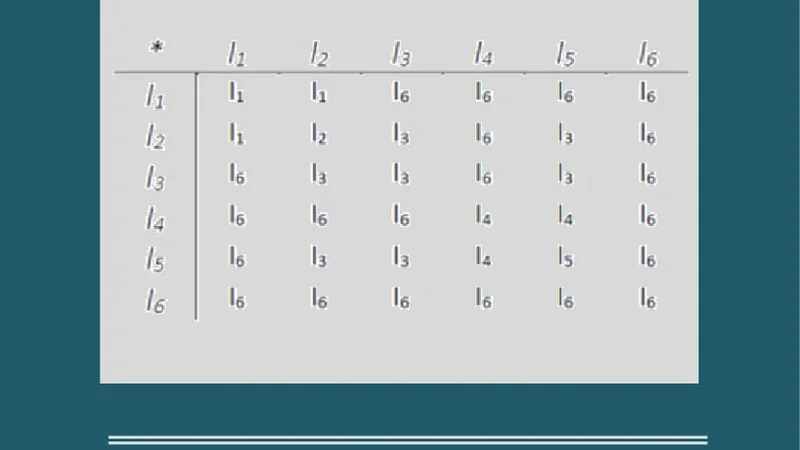
Symbolic (or Literal) Neutrosophic Theory is referring to the use of abstract symbols (i.e. the letters T, I, F, or their refined indexed letters Tj, Ik, Fl) in neutrosophics. We extend the dialectical triad thesis-antithesis-synthesis to the neutrosophic tetrad thesis-antithesis-neutrothesis-neutrosynthesis. The we introduce the neutrosophic system that is a quasi or (t,i,f) classical system, in the sense that the neutrosophic system deals with quasi-terms (concepts, attributes, etc.). Then the notions of Neutrosophic Axiom, Neutrosophic Deducibility, Degree of Contradiction (Dissimilarity) of Two Neutrosophic Axioms, etc. Afterwards a new type of structures, called (t, i, f) Neutrosophic Structures, and we show particular cases of such structures in geometry and in algebra. Also, a short history of the neutrosophic set, neutrosophic numerical components and neutrosophic literal components, neutrosophic numbers, etc. We construct examples of splitting the literal indeterminacy (I) into literal subindeterminacies (I1, I2, and so on, Ir), and to define a multiplication law of these literal subindeterminacies in order to be able to build refined I neutrosophic algebraic structures. We define three neutrosophic actions and their properties. We then introduce the prevalence order on T,I,F with respect to a given neutrosophic operator. And the refinement of neutrosophic entities A, neutA, and antiA. Then we extend the classical logical operators to neutrosophic literal (symbolic) logical operators and to refined literal (symbolic) logical operators, and we define the refinement neutrosophic literal (symbolic) space. We introduce the neutrosophic quadruple numbers (a+bT+cI+dF) and the refined neutrosophic quadruple numbers. Then we define an absorbance law, based on a prevalence order, in order to multiply the neutrosophic quadruple numbers.
💡 Research Summary
The paper presents a comprehensive development of Symbolic (or Literal) Neutrosophic Theory, which treats the neutrosophic components truth (T), indeterminacy (I) and falsity (F) as abstract symbols that can be refined into indexed forms (Tj, Ik, Fl). Building on the classical dialectical triad (thesis‑antithesis‑synthesis), the author extends the framework to a tetrad: thesis‑antithesis‑neutrothesis‑neutrosynthesis, thereby accommodating a distinct “neutral” stage in logical evolution.
A neutrosophic system is defined as a quasi‑(t,i,f) classical system, where t, i, f are not precise numeric values but quasi‑terms such as concepts or attributes. Within this setting the paper introduces neutrosophic axioms, a notion of neutrosophic deducibility, and a quantitative measure called Degree of Contradiction (or Dissimilarity) that evaluates how far two neutrosophic axioms diverge in the three‑dimensional (T,I,F) space.
The author then constructs (t,i,f) neutrosophic structures and demonstrates their concrete realizations in geometry (neutrosophic coordinates, distance, and angle definitions) and algebra (neutrosophic groups, rings, fields). A short historical overview of neutrosophic sets, numbers, and literal components precedes a detailed treatment of splitting the indeterminacy component I into multiple sub‑indeterminacies (I₁, I₂,…, Iᵣ). A multiplication law for these sub‑indeterminacies is proposed, preserving commutativity while allowing a hierarchy of influence among them; this enables the creation of refined neutrosophic algebraic structures.
Three neutrosophic actions—neutro‑transition, neutro‑combination, and neutro‑reversal—are defined together with their algebraic properties. The paper introduces a prevalence order on the symbols T, I, and F with respect to any given neutrosophic operator; for example, a common order T > I > F can be altered depending on context. This order governs how operators absorb or dominate other components, a principle that is later formalized as the absorbance law.
Further, the refinement of neutrosophic entities A, neutA (the neutrosophic version of A) and antiA (the negation) is explored, showing how each can carry distinct T, I, F contributions. Classical logical connectives are extended to neutrosophic literal logical operators and to refined literal operators, yielding a logical calculus capable of handling simultaneous truth, indeterminacy, and falsity in a single expression.
The paper culminates with the definition of neutrosophic quadruple numbers of the form a + bT + cI + dF and their refined counterparts. Using the previously established prevalence order, an absorbance law is formulated to dictate multiplication of these quadruple numbers: the component with higher precedence “absorbs” the lower‑precedence components, ensuring consistent results across complex expressions.
Overall, the work provides a unified symbolic framework that integrates neutrosophic concepts into logical, geometric, and algebraic structures. By treating T, I, and F as manipulable symbols with refined indices and by establishing quantitative measures of contradiction and precedence, the theory opens new avenues for modeling systems where uncertainty, inconsistency, and partial truth coexist—applications ranging from artificial intelligence and data fusion to the formal analysis of paradoxical or contradictory information.