More on Decomposing Coverings by Octants
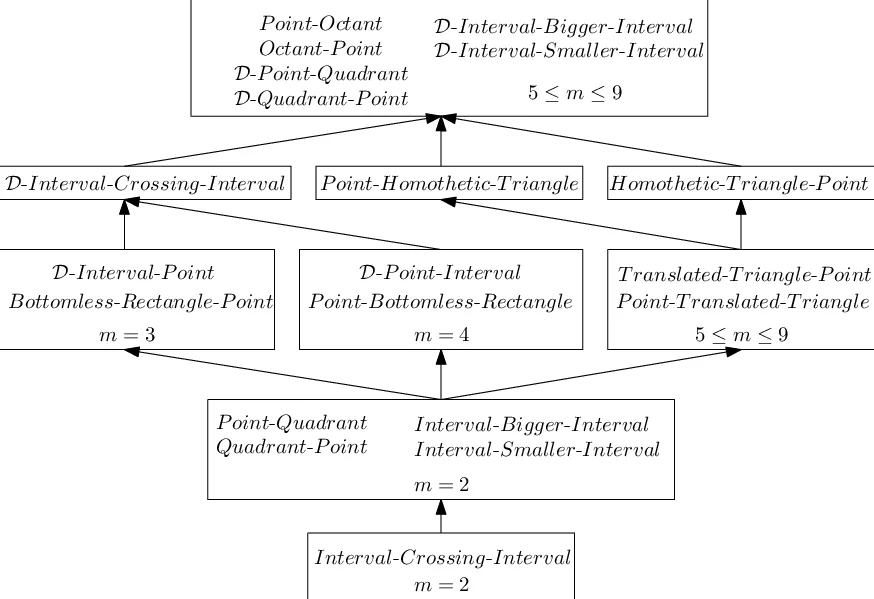
In this note we improve our upper bound given earlier by showing that every 9-fold covering of a point set in the space by finitely many translates of an octant decomposes into two coverings, and our lower bound by a construction for a 4-fold covering that does not decompose into two coverings. The same bounds also hold for coverings of points in $\R^2$ by finitely many homothets or translates of a triangle. We also prove that certain dynamic interval coloring problems are equivalent to the above question.
💡 Research Summary
The paper “More on Decomposing Coverings by Octants” investigates the problem of decomposing multiple coverings of point sets by translates of an octant in three‑dimensional space. An octant is defined as the set (−∞,x)×(−∞,y)×(−∞,z), and its apex is the point (x,y,z). The authors improve upon their earlier result, which showed that any 12‑fold covering can be split into two coverings, by proving that the constant can be reduced to nine. In other words, if every point of a finite set P⊂ℝ³ belongs to at least nine octants from a finite family F, then F can be partitioned into two subfamilies F₁ and F₂ such that each point of P is covered by an octant from F₁ and also by an octant from F₂.
The improvement is achieved by a careful modification of the original proof technique, which is based on a dual coloring formulation. The dual statement asserts that the points of P can be colored with two colors so that any octant containing at least nine points of P contains both colors. This two‑coloring problem is further transformed into a dynamic planar version: points arrive one by one, and after each arrival the current prefix of points must be two‑colored in such a way that any quadrant (the 2‑D analogue of an octant) containing at least nine of the already arrived points contains both colors.
To maintain this invariant, the authors construct, for each time step t, a forest Gₜ on the points that have arrived so far and a set Sₜ of “stair‑points” – a maximal antichain with respect to the partial order defined by the quadrant relation. Four operations are repeatedly applied whenever possible:
- Above – connects a newly appearing above‑point to a suitable stair‑point, making the above‑point “good”.
- Comparable – when two below‑points are comparable (one is northeast of the other), they are linked and the northeast point is promoted to the staircase.
- Incomparable – when four incomparable below‑points lie inside a wedge, they are paired (q₁–q₂ and q₃–q₄) and the middle two become stair‑points.
- Box – handles the case where no previous operation applies but two neighboring stair‑points have opposite “goodness” properties; a point inside the rectangle defined by them is linked to the right‑good stair‑point and added to the staircase.
Throughout the process four invariants are preserved: (i) all above‑points are already “good”, (ii) every stair‑point is “almost‑good” (it has a neighbor that already forces a two‑coloring), (iii) below‑points belong to distinct connected components of the forest, and (iv) the forest remains acyclic. The crucial observation is that a monochromatic wedge can contain at most eight points; therefore any wedge (or, equivalently, any octant) containing nine points must contain two points from the same tree component, which forces opposite colors in the final two‑coloring of the forest. Consequently the dynamic coloring succeeds for every prefix, establishing the nine‑fold bound.
In addition to the upper bound, the paper presents a lower‑bound construction. The authors exhibit, for any triangle T, a finite point set P such that in every two‑coloring of P there exists a translate (or homothet) of T that contains exactly four points, all of the same color. By intersecting octants with the plane x+y+z=0, this construction yields a 4‑fold covering of a point set by octants that cannot be split into two coverings, proving that the optimal constant m_oct satisfies 5 ≤ m_oct ≤ 9.
The authors also discuss the equivalence between the octant decomposition problem and certain dynamic interval‑coloring problems. In particular, the one‑dimensional version (intervals on a line) where any interval containing at least nine points must be bichromatic is shown to be essentially the same as the planar quadrant problem, reinforcing the robustness of the method across dimensions and geometric shapes.
Finally, the paper derives several corollaries for related geometric families: coverings by homothetic copies of a triangle in the plane, and coverings by “bottom‑less” rectangles (sets of the form (x₁,x₂)×(−∞,y)). Using the new bound m_oct ≤ 9, the authors improve previously known exponential bounds to polynomial ones, showing that any Ω(k^{5.09})‑fold covering by these shapes can be decomposed into k coverings. The work closes a substantial gap between known upper and lower bounds and suggests that the true value of m_oct may be linear in k, as conjectured in earlier literature.
Comments & Academic Discussion
Loading comments...
Leave a Comment