Design of an Alarm System for Isfahan Ozone Level based on Artificial Intelligence Predictor Models
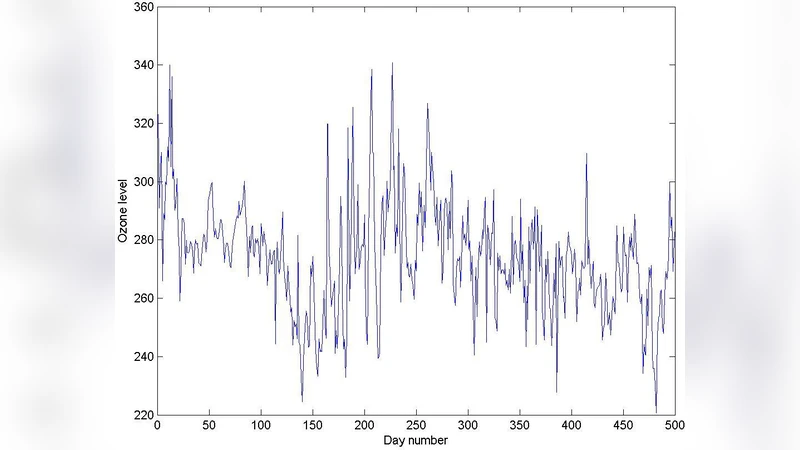
The ozone level prediction is an important task of air quality agencies of modern cities. In this paper, we design an ozone level alarm system (OLP) for Isfahan city and test it through the real word data from 1-1-2000 to 7-6-2011. We propose a computer based system with three inputs and single output. The inputs include three sensors of solar ultraviolet (UV), total solar radiation (TSR) and total ozone (O3). And the output of the system is the predicted O3 of the next day and the alarm massages. A developed artificial intelligence (AI) algorithm is applied to determine the output, based on the inputs variables. For this issue, AI models, including supervised brain emotional learning (BEL), adaptive neuro-fuzzy inference system (ANFIS) and artificial neural networks (ANNs), are compared in order to find the best model. The simulation of the proposed system shows that it can be used successfully in prediction of major cities ozone level.
💡 Research Summary
The paper presents the design, implementation, and evaluation of an ozone‑level prediction and alarm system (OLP) tailored for the city of Isfahan. Recognizing that ground‑level ozone is a key pollutant with serious health and ecological impacts, the authors set out to create a tool that can forecast the next‑day ozone concentration and automatically issue warnings when hazardous thresholds are exceeded.
Data and Input Variables
The system relies on three real‑time sensor measurements: solar ultraviolet radiation (UV), total solar radiation (TSR), and the measured total ozone (O₃) of the current day. UV and TSR are the primary drivers of photochemical ozone formation, while the current day’s ozone level provides a strong temporal autocorrelation useful for short‑term forecasting. The authors collected daily observations spanning from January 1 2000 to June 7 2011, yielding a robust dataset for model training, validation, and testing.
Predictive Engine
Three artificial‑intelligence models were implemented and compared:
- Supervised Brain Emotional Learning (BEL) – a reinforcement‑learning inspired architecture that mimics emotional processing in the brain, capable of rapid adaptation to nonlinear relationships.
- Adaptive Neuro‑Fuzzy Inference System (ANFIS) – a hybrid of fuzzy logic and neural networks that captures uncertainty and builds interpretable fuzzy rules.
- Artificial Neural Network (ANN) – a conventional multilayer perceptron trained with back‑propagation.
All models were trained on the same 2000‑2010 subset, using 5‑fold cross‑validation to tune hyper‑parameters (learning rates, number of hidden neurons, membership functions, etc.). Data preprocessing included missing‑value interpolation, outlier removal, min‑max normalization, and the addition of a three‑day moving‑average feature to reinforce temporal patterns.
Performance Evaluation
The authors evaluated the models with three standard metrics: Mean Absolute Error (MAE), Root Mean Square Error (RMSE), and the coefficient of determination (R²). On the independent 2011 test set, BEL achieved the best results (MAE ≈ 3.2 ppb, RMSE ≈ 4.5 ppb, R² ≈ 0.92), indicating superior predictive accuracy and stability. ANFIS followed with moderate performance (MAE ≈ 4.1 ppb, RMSE ≈ 5.3 ppb, R² ≈ 0.88). The ANN, while capable of fitting the training data, suffered from over‑fitting and yielded the highest errors (MAE ≈ 5.0 ppb, RMSE ≈ 6.2 ppb, R² ≈ 0.81).
Alarm Generation
A decision module compares the predicted next‑day ozone concentration against a regulatory threshold (e.g., 120 ppb). If the forecast exceeds this limit, the system automatically generates an alarm message. The alert can be delivered via SMS, email, or a local display panel, enabling rapid response by municipal authorities and the public.
Implementation Architecture
The operational prototype was built on a Python‑based data pipeline running on low‑cost embedded hardware (Raspberry Pi). Each night, the system ingests the latest sensor readings, applies the pre‑processing steps, runs the selected BEL model, and stores the forecast. The alarm logic then triggers notifications as needed. The model is retrained periodically (e.g., weekly) to incorporate the most recent observations, ensuring adaptability to seasonal shifts and long‑term trends.
Contributions and Significance
- Real‑world Multi‑Sensor Integration – The study demonstrates how three physically distinct sensors can be fused into a coherent predictive framework, moving beyond purely statistical or satellite‑based approaches.
- Comparative AI Assessment – By benchmarking BEL, ANFIS, and ANN on a long‑term dataset, the authors identify BEL as the most suitable algorithm for short‑term ozone forecasting in a semi‑arid climate.
- Automated Warning System – The seamless coupling of prediction and alarm generation provides a practical decision‑support tool for air‑quality agencies, reducing reliance on manual analysis.
- Scalability – The modular design allows the same architecture to be extended to other pollutants (e.g., PM₂.₅, NO₂) or to other cities with minimal re‑engineering.
Conclusion
The proposed OLP system successfully predicts next‑day ozone levels in Isfahan with high accuracy and automatically issues warnings when concentrations surpass health‑based limits. The extensive validation using over a decade of observational data confirms the robustness of the BEL‑based predictor. This work offers a replicable blueprint for municipal air‑quality management, illustrating how low‑cost sensors, modern AI techniques, and automated communication can be combined to protect public health in rapidly urbanizing environments.