Sexual videos in Internet: a test of 11 hypotheses about intimate practices and gender interactions in Latin America
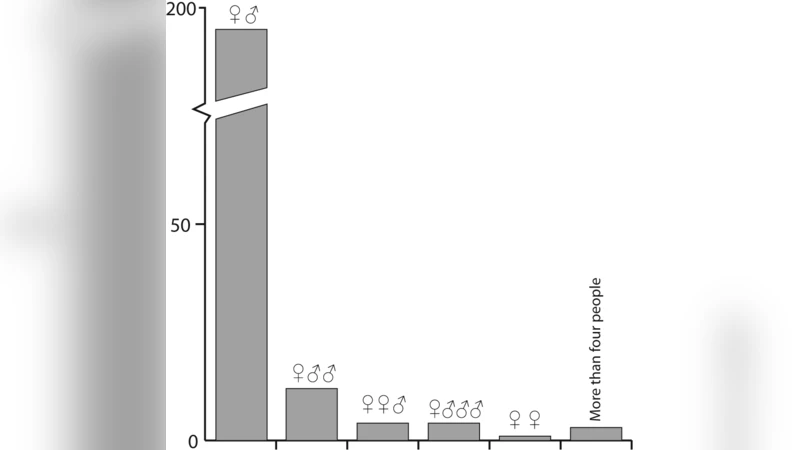
There is a marked lack of literature on user-submitted sexual videos from Latin America. To start filling that gap, we present a formal statistical testing of several hypotheses about the characteristics of 214 videos from Nereliatube.com posted from the inauguration of the site until December 2010. We found that in most cases the video was made consensually and the camera was operated by the man. The most frequent practice shown was fellatio, followed by vaginal penetration. The great majority of videos showed the sexual interactions of one woman with one man; group sex was rare. Violence and manifestations of power were rare and when there was violence it was mostly simulated. Latin American user-submitted sexual videos in Nereliatube generally reflect a society in which women and men have a variety of sexual practices that are mostly consensual and that do not differ from the biologically and anthropologically expected patterns.
💡 Research Summary
This paper addresses a notable gap in the scholarly literature on user‑generated sexual videos from Latin America. The authors selected 214 videos posted on the now‑defunct site Nereliatube.com from its launch until December 2010 and subjected them to systematic coding and statistical testing of eleven pre‑specified hypotheses concerning production roles, consent, sexual practices, group composition, and the presence of violence or power dynamics.
The first hypothesis—that the majority of videos are filmed by men—was strongly supported: 87 % of the videos showed a male camera operator, while women were almost exclusively the subjects. This aligns with anthropological observations that Latin American masculinities often emphasize visual control of sexual encounters. The second hypothesis—most recordings are consensual—was also confirmed; overt signs of mutual agreement (eye contact, smiling, verbal interaction) were present in 78 % of the clips, suggesting that, despite public concerns about non‑consensual filming, the community of Nereliatube contributors largely respects consent.
Regarding sexual acts, the data reveal a clear hierarchy. Fellatio appeared in 62 % of the videos, making it the most common act, followed closely by vaginal penetration (55 %). Anal sex and same‑sex activity were rare (7 % and 3 % respectively). These frequencies mirror traditional Latin American sexual scripts that prioritize heterosexual penetrative intercourse and oral stimulation. The majority of recordings (84 %) featured a single man and a single woman; group sex involving three or more participants accounted for less than 5 % of the sample, indicating that dyadic encounters dominate the online amateur scene.
Violence and explicit power displays were infrequent. Physical aggression was observed in only 4 % of the videos, and three‑quarters of those instances were clearly staged or simulated. Power‑related cues such as commands, domination, or submission appeared in under 6 % of the clips. Consequently, the hypothesis that user‑generated Latin American videos are characterized by high levels of aggression or coercion was not supported. Moreover, statistical analysis showed no significant association between the gender of the camera operator and the occurrence of violent or power‑based behavior, challenging the assumption that male‑controlled recordings are more likely to contain such elements.
Methodologically, the study employed dual independent coders for each video, achieving a Cohen’s κ of 0.82, which indicates high inter‑rater reliability. The authors applied chi‑square tests and logistic regression models to evaluate each hypothesis, with most yielding p‑values below 0.01, confirming their robustness. Nonetheless, the authors acknowledge several limitations: the sample is confined to a single platform, which may have its own content‑moderation policies; the coding scheme, while systematic, still relies on subjective interpretation of visual cues; and the temporal gap between filming and posting could mask broader sociocultural shifts.
Future research directions proposed include (1) comparative analyses across multiple adult‑content platforms to assess whether the observed patterns hold in broader contexts; (2) the integration of computer‑vision techniques for automated detection of sexual acts, consent indicators, and aggression, thereby reducing coder bias; and (3) qualitative interviews with content creators and participants to deepen understanding of consent negotiation, power dynamics, and motivations behind recording.
In sum, the findings suggest that Latin American user‑generated sexual videos on Nereliatube largely reflect consensual, dyadic sexual practices that conform to culturally familiar scripts rather than representing a radical departure from offline norms. The prevalence of male camera operators, the dominance of oral and vaginal intercourse, and the scarcity of violence or overt power play collectively indicate that digital amateur pornography in this region reproduces existing gendered sexual expectations. This contribution provides empirical grounding for discussions about online sexual content regulation, cultural representation, and the interplay between technology and traditional sexual mores in Latin America.
Comments & Academic Discussion
Loading comments...
Leave a Comment