Object-Oriented Dynamic Networks
This paper contains description of such knowledge representation model as Object-Oriented Dynamic Network (OODN), which gives us an opportunity to represent knowledge, which can be modified in time, to build new relations between objects and classes of objects and to represent results of their modifications. The model is based on representation of objects via their properties and methods. It gives us a possibility to classify the objects and, in a sense, to build hierarchy of their types. Furthermore, it enables to represent relation of modification between concepts, to build new classes of objects based on existing classes and to create sets and multisets of concepts. OODN can be represented as a connected and directed graph, where nodes are concepts and edges are relations between them. Using such model of knowledge representation, we can consider modifications of knowledge and movement through the graph of network as a process of logical reasoning or finding the right solutions or creativity, etc. The proposed approach gives us an opportunity to model some aspects of human knowledge system and main mechanisms of human thought, in particular getting a new experience and knowledge.
💡 Research Summary
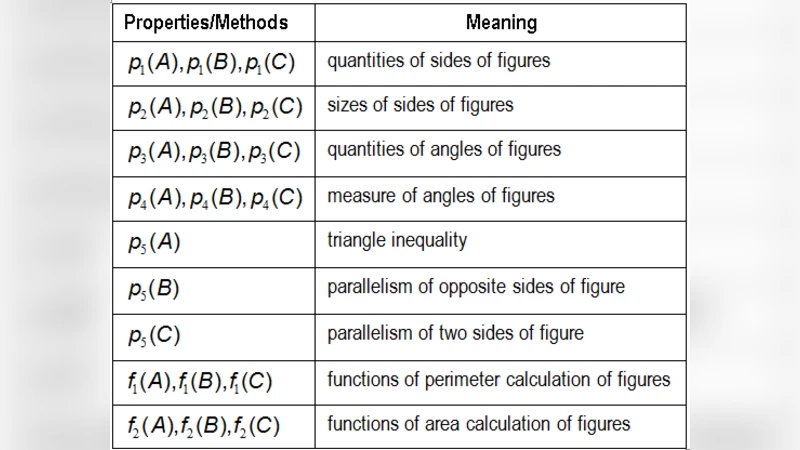
The paper introduces Object‑Oriented Dynamic Networks (OODN), a novel knowledge‑representation framework that blends the core ideas of object‑oriented programming with the requirements of dynamic, evolving knowledge bases. Traditional semantic networks, frames, and ontologies are largely static; they capture concepts and relations but struggle to model how knowledge changes over time, how new relations are forged, or how creative reasoning emerges from experience. OODN addresses these gaps by representing every knowledge element as an object characterized by a set of properties (static state) and a set of methods (dynamic behavior). Objects are grouped into classes that share identical property‑method signatures, and inheritance relations create a hierarchical type system.
A distinctive feature of OODN is the explicit “modification” relation. Unlike ordinary inheritance, a modification edge (σ: C₁ → C₂) denotes that concept C₁ can be transformed into concept C₂ under certain conditions, typically triggered by the execution of a method. This models the temporal evolution of knowledge—e.g., an initial design object being refined into an improved design, or a medical diagnosis being updated as new symptoms appear. The framework also incorporates set and multiset meta‑classes, allowing collections of objects to be treated as single nodes while preserving or ignoring duplicate instances, respectively. This capability simplifies the representation of complex aggregates and supports operations such as clustering or pattern abstraction.
Structurally, OODN is realized as a directed, strongly connected graph G = (V, E). Vertices V consist of objects, classes, and set/multiset nodes; edges E consist of traditional relations (inheritance, inclusion, association) and modification edges. Because the graph is strongly connected, any concept can be reached from any other, enabling reasoning to be framed as graph traversal. Logical inference, problem solving, or creative exploration can be performed by standard algorithms—depth‑first search for exhaustive exploration, Dijkstra’s algorithm for shortest transformation paths, or heuristic search for goal‑directed reasoning. New knowledge is introduced by adding or rewiring edges, effectively “moving” through the network.
The authors demonstrate OODN with two case studies. In a software‑engineering scenario, an initial design object undergoes a series of refactorings; each refactoring is modeled as a method that triggers a modification edge, producing a clear visual trace of design evolution. In a medical‑diagnosis scenario, the arrival of a novel symptom leads to the dynamic insertion of new properties and methods into an existing disease class, illustrating how the network adapts without rebuilding the entire ontology. Both examples show that OODN can capture knowledge change more naturally than rule‑based systems and can support flexible, context‑sensitive reasoning.
The paper discusses advantages: (1) unified static‑dynamic representation, (2) explicit modeling of temporal knowledge change, (3) compact handling of aggregates via set/multiset nodes, and (4) intuitive graph‑based reasoning that scales with existing graph algorithms. Limitations are also acknowledged. As the number of modification edges grows, the graph can become dense, leading to higher traversal costs. Method definitions may require sophisticated compatibility checks, increasing implementation complexity. The current work remains largely theoretical; practical deployment on large‑scale knowledge bases will need optimization techniques such as graph compression, partial caching, and efficient type‑checking mechanisms.
Future research directions include: developing compression and indexing strategies to keep traversal efficient, formalizing a type system for method signatures to automate compatibility verification, and integrating reinforcement learning to allow the network to discover beneficial modification paths autonomously. The authors envision OODN as a stepping stone toward AI systems that can accumulate experience, restructure their internal knowledge, and generate novel solutions in a manner reminiscent of human creative thought.
In conclusion, Object‑Oriented Dynamic Networks provide a powerful, flexible framework for representing and reasoning about knowledge that is not only hierarchical but also mutable and generative. By marrying object‑oriented concepts with graph‑based knowledge structures, OODN opens new possibilities for adaptive AI, dynamic ontologies, and computational models of human cognition.