Evaluating m-learning in Saudi Arabian higher education: a case study
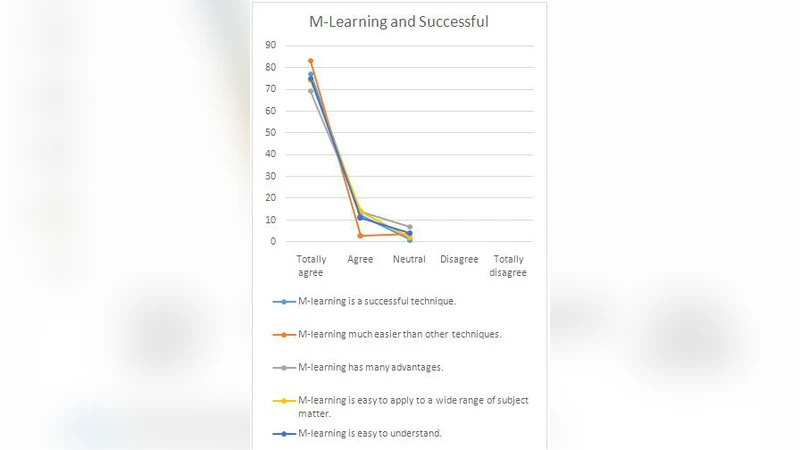
Nowadays, mobile devices have become increasingly a part of education for those who study or teach at the university level and school levels. The support of electronic learning (elearning) is essential to making mobile learning (m-learning) successful. This paper presents a study that applies mlearning to a course at Qassim University, where 100 students attended during the academic year 2014, including summer courses. The study aims to demonstrate that m-learning provides students with the ability to engage in reflective thinking, to share information among peers and to facilitate the construction of social knowledge. 90 student questionnaires were filled correctly, remaining 10 had various anomalies and thus were not considered. The study also aims to demonstrate that learning provides methods for education strategies to be easily and rapidly applied. Such strategies include team work, time management, etc. In order to judge the feasibility of applying m-learning widely, a questionnaire was developed. The results indicate that m-learning helps make the process of education more convenient than in the past. A major disadvantage of applying m-learning is inadequate wireless network bandwidth.
💡 Research Summary
This paper presents an empirical case study of mobile learning (m‑learning) implementation in a Saudi Arabian higher‑education context, specifically within a course at Qassim University during the 2014 academic year (including summer sessions). The authors enrolled 100 undergraduate students, of whom 90 valid questionnaires were analyzed after discarding ten responses with inconsistencies or missing data. The study’s primary objectives were to determine whether m‑learning fosters reflective thinking, facilitates peer‑to‑peer information exchange, and supports the construction of socially mediated knowledge; to assess whether it enables educational strategies such as teamwork and time‑management to be applied more easily; and to evaluate overall learner convenience compared with traditional classroom instruction.
A structured questionnaire, grounded in prior literature on e‑learning and m‑learning, was designed with five dimensions: (1) reflective cognition, (2) knowledge sharing, (3) learning convenience, (4) application of instructional strategies (teamwork, time management, etc.), and (5) satisfaction with technical infrastructure. Each dimension comprised 4–6 items measured on a five‑point Likert scale. Descriptive statistics, reliability analysis (Cronbach’s α), and exploratory factor analysis were employed to validate the instrument and to interpret the data.
Findings reveal that students rated the impact of mobile devices on reflective thinking highly (mean ≈ 4.3/5), indicating that immediate feedback, personal note‑taking, and the ability to revisit content at will encourage deeper self‑assessment. Knowledge sharing also scored strongly; 82 % of participants agreed that mobile apps made it easier to exchange resources during group projects. Learning convenience emerged as the most positively perceived benefit, with a mean score of 4.5, reflecting the perceived freedom to study anytime and anywhere. The application of instructional strategies such as teamwork and time management received an average rating of 4.2, suggesting that mobile platforms effectively support collaborative scheduling, real‑time communication, and task coordination.
Conversely, technical infrastructure presented a notable barrier. A substantial 68 % of respondents reported that limited wireless bandwidth caused video buffering, delayed quiz responses, and overall sluggishness, thereby diminishing the learning experience. Additional concerns included device compatibility and battery life, which, while less prevalent, were still mentioned.
The authors discuss these outcomes in the context of Saudi higher education, arguing that m‑learning can shift pedagogy toward a learner‑centered model that integrates reflective practice and collaborative knowledge construction—capabilities that are difficult to achieve in static lecture halls. However, they caution that without robust network capacity and institutional support, the full potential of mobile learning cannot be realized. Recommendations include investing in campus‑wide high‑speed Wi‑Fi, adopting cloud‑based learning management systems optimized for mobile access, and designing course materials with responsive design principles.
Limitations of the study are acknowledged: the sample is confined to a single university and a single course, limiting external validity; reliance on self‑reported questionnaire data introduces possible social desirability bias; and the research does not link m‑learning usage to objective academic performance metrics such as grades or retention rates. The authors propose future work involving multi‑institution longitudinal studies, integration of learning analytics to capture real‑time interaction data, and experimental designs that compare m‑learning with traditional instruction on measurable learning outcomes.
In conclusion, the case study demonstrates that mobile learning can substantially improve learner convenience, promote reflective and collaborative processes, and enable flexible instructional strategies in Saudi higher education. The primary impediment is inadequate wireless bandwidth, underscoring the necessity for infrastructural upgrades. With appropriate technical and pedagogical support, m‑learning holds promise for broader adoption across the region’s universities.
Comments & Academic Discussion
Loading comments...
Leave a Comment