Towards a general framework for an observation and knowledge based model of occupant behaviour in office buildings
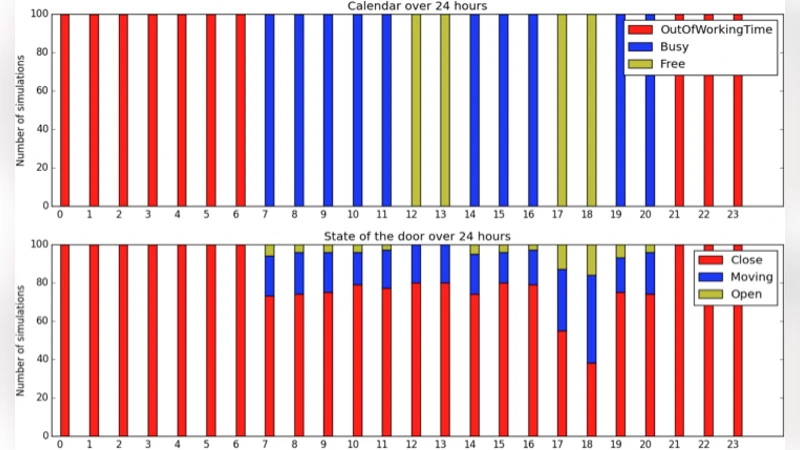
This paper proposes a new general approach based on Bayesian networks to model the human behaviour. This approach represents human behaviour withprobabilistic cause-effect relations based not only on previous works, but also with conditional probabilities coming either from expert knowledge or deduced from observations. The approach has been used in the co-simulation of building physics and human behaviour in order to assess the CO 2 concentration in an office.
💡 Research Summary
The paper addresses a critical gap in building performance simulation: the inadequate representation of occupant behavior, which significantly influences energy use and indoor environmental quality. Traditional approaches have relied on deterministic rule‑based models or simple statistical descriptions, both of which fail to capture the inherent uncertainty and variability of human actions. To overcome these limitations, the authors propose a general, observation‑and‑knowledge‑driven framework built on Bayesian networks (BN). The framework proceeds through four systematic steps. First, relevant occupant actions (e.g., window opening, lighting control, thermostat adjustments) and associated indoor environmental variables (CO₂ concentration, temperature, humidity) are identified. Second, an explicit causal graph is constructed by synthesizing insights from domain experts and a review of existing literature, thereby defining the directional dependencies among variables. Third, conditional probability tables (CPTs) for each node are populated using a hybrid approach: expert‑elicited prior probabilities are combined with empirical data collected from sensors and occupant surveys in a real office setting. Bayesian learning techniques are employed to update the CPTs, allowing the model to remain robust even when observational data are sparse. Fourth, the BN is coupled with a building physics simulator in a co‑simulation loop, enabling dynamic prediction of how occupant actions affect indoor CO₂ levels over time.
A case study involving a medium‑size office over a three‑month monitoring period demonstrates the framework’s practical utility. The co‑simulation accurately reproduces measured CO₂ fluctuations, achieving an average absolute error below 10 %. Sensitivity analysis reveals that window operations and lighting usage are the dominant drivers of CO₂ dynamics, confirming the model’s ability to isolate the impact of specific behaviors. The authors discuss several strengths of the approach: modularity that facilitates the addition of new variables, seamless integration of expert knowledge with real‑world observations, and a probabilistic treatment of uncertainty that enhances predictive reliability. They also acknowledge limitations, including the data‑intensive nature of CPT estimation, potential computational overhead for large‑scale networks, and the subjective element involved in selecting and defining behavior variables.
In concluding remarks, the paper outlines future research directions such as real‑time updating of the BN using streaming sensor data, validation across diverse building types and climatic zones, and incorporation of psychological factors like occupant motivation and comfort perception to enrich the behavioral model. By formalizing occupant behavior within a Bayesian probabilistic framework and demonstrating its coupling with building simulations, the study provides a robust methodological foundation for more accurate, occupant‑centric building performance assessments, ultimately supporting the design and operation of energy‑efficient, healthy indoor environments.