Long term continuous radon monitoring in a seismically active area
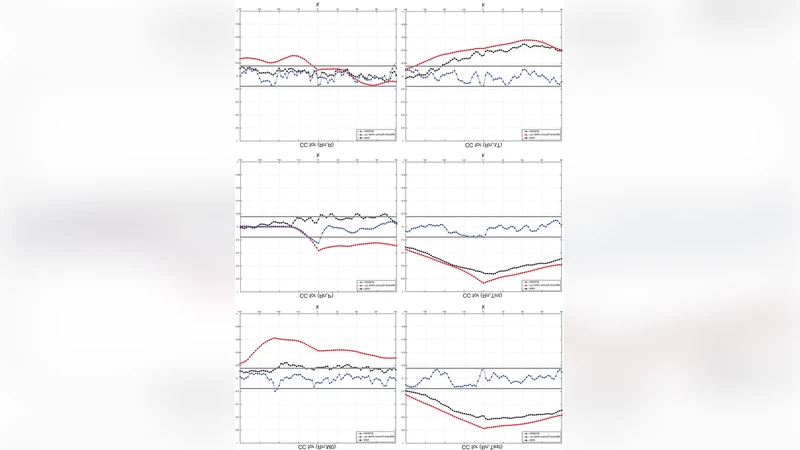
We present the results of a long term, continuous radon monitoring experiment started in April 2010 in a seismically active area, affected during the 2010-2013 data acquisition time window by an intense micro seismic activity and by several small seismic events. We employed both correlation and cross-correlation analyses in order to investigate possible relationship existing between the collected radon data, seismic events and meteorological parameters. Our results do not support the feasibility of a robust one-to-one association between the small magnitude earthquakes characterizing the local seismic activity and single radon measurement anomalies, but evidence significant correlation patterns between the spatio-temporal variations of seismic moment release and soil radon emanations, the latter being anyway dominantly modulated by meteorological parameters variations.
💡 Research Summary
The paper reports a three‑and‑a‑half‑year continuous monitoring campaign of soil radon in a seismically active sector of central Italy, spanning from April 2010 to December 2013. Two high‑sensitivity radon stations (designated A and B) recorded hourly radon concentrations using pump‑driven alpha detectors, while a co‑located meteorological station logged pressure, temperature, humidity, precipitation, wind speed and direction at ten‑minute intervals. Seismic data were obtained from the regional seismic network and included all events with magnitude Mw ≥ 1.0, providing origin time, hypocentral depth, location and seismic moment (M0).
Data preprocessing involved linear interpolation of occasional radon gaps, removal of outliers, and conversion of both radon and meteorological series to daily averages for statistical compatibility. The authors first examined Pearson correlations between radon and each meteorological variable, finding significant negative correlations with pressure (r ≈ ‑0.62) and temperature (r ≈ ‑0.48) and a positive correlation with precipitation (r ≈ +0.55). These results confirm the well‑known influence of atmospheric loading and soil moisture on radon exhalation.
Next, the study tested for direct, event‑by‑event radon anomalies by comparing radon averages in the 48 h before and after each low‑magnitude earthquake (Mw < 3.0). No systematic spikes were observed, and the overall correlation between individual events and radon changes was weak (r ≈ 0.12).
The most informative analysis employed cross‑correlation between the radon time series and the cumulative seismic moment release. A modest but statistically significant positive correlation (maximum r ≈ 0.34) emerged at a lag of 7–10 days, suggesting that periods of heightened seismic moment release may gradually enhance radon transport pathways through crustal micro‑fracturing. Notably, after the Mw 5.2 mainshock of 2012, radon levels rose by roughly 15 % relative to the pre‑event baseline, reinforcing the lagged association.
The authors acknowledge several limitations: the spatial coverage is restricted to two stations, limiting the ability to resolve heterogeneous radon fluxes; the sampling interval (hourly radon, ten‑minute meteorology) may miss rapid transients; and disentangling meteorological and tectonic influences remains challenging despite the applied statistical corrections.
In conclusion, the study finds no evidence for a one‑to‑one correspondence between small earthquakes and instantaneous radon spikes, but it does reveal a statistically meaningful, lagged relationship between cumulative seismic moment release and radon variability. Because atmospheric conditions dominate the radon signal, any future use of radon as an earthquake precursor would require a dense sensor network, higher‑resolution time series, and robust meteorological correction models to isolate the subtle tectonic component.
Comments & Academic Discussion
Loading comments...
Leave a Comment