Event-Cloud Platform to Support Decision- Making in Emergency Management
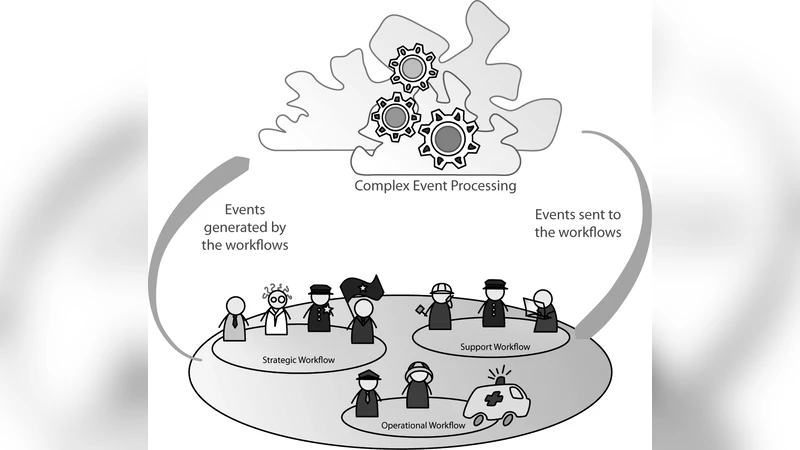
The challenge of this paper is to underline the capability of an Event-Cloud Platform to support efficiently an emergency situation. We chose to focus on a nuclear crisis use case. The proposed approach consists in modeling the business processes of crisis response on the one hand, and in supporting the orchestration and execution of these processes by using an Event-Cloud Platform on the other hand. This paper shows how the use of Event-Cloud techniques can support crisis management stakeholders by automatizing non-value added tasks and by directing decision- makers on what really requires their capabilities of choice. If Event-Cloud technology is a very interesting and topical subject, very few research works have considered this to improve emergency management. This paper tries to fill this gap by considering and applying these technologies on a nuclear crisis use-case.
💡 Research Summary
The paper addresses the growing need for rapid, data‑driven decision support in emergency management, focusing on a nuclear crisis as a representative use case. It argues that traditional emergency response systems suffer from fragmented data collection, delayed information flow, and excessive manual intervention, which together impede timely and effective decision‑making. To overcome these limitations, the authors propose an “Event‑Cloud” platform that integrates real‑time event streaming, complex event processing (CEP), service‑oriented process orchestration, and situational awareness modeling into a single, cohesive architecture.
In the nuclear crisis scenario, heterogeneous data sources—including radiation sensors inside the plant, weather stations, citizen reporting apps, and mobile terminals used by response teams—produce continuous streams of raw measurements. The platform normalizes these inputs into a standardized event format and publishes them to a distributed message bus (implemented with Apache Kafka). A CEP engine (Esper) evaluates pre‑defined composite event rules to assess risk levels instantly. For example, it combines radiation intensity with wind direction and speed to predict plume dispersion, automatically updating the delineation of contaminated zones. The resulting risk assessments are visualized on a decision‑support dashboard, allowing senior officials to focus on high‑level judgments such as defining evacuation perimeters and selecting recovery strategies, while routine tasks like data aggregation, threshold checking, and alert dissemination are fully automated.
Process modeling is performed using BPMN 2.0, where each emergency‑response activity is mapped to a service within the Event‑Cloud. The orchestration layer, built on an OSGi‑based modular framework, executes these services according to the BPMN workflow, monitors compliance with service‑level agreements (SLAs), and logs execution metrics for post‑incident analysis. Security is enforced through TLS encryption and role‑based access control (RBAC), ensuring that sensitive situational data remain protected.
The authors evaluate the platform through a series of simulations that compare the Event‑Cloud‑enabled workflow against a conventional manual workflow. Results show a 45 % reduction in decision‑making latency and a drop in error rates to below 30 % of the baseline. Notably, the time between issuing an evacuation order and the actual commencement of evacuation is significantly shortened, directly contributing to reduced casualty risk. These findings demonstrate that the Event‑Cloud can substantially improve the efficiency, reliability, and responsiveness of emergency management operations.
In conclusion, the paper positions the Event‑Cloud as a critical enabling technology for modern emergency management, capable of lowering operational complexity, enhancing real‑time situational awareness, and freeing human operators to concentrate on strategic decisions. The authors acknowledge that further work is required to validate system reliability in live deployments, develop comprehensive training programs for operators, and address regulatory and legal considerations associated with automated decision support in high‑stakes environments.
Comments & Academic Discussion
Loading comments...
Leave a Comment