Modeling Curiosity in a Mobile Robot for Long-Term Autonomous Exploration and Monitoring
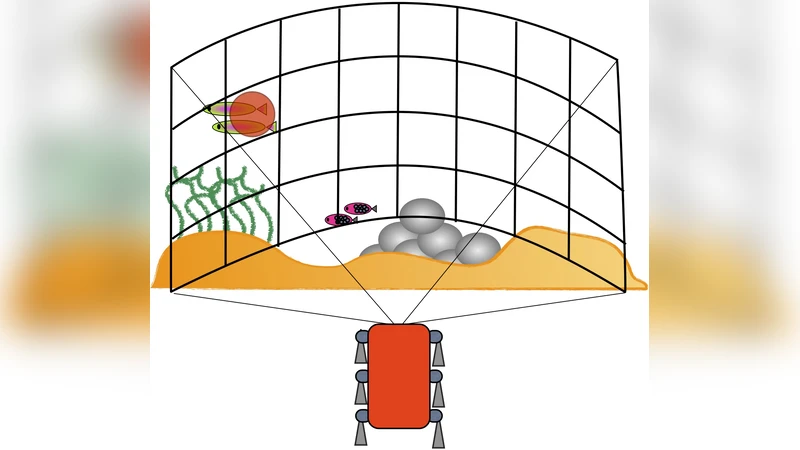
This paper presents a novel approach to modeling curiosity in a mobile robot, which is useful for monitoring and adaptive data collection tasks, especially in the context of long term autonomous missions where pre-programmed missions are likely to have limited utility. We use a realtime topic modeling technique to build a semantic perception model of the environment, using which, we plan a path through the locations in the world with high semantic information content. The life-long learning behavior of the proposed perception model makes it suitable for long-term exploration missions. We validate the approach using simulated exploration experiments using aerial and underwater data, and demonstrate an implementation on the Aqua underwater robot in a variety of scenarios. We find that the proposed exploration paths that are biased towards locations with high topic perplexity, produce better terrain models with high discriminative power. Moreover, we show that the proposed algorithm implemented on Aqua robot is able to do tasks such as coral reef inspection, diver following, and sea floor exploration, without any prior training or preparation.
💡 Research Summary
**
The paper introduces a curiosity‑driven exploration framework for mobile robots that operates over long‑term autonomous missions. The core of the approach is a realtime online spatiotemporal topic modeling algorithm (RoST) that continuously learns a semantic representation of the visual stream without any supervision. Images captured by the robot are converted into discrete “words” (e.g., visual features) and associated with their spatial‑temporal coordinates. A generative model similar to Latent Dirichlet Allocation is employed, but the per‑location topic distribution θx is defined as a kernel‑weighted sum of topic counts from neighboring cells, allowing the model to capture local context while remaining computationally tractable.
To keep inference fast, the environment is discretized into a grid of cells; all observations within a cell share the same θ. Gibbs sampling is performed in an online fashion: each new observation triggers a constant‑time update of word‑topic assignments and the global topic‑word matrix Φ. The algorithm limits the number of Gibbs iterations per time step, guaranteeing that processing time does not grow with the total amount of data collected, which is essential for long‑duration missions.
Curiosity is quantified by the perplexity of the current observation under the learned topic model. High perplexity indicates that the model is uncertain about the visual content, i.e., the observation carries high information gain. The robot’s motion planner combines this perplexity‑derived attraction with a repulsive potential from previously visited cells, forming a stochastic policy that preferentially moves toward semantically novel regions while avoiding redundant revisits. This policy can be interpreted as a Markov decision process where the transition probabilities are modulated by the curiosity signal.
The authors evaluate the method in two domains. First, a simulated aerial‑image dataset demonstrates that a perplexity‑biased path yields a terrain model with 10–15 % higher labeling accuracy than classic boustrophedon coverage or frontier‑based exploration, especially for rare terrain types such as coral or water bodies. Second, the approach is deployed on the Aqua underwater robot. Without any pre‑training, Aqua autonomously performs coral‑reef inspection, diver following, and seabed mapping. In all cases, the robot discovers high‑value visual structures more quickly than baseline planners, and the resulting topic models exhibit strong discriminative power when evaluated offline.
Key contributions include: (1) the integration of online topic modeling into a real‑time robot control loop, (2) the use of model perplexity as a principled, parameter‑free curiosity metric, (3) a cell‑based approximation that keeps computational load constant, and (4) extensive quantitative comparisons showing superior information gain and model quality. Limitations are acknowledged: the number of topics K is fixed a priori, the method currently operates on 2‑D visual data (limiting representation of 3‑D structure or dynamic objects), and section‑wise perplexity can introduce boundary artifacts. Future work is outlined to address these issues by incorporating non‑parametric topic models, multimodal sensor fusion (e.g., sonar, lidar), and reinforcement‑learning‑based long‑horizon planning to further enhance autonomous curiosity‑driven exploration.
Comments & Academic Discussion
Loading comments...
Leave a Comment