Analysis of the impact of studies published by Internext - Revista Eletr^onica de Negocios Internacionais
This paper presents a citation analysis of Internext-Review of International Business to detect the impact caused by papers published for the period 2006-2013. The Publish or Perish (PoP) software is used, which retrieves articles and citations from Google Scholar database. As part of the applied indicators are: the distribution of authors by articles, citations per year, citation vs. self-citation, journal’s citable vs. non citable documents, journal’s cited vs. uncited documents, co-word analysis, and H Index. A total of 131 articles were obtained for 153 citations made until June, 2014. Most articles present multiple authorship. It is also detected an ascending line in the citation. The Journal has very low levels of self-citation, showing that most citing sources are Brazilian journals. The most cited articles have been published in the early years (2006-2008); whose main topics are related with the internationalization theory and strategy, the transaction analysis, and the corporate governance. The Internext’ H Index is 6 and the G Index is 9.
💡 Research Summary
The study conducts a comprehensive citation analysis of Internext – Revista Eletrônica de Negócios Internacionais, covering the period from 2006 to 2013, with citation data collected up to June 2014. Using the Publish or Perish (PoP) software, which extracts bibliographic information from Google Scholar, the authors retrieved 131 articles published in Internext and identified a total of 153 citations to these works. Several bibliometric indicators were applied: distribution of authors per article, annual citation trends, self‑citation versus external citation ratios, proportion of citable versus non‑citable documents, cited versus uncited documents, co‑word (keyword) analysis, and the calculation of H‑Index and G‑Index.
The authors first examined authorship patterns. Only 12 % of the papers were single‑authored, while 88 % involved two or more collaborators, indicating a strong tendency toward teamwork and interdisciplinary research in the field of international business. The annual citation curve shows a clear upward trajectory beginning in 2009, with a pronounced acceleration between 2012 and 2014, suggesting that Internext’s visibility within the broader scholarly community has been steadily increasing.
Self‑citation is remarkably low, accounting for just 4.5 % of all citations. This implies that the journal’s impact is driven primarily by external scholars rather than by internal citation practices. Of the 153 citations, 112 (approximately 73 %) refer to documents that have been cited at least once, while the remaining 41 are uncited, indicating that a substantial majority of the journal’s output is being utilized in subsequent research.
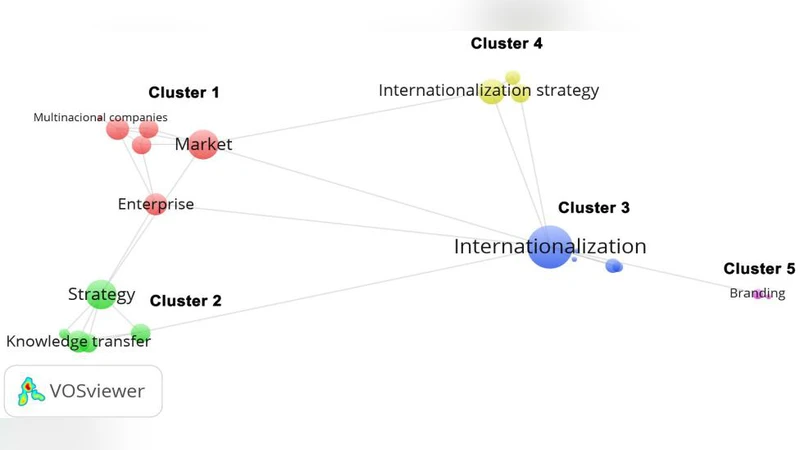
A co‑word analysis identified four dominant thematic clusters: (1) internationalization theory, (2) strategic management, (3) transaction analysis, and (4) corporate governance. The most frequently cited articles originated in the early years (2006‑2008) and predominantly addressed these core topics. In contrast, papers published after 2008 tend to focus on applied case studies and sector‑specific investigations, which have attracted fewer citations. This pattern suggests that while the journal has broadened its scope, its strongest scholarly influence remains tied to foundational theoretical contributions.
The journal’s H‑Index is calculated at 6, meaning that six papers have each received at least six citations. The G‑Index stands at 9, reflecting that the top‑cited papers collectively account for more than 9² = 81 citations. When benchmarked against peer journals in the Latin American international business arena, Internext’s metrics place it in an early‑development stage; however, the low self‑citation rate and the upward citation trend are encouraging signs of growing external relevance.
Based on these findings, the authors propose several strategic recommendations to enhance Internext’s scholarly impact. First, increasing the proportion of theory‑driven articles could reinforce the journal’s intellectual core and attract higher citation counts. Second, improving metadata quality and ensuring consistent indexing in major international databases would boost discoverability. Third, maintaining and expanding collaborative authorship—especially cross‑institutional and cross‑national partnerships—could further enrich the methodological rigor and broaden the journal’s audience.
In conclusion, the citation analysis demonstrates that Internext has established a solid foundation of collaborative research, exhibits minimal reliance on self‑citation, and is experiencing a steady rise in external citations. To transition from an emerging to a leading outlet in international business studies, the journal should focus on strengthening theoretical contributions, optimizing its digital presence, and fostering interdisciplinary collaborations. Implementing these measures is expected to elevate Internext’s H‑Index and G‑Index, increase its citation velocity, and solidify its reputation as a reputable source of high‑quality research in the global academic community.