A Conversation with Professor Tadeusz Cali{n}ski
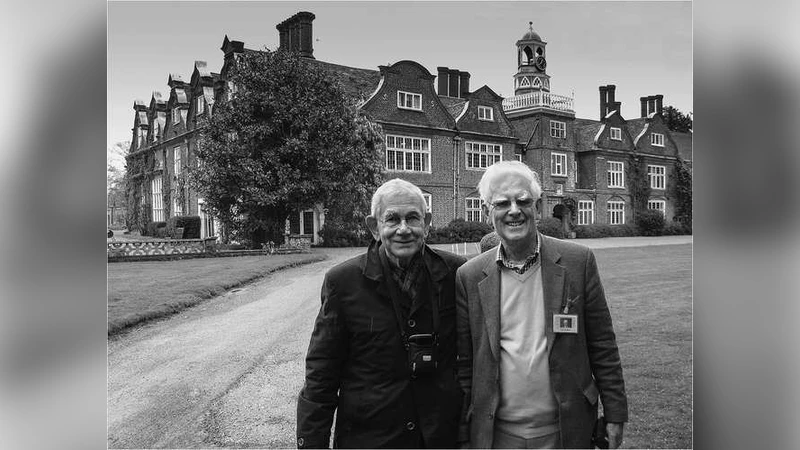
Tadeusz Cali'{n}ski was born in Pozna'{n}, Poland in 1928. Despite the absence of formal secondary eduction for Poles during the Second World War, he entered the University of Pozna'{n} in 1948, initially studying agronomy and in later years mathematics. From 1953 to 1988 he taught statistics, biometry and experimental design at the Agricultural University of Pozna'{n}. During this period he founded and developed the Pozna'{n} inter-university school of mathematical statistics and biometry, which has become one of the most important schools of this type in Poland and beyond. He has supervised 24 Ph.D. students, many of whom are currently professors at a variety of universities. He is now Professor Emeritus. Among many awards, in 1995 Professor Cali'{n}ski received the Order of Polonia Restituta for his outstanding achievements in the fields of Education and Science. In 2012 the Polish Statistical Society awarded him The Jerzy Sp{\l}awa-Neyman Medal for his contribution to the development of research in statistics in Poland. Professor Cali'{n}ski in addition has Doctoral Degrees honoris causa from the Agricultural University of Pozna'{n} and the Warsaw University of Life Sciences. His research interests include mathematical statistics and biometry, with applications to agriculture, natural sciences, biology and genetics. He has published over 140 articles in scientific journals as well as, with Sanpei Kageyama, two important books on the randomization approach to the design and analysis of experiments. He has been extremely active and successful in initiating and contributing to fruitful international research cooperation between Polish statisticians and biometricians and their colleagues in various countries, particularly in the Netherlands, France, Italy, Great Britain, Germany, Japan and Portugal. The conversations in addition cover the history of biometry and experimental design in Poland and the early influence of British statisticians.
💡 Research Summary
The paper under review is a transcript of a series of conversations with Professor Tadeusz Caliński, a pioneering figure in Polish statistical science and biometry, published in Statistical Science (2015, Vol. 30, No. 3). The interview, conducted by Anthony C. Atkinson and Barbara Bogacka, chronicles Caliński’s life, academic development, and the evolution of the Polish school of mathematical statistics and biometry from the immediate post‑World‑War II period to the present.
Caliński was born in Poznań in 1928 and, due to the German occupation, received no formal secondary education during the war. After the war he completed his primary schooling with the help of his aunt, entered the newly reopened Karol Marcinkowski Gymnasium, and earned his secondary‑school certificate in 1948. He enrolled in the Faculty of Agronomy at the University of Poznań, later transferred to the Higher School of Agriculture (Wyższa Szkoła Rolnicza, WSR), and obtained an engineering diploma in 1952. Influenced by Professor Stefan Barbacki, who had spent a year with R. A. Fisher in London, Caliński turned his attention to experimental design and statistical analysis.
From 1953 to 1988 Caliński taught statistics, biometry, and experimental design at the Agricultural University of Poznań. He founded the “Poznań inter‑university school of mathematical statistics and biometry,” a research community that trained 24 Ph.D. students, many of whom now hold professorships in Poland and abroad. The school’s mission combined rigorous statistical methodology with practical agricultural applications and emphasized international collaboration.
A central theme of the interview is the impact of British statistical thought on Caliński’s work. In 1964 he received a government scholarship to work at University College London under Professor Maurice S. Bartlett. There he attended David Cox’s evening lectures on experimental design, which deepened his understanding of randomization theory. Bartlett encouraged a visit to Rothamsted Experimental Station, leading to a memorable interview with Frank Yates. Although language barriers made the interview challenging, the experience cemented Caliński’s commitment to randomization‑based designs and mixed‑effects models.
Caliński’s scholarly output includes two seminal monographs co‑authored with Sanpei Kageyama on the randomization approach to experimental design and analysis, and more than 140 journal articles. His research spans analysis of variance for varietal experiments, development of mixed‑effects models for plant breeding, multivariate biometric methods, and Bayesian approaches to agricultural data. He also played a pivotal role in establishing the Review of Agricultural Experimentation journal, which disseminated modern statistical techniques to Polish agronomists throughout the communist era.
Internationally, Caliński forged collaborations with researchers in the Netherlands, France, Italy, Germany, Japan, and Portugal. These partnerships produced joint projects on genetic statistics, ecological biometry, and the application of modern design theory to field trials. His contributions were recognized with the Order of Polonia Restituta (1995) and the Jerzy Spława‑Neyman Medal (2012), among other honors.
The interview also provides a vivid historical account of Polish scientific life under occupation and during the communist period. It describes how universities were closed by the Nazis, how scholars were arrested or forced into underground institutions, and how, after 1945, the rebuilding of academic structures relied heavily on personal networks and the support of senior figures such as Barbacki and Professor Orlicz. Caliński’s narrative illustrates the resilience of Polish statistical culture and its ability to integrate foreign ideas while maintaining a distinct national identity.
In sum, the conversation offers a comprehensive portrait of Professor Caliński’s career, his methodological innovations in experimental design and biometry, his mentorship legacy, and his role in positioning Polish statistics within the global scientific community. The paper is valuable not only as a biographical record but also as a case study of how scientific disciplines can thrive despite political upheaval, by leveraging international exchange, rigorous training, and a commitment to practical applications in agriculture and the life sciences.
Comments & Academic Discussion
Loading comments...
Leave a Comment