Rms-flux relation in the optical fast variability data of BL Lacertae object S5 0716+714
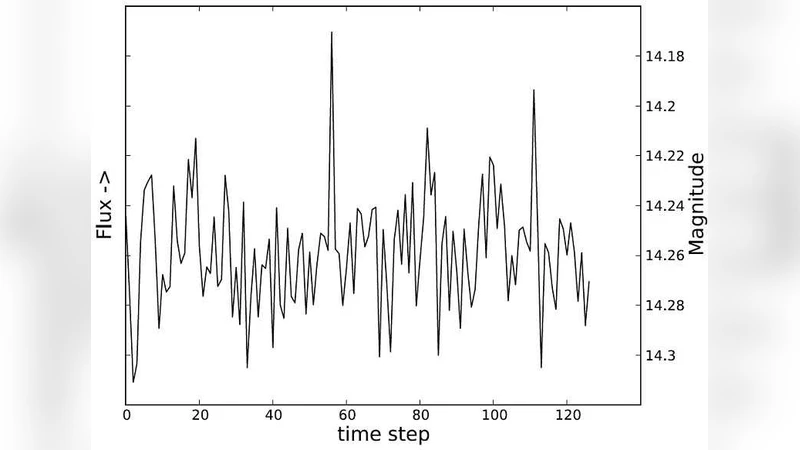
The possibility that BL Lac S5 0716+714 exhibits a linear root mean square (rms)-flux relation in its IntraDay Variability (IDV) is analysed. The results may be used as an argument in the existing debate regarding the source of optical IDV in Active Galactic Nuclei. 63 time series in different optical bands were used. A linear rms-flux relation at a confidence level higher than 65% was recovered for less than 8% of the cases. We were able to check if the magnitude is log-normally distributed for eight timeseries and found, with a confidence > 95%, that this is not the case.
💡 Research Summary
This paper analyzes the root mean square (RMS)-flux relation in the IntraDay Variability (IDV) of BL Lacertae object S5 0716+714. The study aims to understand whether this object exhibits a linear RMS-flux relationship, which could provide insights into the source of optical IDV in Active Galactic Nuclei (AGN). Using 63 time series data sets across different optical bands, researchers found that less than 8% of cases showed a linear RMS-flux relation at a confidence level higher than 65%. This suggests that the variability observed in S5 0716+714 is not well explained by simple linear models.
Additionally, the study tested whether the magnitude distribution follows a log-normal distribution for eight time series. The results indicated with more than 95% confidence that this was not the case. These findings imply that the optical IDV data of S5 0716+714 has complex statistical properties and cannot be easily modeled using standard distributions.
The analysis contributes to ongoing debates about the origins of optical variability in AGN, suggesting that more sophisticated models may be necessary to fully understand these phenomena. The results highlight the need for further research into the mechanisms driving IDV in BL Lacertae objects and other types of AGN.
Comments & Academic Discussion
Loading comments...
Leave a Comment