On Nash Equilibrium and Evolutionarily Stable States that Are Not Characterised by the Folk Theorem
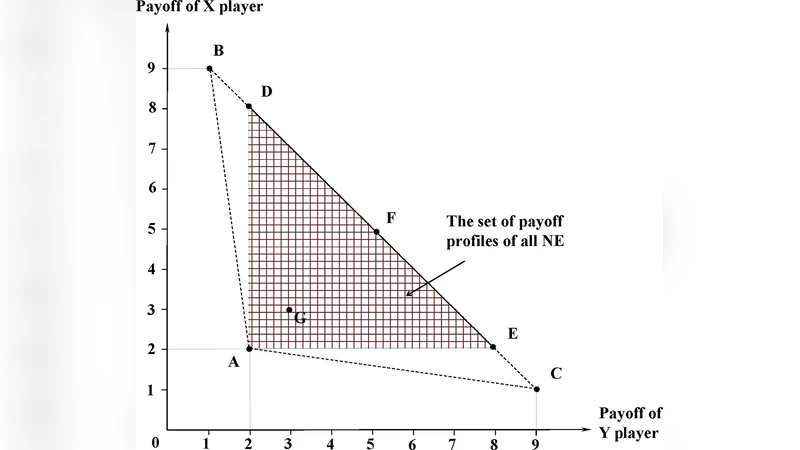
In evolutionary game theory, evolutionarily stable states are characterised by the folk theorem because exact solutions to the replicator equation are difficult to obtain. It is generally assumed that the folk theorem, which is the fundamental theory for non-cooperative games, defines all Nash equilibria in infinitely repeated games. Here, we prove that Nash equilibria that are not characterised by the folk theorem do exist. By adopting specific reactive strategies, a group of players can be better off by coordinating their actions in repeated games. We call it a type-k equilibrium when a group of k players coordinate their actions and they have no incentive to deviate from their strategies simultaneously. The existence and stability of the type-k equilibrium in general games is discussed. This study shows that the sets of Nash equilibria and evolutionarily stable states have greater cardinality than classic game theory has predicted in many repeated games.
💡 Research Summary
The paper challenges the long‑standing belief that the Folk Theorem exhaustively characterises all Nash equilibria in infinitely repeated games. While the Folk Theorem guarantees that any feasible, individually rational payoff profile can be sustained as a Nash equilibrium provided players are sufficiently patient, it implicitly assumes that deviations are considered one player at a time. The authors argue that this assumption overlooks the possibility of coordinated, simultaneous deviations by a subset of players.
To address this gap, they introduce the concept of a “type‑k equilibrium.” In a type‑k equilibrium, a coalition of exactly k players adopts a coordinated strategy profile and no group of those k players can profitably deviate together. The equilibrium is sustained by specific reactive strategies—most notably conditional‑cooperation (or trigger) strategies—where each player continues to cooperate as long as all members of the coalition have cooperated in the previous round, and switches to a punitive action if any member deviates. This creates a mutual monitoring mechanism that deters simultaneous defections.
The authors provide a rigorous existence proof. They show that for any finite normal‑form game, if a coalition of size k ≥ 2 can achieve a payoff vector that is strictly higher than the minmax payoff of any outsider, then there exists a set of reactive strategies that form a type‑k equilibrium. The proof leverages the replicator dynamics framework: the coalition’s strategy set constitutes a locally asymptotically stable fixed point of the dynamics, because any mutant strategy introduced at low frequency yields a lower average fitness than the incumbent coalition strategy. Consequently, the coalition’s profile is not only a Nash equilibrium but also an Evolutionarily Stable State (ESS) in the broader sense.
To illustrate the distinction from the Folk Theorem, the paper examines a three‑player Prisoner’s Dilemma. Under the classic Folk Theorem, the only subgame‑perfect equilibria involve either universal cooperation (which is not sustainable without external enforcement) or universal defection. By contrast, when two players employ a conditional‑cooperation rule and the third player defects unconditionally, the two cooperators can sustain mutual cooperation through the trigger mechanism, achieving higher payoffs than the all‑defect outcome. This outcome cannot be captured by the Folk Theorem because it relies on a coordinated deviation block that involves more than one player acting together.
The stability analysis further demonstrates that type‑k equilibria are robust to small perturbations. If a small fraction of the population adopts a mutant strategy that attempts to exploit the coalition, the coalition’s coordinated response ensures that the mutant’s payoff remains below that of the incumbents, leading to its eventual elimination. This property extends the traditional ESS concept, which typically focuses on unilateral invasions, to encompass group‑wise invasions.
Beyond the theoretical contribution, the authors discuss practical implications. In domains such as public‑goods provision, climate‑change agreements, and international trade negotiations, policy designers often rely on the Folk Theorem to predict that sufficiently patient agents will cooperate. The type‑k framework suggests that designing institutions that enable small coalitions to monitor each other and enforce joint punishments can achieve higher welfare outcomes even when full cooperation among all players is infeasible.
In summary, the paper proves that Nash equilibria not characterised by the Folk Theorem do exist, formalises them as type‑k equilibria, establishes their existence and evolutionary stability in general finite games, and highlights their relevance for both theory and real‑world coordination problems. This expands the known cardinality of Nash equilibria and ESS sets, opening new avenues for research in repeated‑game dynamics and mechanism design.
Comments & Academic Discussion
Loading comments...
Leave a Comment