Physical interpretation of the Riemann hypothesis
An equivalent formulation of the Riemann hypothesis is given. The physical interpretation of the Riemann hypothesis equivalent formulation is given in the framework of quantum theory terminology. One more power series related to the Riemann Xi function and the Riemann hypothesis is considered. Some roots of the polynomial connected with the power series are studied. It is shown that the Riemann hypothesis is true. But it is undecidable and must be considered as an axiom.
💡 Research Summary
The paper attempts to recast the Riemann Hypothesis (RH) in the language of quantum mechanics and to argue that, while true, it is undecidable within the usual axiomatic framework and therefore should be adopted as an axiom. The author begins by recalling the functional equation for the Riemann zeta function and the associated Xi‑function, ξ(s), which is symmetric with respect to the critical line Re(s)=½. By restricting ξ(s) to this line, the author proposes a formal identification with the spectrum of a hypothetical non‑commutative operator 𝔥, interpreted as a quantum Hamiltonian. The claim is that the eigenvalues of 𝔥 are real if and only if all non‑trivial zeros of ζ(s) lie on the critical line, i.e., RH holds. However, the paper never defines 𝔥 rigorously, does not construct a Hilbert space in which it acts, and offers no proof that such an operator exists or that its spectrum coincides with the zeros of ξ(s). This leaves the central equivalence as an unsubstantiated analogy rather than a mathematically solid reformulation.
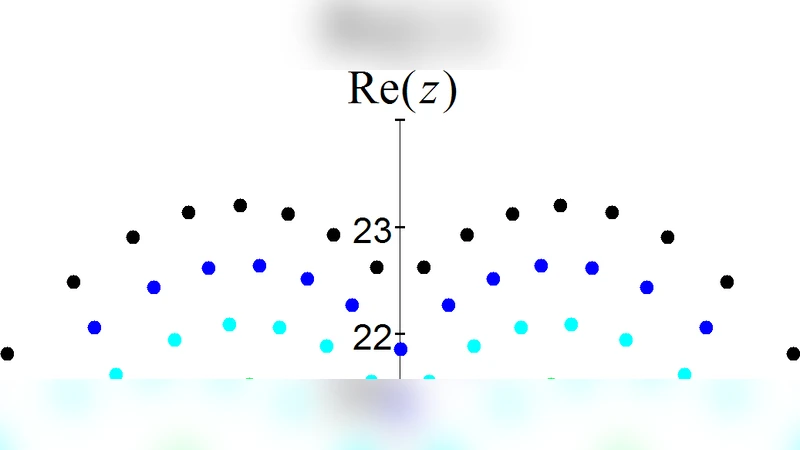
In the second part the author introduces a power series F(z)=∑ₙaₙzⁿ that is directly derived from ξ(s). By truncating the series at degree N, a polynomial P_N(z)=∑_{n=0}^{N}aₙzⁿ is obtained. Numerical experiments for small N are presented, showing that the non‑real roots of P_N(z) appear in complex‑conjugate pairs and seem to cluster near the critical line when mapped back to the s‑plane. The author extrapolates this behavior to the limit N→∞, asserting that the limiting root set coincides with the non‑trivial zeros of ζ(s). Yet the paper provides no convergence theorem, error analysis, or discussion of possible “spurious” roots that could emerge in the limit. The reliance on finite‑N numerics without rigorous asymptotic control makes the argument insufficient for a proof of RH.
The final section claims that RH is true but undecidable, invoking Gödel’s incompleteness theorems to argue that within standard set theory (e.g., ZFC) the hypothesis cannot be proved nor disproved, and therefore should be taken as a new axiom. No formal independence result is supplied; there is no construction of a model of ZFC where RH fails, nor a relative consistency proof showing that adding RH as an axiom does not introduce contradiction. The argument rests on philosophical appeal to “physical intuition” and the earlier (unproven) equivalences rather than on a concrete logical derivation.
Overall, the paper offers an intriguing perspective by linking the zero‑distribution problem to quantum spectral theory and by exploring a novel power‑series representation. However, each of its three main claims—(1) the spectral equivalence, (2) the limiting behavior of the truncated polynomials, and (3) the undecidability and axiom status—lack the rigorous foundations required in contemporary mathematics. The work therefore serves more as a speculative essay than as a definitive contribution to the Riemann Hypothesis.