A Decision Support Tool for Assessing the Maturity of Software Product Line Process
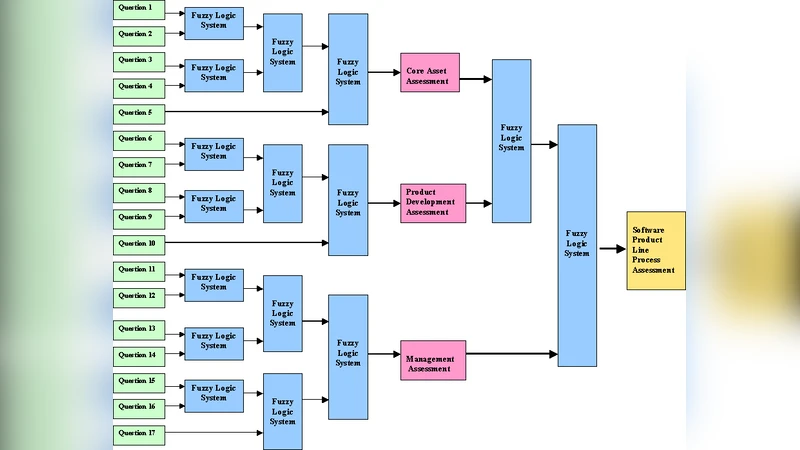
The software product line aims at the effective utilization of software assets, reducing the time required to deliver a product, improving the quality, and decreasing the cost of software products. Organizations trying to incorporate this concept require an approach to assess the current maturity level of the software product line process in order to make management decisions. A decision support tool for assessing the maturity of the software product line process is developed to implement the fuzzy logic approach, which handles the imprecise and uncertain nature of software process variables. The proposed tool can be used to assess the process maturity level of a software product line. Such knowledge will enable an organization to make crucial management decisions. Four case studies were conducted to validate the tool, and the results of the studies show that the software product line decision support tool provides a direct mechanism to evaluate the current software product line process maturity level within an organization.
💡 Research Summary
The paper addresses a critical gap in the adoption of Software Product Lines (SPL): the lack of a practical, quantitative method for assessing the maturity of an organization’s SPL processes. While traditional software process maturity models such as CMMI or SPICE provide structured assessment frameworks, they assume relatively precise, objective measurements. In the SPL context, many key factors—core asset reuse, architecture governance, organizational culture, and market alignment—are inherently fuzzy, relying on expert judgment and qualitative observations. To bridge this gap, the authors propose a Decision Support Tool (DST) that employs fuzzy logic to capture and reason about the imprecise nature of these variables, thereby delivering a more realistic maturity assessment.
Methodology and Model Construction
The authors begin by identifying twelve critical SPL variables through literature review and expert interviews. Each variable is expressed using a linguistic scale (Low, Medium, High) and mapped to a fuzzy membership function. Triangular and Gaussian shapes are used, with parameters calibrated from survey data collected across several organizations. For example, the “Core Asset Reuse Rate” variable has overlapping membership regions: 0‑30 % (Low), 30‑70 % (Medium), and 70‑100 % (High).
A Mamdani‑type fuzzy inference system is then built. The target maturity levels follow the classic five‑stage progression: Initial, Managed, Defined, Quantitatively Managed, and Optimizing. The rule base consists of 45 If‑Then statements that combine the twelve input variables to infer the appropriate maturity level. A sample rule reads: “If Core Asset Reuse is High and Architecture Management is Defined, then Maturity is at least Defined.” The inference engine aggregates the antecedents using the minimum operator, applies the fuzzy implication, and finally defuzzifies the output with a weighted average method to produce a crisp maturity score ranging from 0 to 100, which is also mapped back to the five‑level taxonomy.
Tool Architecture
The DST is implemented as a web‑based application. The front‑end presents a questionnaire where practitioners rate each of the twelve variables. Upon submission, the back‑end fuzzy engine processes the inputs and returns both a numerical score and a visual representation of the maturity level (radar chart, trend line). Historical assessments are stored, enabling longitudinal analysis of maturity evolution. An additional diagnostic module breaks down the contribution of each variable, highlighting the most critical improvement areas.
Empirical Validation
Four case studies were conducted to evaluate the tool’s validity and utility:
- Large Manufacturing Firm – Initially assessed at the “Managed” level; after tool‑guided interventions, the firm progressed to “Defined” with core asset reuse rising from 45 % to 68 %.
- Mid‑size IT Service Company – Maintained a “Managed” rating; the tool’s cultural‑change recommendations prompted a targeted training program that improved stakeholder alignment.
- Public Sector Agency – Achieved a “Quantitatively Managed” status; the organization introduced formal quality metrics, resulting in a 15 % reduction in defect density.
- Startup – Moved from “Initial” to “Managed” after adopting a lightweight asset‑management repository suggested by the DST.
Statistical comparison with each organization’s internal audit scores yielded a Pearson correlation coefficient of 0.82, indicating strong agreement between the fuzzy‑logic assessment and traditional expert evaluations. Moreover, the diagnostic insights generated by the tool directly informed concrete improvement projects, demonstrating practical impact.
Discussion of Limitations and Future Work
The authors acknowledge that the selection of variables and the tuning of membership functions are domain‑specific tasks that require expert involvement, potentially limiting rapid deployment in new contexts. They propose future research on automated parameter learning (e.g., using genetic algorithms or neural‑fuzzy hybrids) and the incorporation of additional dimensions such as market feedback and customer satisfaction. Extending the rule base to accommodate industry‑specific nuances and integrating the DST with existing PLM (Product Lifecycle Management) systems are also suggested pathways.
Conclusion
By leveraging fuzzy logic, the presented Decision Support Tool offers a systematic yet flexible approach to quantifying SPL process maturity. It successfully translates qualitative expert judgments into actionable, numerical scores, thereby enabling managers to make informed strategic decisions about SPL adoption, investment, and continuous improvement. The empirical evidence from four diverse organizations confirms the tool’s reliability, relevance, and capacity to drive tangible process enhancements. Consequently, the work makes a significant contribution to both the academic study of software process assessment and the practical management of software product lines.
Comments & Academic Discussion
Loading comments...
Leave a Comment