Media Usage in Post-Secondary Education and Implications for Teaching and Learning
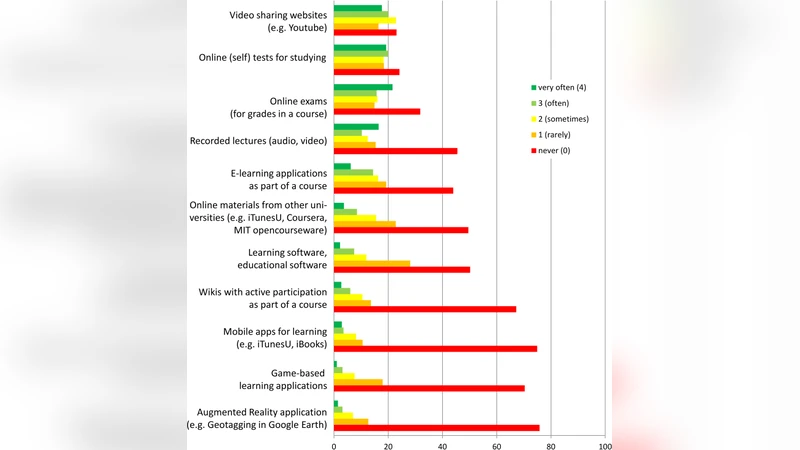
The Web 2.0 has permeated academic life. The use of online information services in post-secondary education has led to dramatic changes in faculty teaching methods as well as in the learning and study behavior of students. At the same time, traditional information media, such as textbooks and printed handouts, still form the basic pillars of teaching and learning. This paper reports the results of a survey about media usage in teaching and learning conducted with Western University students and instructors, highlighting trends in the usage of new and traditional media in higher education by instructors and students. In addition, the survey comprises part of an international research program in which 20 universities from 10 countries are currently participating. Further, the study will hopefully become a part of the ongoing discussion of practices and policies that purport to advance the effective use of media in teaching and learning.
💡 Research Summary
The paper presents a comprehensive investigation into how post‑secondary institutions blend traditional print media with Web 2.0 digital tools in teaching and learning. Using a large‑scale online questionnaire administered at Western University, the authors collected responses from roughly 900 students and 300 faculty members, achieving a 78 % response rate. The survey was organized into four sections: (1) frequency and type of media used for coursework and lecture preparation, (2) specific purposes (e.g., content delivery, collaboration, assessment), (3) perceived usefulness and satisfaction, and (4) expectations for future media integration.
Quantitative analysis (descriptive statistics, cross‑tabulations) and qualitative text‑mining revealed several consistent patterns. First, faculty are increasingly incorporating digital resources—recorded video lectures, cloud‑based file sharing, and interactive quizzes—into their instructional design; 62 % reported regular use of such tools, a rise of 18 percentage points over the previous five‑year period. Nevertheless, printed textbooks and hand‑outs remain the primary learning artifacts, cited by 85 % of instructors as essential for most courses. Second, students heavily rely on mobile devices for accessing course materials (78 % daily use) and actively participate in social‑media‑based study groups, yet they revert to PDFs of textbooks or printed lecture notes when preparing for exams or consolidating core concepts. This indicates that digital media function largely as supplementary or “extension” resources, while traditional media continue to support deep, sustained learning.
Cross‑institutional comparison within the broader international project (20 universities across 10 countries) shows regional variation: North American and European campuses exhibit faster digital adoption, whereas Asian and Oceanian sites retain higher dependence on printed texts, reflecting cultural, policy, and infrastructure differences.
The authors interpret these findings through the lens of “multimodal learning design.” They argue that effective pedagogy should deliberately combine the motivational and collaborative affordances of Web 2.0 tools with the reliability, consistency, and cognitive scaffolding offered by printed materials. Policy recommendations include: (a) establishing robust digital‑rights and accessibility frameworks, (b) expanding open educational resources to offset textbook costs, (c) providing systematic professional development for faculty to enhance digital competencies, and (d) implementing longitudinal assessment mechanisms that link media usage patterns to measurable learning outcomes.
Limitations are acknowledged: the reliance on self‑reported data, the single‑institution sample, and the absence of direct performance metrics. Future research directions propose longitudinal studies that track academic achievement alongside media usage, as well as discipline‑specific models for optimal media mixes.
In sum, the study confirms that while Web 2.0 technologies are reshaping instructional practices, traditional print media remain a foundational pillar in higher education. The strategic, complementary integration of both media types is essential for maximizing learning effectiveness, and institutions must adopt coordinated infrastructural, policy, and pedagogical measures to realize this potential.
Comments & Academic Discussion
Loading comments...
Leave a Comment