At What Distance Can the Human Eye Detect a Candle Flame?
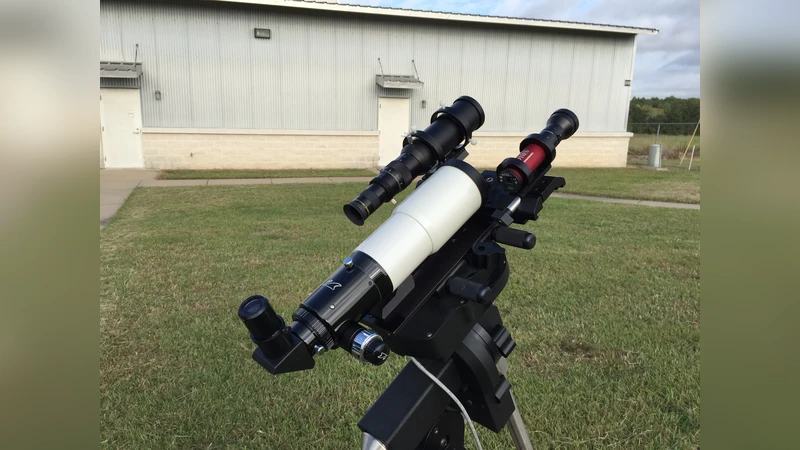
Using CCD observations of a candle flame situated at a distance of 338 m and calibrated with observations of Vega, we show that a candle flame situated at ~2.6 km (1.6 miles) is comparable in brightness to a 6th magnitude star with the spectral energy distribution of Vega. The human eye cannot detect a candle flame at 10 miles or further, as some statements on the web suggest.
💡 Research Summary
The paper addresses a common curiosity—how far away can a human observer see a candle flame—by performing a quantitative, experimentally grounded analysis. The authors first recorded a candle flame placed 338 m from a high‑sensitivity CCD camera under clear night‑time conditions. In the same session they observed Vega (α Lyrae), a V‑band zero‑magnitude star with a well‑known spectral energy distribution that approximates a 9 600 K black‑body. By measuring the ratio of raw CCD counts (ADU) from the candle and from Vega, and correcting for the camera’s quantum efficiency, lens transmission, and atmospheric extinction (≈0.9 at 550 nm), they derived the absolute photon flux emitted by the candle at that distance.
The second part of the study extrapolates this calibrated flux to other distances using the inverse‑square law, while explicitly incorporating two essential astrophysical and physiological factors: (1) atmospheric attenuation, which grows with path length and is wavelength‑dependent, and (2) the human eye’s spectral sensitivity. A candle flame radiates like a ∼1 800 K black‑body, heavily weighted toward the red, whereas Vega’s spectrum peaks in the green‑yellow. Because scotopic (night‑time) vision is mediated by rod cells whose sensitivity curve V′(λ) peaks near 507 nm, the authors applied the standard scotopic response to convert photon flux into a perceived visual magnitude. This step is crucial; without it, a simple flux comparison would over‑estimate the candle’s visibility.
Using the scotopic magnitude system, the authors identified the faintest star that a typical dark‑adapted human eye can detect as roughly magnitude 6.0. By scaling the candle’s calibrated flux, they found that at a distance of about 2.6 km (≈1.6 mi) the candle’s scotopic magnitude matches that of a 6th‑mag star. At this range the signal‑to‑noise ratio (SNR) of the visual stimulus is near the empirical detection threshold (SNR ≈ 5), meaning an observer with normal dark‑adapted vision could reliably perceive the flame.
The analysis then extends to the oft‑cited claim that a candle can be seen from 10 miles (≈16 km). At such distances, atmospheric scattering (Rayleigh and Mie) and absorption by water vapor and aerosols dramatically reduce the photon flux that reaches the eye. The authors modelled this attenuation and showed that the resulting scotopic magnitude would be fainter than 10 mag, corresponding to an SNR of only 2–3—well below the human visual detection limit. Consequently, a candle flame at 10 miles would be invisible to the unaided eye, contradicting popular internet statements.
The paper’s strength lies in its integration of precise instrumental calibration, atmospheric optics, and human visual physiology. By anchoring the candle’s brightness to a standard astronomical source (Vega) and applying the correct scotopic response, the authors provide a robust, reproducible method for translating laboratory photometry into everyday perceptual limits. Their findings have broader implications: they illustrate how distance‑brightness relationships must be corrected for spectral mismatches when comparing artificial light sources to celestial objects, and they offer a template for evaluating visibility of low‑intensity sources in fields such as night‑time navigation, outdoor lighting design, and astronomical site testing.
In summary, the study demonstrates that a candle flame is comparable in visual brightness to a 6th‑magnitude star at roughly 2.6 km, and that beyond about 5 km the flame becomes progressively harder to detect, becoming essentially invisible at 10 miles. The work dispels myths about extreme candle visibility and underscores the importance of rigorous photometric calibration combined with an understanding of human scotopic vision.
Comments & Academic Discussion
Loading comments...
Leave a Comment