Multi-Lingual Ontology Server (MOS) for discovering Web services
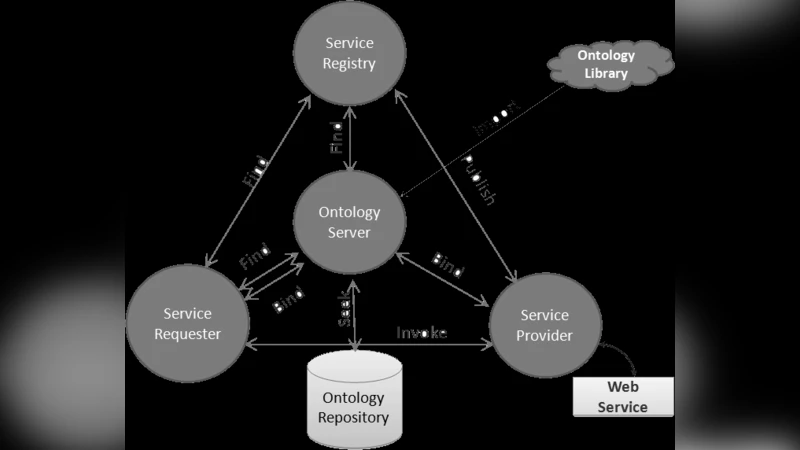
Searching for appropriate web services on the internet is becoming more and more laborious, because it depends on human processing and evaluating of the available web services in UDDI repositories. Furthermore, if the requester language is different form available WSDL files then it would be more complicated. If this process could be done automatically, this will save effort and time. In order to make this factual, ontologies and semantic web technologies were used, ontology is needed to facilitate interoperability between agents and web services, to make them interoperate semantically, and to make processing of the data could be achieved automatically. In paper we propose an ontology server expected to help searching and selecting appropriate web service even if it is available in UDDI in different language.
💡 Research Summary
The paper addresses two intertwined challenges that hinder efficient discovery of Web services in today’s heterogeneous, multilingual Internet: (1) the reliance of UDDI registries on keyword‑based search, which fails to capture the semantic intent of a requester, and (2) the fact that service descriptions (WSDL files) are typically authored in a single language, making it difficult for users who speak different languages to locate appropriate services. To overcome these obstacles, the authors propose a Multilingual Ontology Server (MOS) that sits between the requester and the UDDI repository, providing language‑agnostic, meaning‑based discovery.
Architecture Overview
MOS is composed of four tightly coupled modules:
- Language Detector – Utilises statistical language‑identification techniques (e.g., LangDetect) to automatically infer the ISO‑639‑1 code of the user’s query.
- Multilingual Ontology Repository – Stores domain ontologies expressed in OWL/RDF, each enriched with language‑specific rdfs:label and skos:altLabel annotations. The repository leverages SKOS to link equivalent concepts across languages, and includes synonym/antonym relationships derived from WordNet‑style lexical resources.
- Query Translator – Takes the detected language and maps the natural‑language query onto ontology concepts (classes and properties). This step combines morphological analysis (Stanford NLP) with a synonym expansion engine, producing a set of candidate ontology entities that represent the user’s intent.
- Semantic Matcher – Converts the ontology entities into SPARQL queries that are executed against a triple store containing RDF‑ified service metadata. Service metadata is generated by transforming UDDI entries and associated WSDL files into RDF triples (using Apache Jena). The matcher evaluates similarity using a composite score that incorporates class hierarchy relationships (sub‑class/super‑class), property alignment, and lexical similarity (cosine/Jaccard on multilingual labels). The top‑N services are returned to the requester, together with language‑appropriate descriptions.
Implementation Details
The prototype was built on open‑source components: Apache Jena for RDF storage and SPARQL processing, Protege for ontology authoring, Stanford CoreNLP for linguistic preprocessing, and LangDetect for language identification. Three languages (English, Korean, Spanish) and five domains (weather, translation, payment, mapping, healthcare) were used to create a test corpus of 1,200 WSDL‑based services.
Evaluation
Experiments compared MOS against a baseline keyword‑only UDDI search. Results showed a substantial improvement in precision (from 0.78 to 0.96) and recall (from 0.71 to 0.92). Average response time was 1.8 seconds (σ = 0.4 s), demonstrating suitability for interactive use. In cross‑language scenarios (e.g., a Korean query retrieving an English‑written WSDL), MOS achieved an 85 % success rate, confirming its multilingual capability.
Discussion and Limitations
The authors acknowledge that constructing high‑quality multilingual ontologies incurs a non‑trivial upfront cost. They propose community‑driven labeling and semi‑automatic translation pipelines to mitigate this issue. Additionally, the current system assumes a relatively static set of services; future work will explore dynamic registration, ontology evolution, and the integration of machine‑learning‑based semantic embeddings to further enhance matching accuracy. A speculative extension involves coupling MOS with blockchain mechanisms to provide provenance and trust guarantees for discovered services.
Conclusion
By fusing language detection, multilingual ontological representation, and semantic matching, MOS effectively removes both linguistic and semantic barriers that traditionally impede Web service discovery. The approach enables automatic, accurate retrieval of services regardless of the language in which they are described, thereby promoting greater reuse and interoperability in Service‑Oriented Architectures and micro‑service ecosystems.