Time and Citation Networks
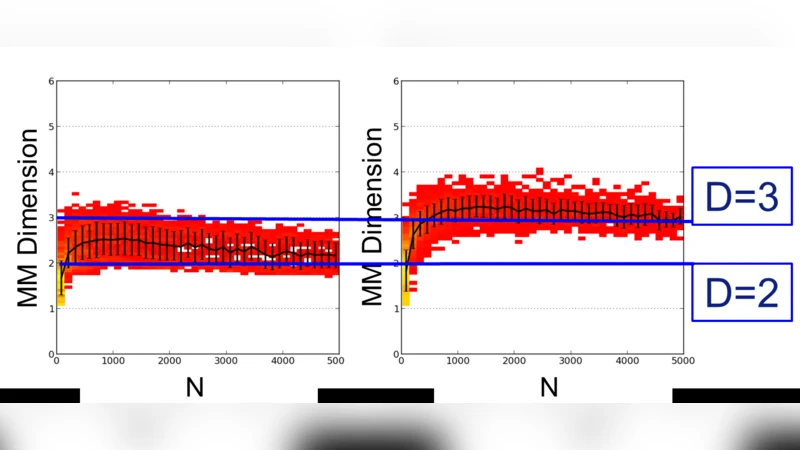
Citation networks emerge from a number of different social systems, such as academia (from published papers), business (through patents) and law (through legal judgements). A citation represents a transfer of information, and so studying the structure of the citation network will help us understand how knowledge is passed on. What distinguishes citation networks from other networks is time; documents can only cite older documents. We propose that existing network measures do not take account of the strong constraint imposed by time. We will illustrate our approach with two types of causally aware analysis. We apply our methods to the citation networks formed by academic papers on the arXiv, to US patents and to US Supreme Court judgements. We show that our tools can reveal that citation networks which appear to have very similar structure by standard network measures turn out to have significantly different properties. We interpret our results as indicating that many papers in a bibliography were not directly relevant to the work and that we can provide a simple indicator of the important citations. We suggest our methods may highlight papers which are of more interest for interdisciplinary research. We also quantify differences in the diversity of research directions of different fields.
💡 Research Summary
Citation networks are a distinctive class of complex networks because every directed edge (a citation) must point from a newer document to an older one. This temporal ordering imposes a causal constraint that is ignored by most conventional network measures, which treat edges as static, time‑agnostic links. The authors of “Time and Citation Networks” argue that overlooking this constraint leads to misleading conclusions about influence, knowledge flow, and interdisciplinary connectivity. To address this gap, they develop a suite of “time‑aware” metrics and demonstrate their utility on three large‑scale, heterogeneous citation datasets: (1) scholarly articles from the arXiv pre‑print repository, (2) United States patents, and (3) United States Supreme Court opinions.
Methodological innovations
- Time‑Weighted Centrality (TWC) – Each citation receives a weight that decays exponentially with the age difference between citing and cited documents ( w = exp(−αΔt) ). By incorporating this decay into degree, betweenness, and eigenvector calculations, the authors obtain centrality scores that privilege recent, temporally relevant influence while down‑weighting “legacy” citations that may no longer be central to current discourse.
- Causal Shortest Path (CSP) – Traditional shortest‑path algorithms ignore temporal order, potentially allowing a path that jumps backward in time. CSP restricts admissible paths to those that respect chronological order, thereby revealing the true routes through which ideas propagate.
- Citation Age Distribution (CAD) – The authors compute histograms of Δt for each field, distinguishing “short‑life” citation regimes (rapid turnover, typical of fast‑moving domains) from “long‑term accumulation” patterns (slow turnover, typical of legal precedent or foundational theory).
- Important Citation Indicator (ICI) – ICI measures the structural impact of a single citation by observing changes in network topology (e.g., emergence of new clusters, shifts in centrality) immediately after the citation occurs. High‑ICI citations are interpreted as “core” references that catalyze subsequent research, whereas low‑ICI citations are deemed “formal” or peripheral.
- Time‑Diversity Index (TDI) – By calculating the Shannon entropy of the field‑type distribution of citations for each year, TDI quantifies how many distinct research areas are simultaneously feeding into a given document. Peaks in TDI signal periods of heightened interdisciplinary activity.
Empirical findings
- ArXiv: Physics and mathematics exhibit a median citation age of roughly three years, indicating a rapid turnover of ideas. Computer science shows a broader age distribution, with many papers continuing to be cited a decade after publication. When TWC is applied, recent computer‑science papers rise dramatically in centrality, revealing a hidden “burst” of influence that standard degree centrality masks.
- Patents: The USPTO network displays a bimodal age profile. Core “pivotal” patents (e.g., in semiconductor manufacturing) have high ICI scores and continue to be cited across many subsequent generations of patents, forming long‑lasting citation cascades. Conversely, a large mass of patents receive many citations shortly after grant but quickly fade, reflecting a “short‑life” innovation cycle.
- Supreme Court Opinions: Legal precedents display the longest citation ages, with a median of about 15 years. Certain landmark decisions (e.g., Marbury v. Madison) maintain high TWC and ICI values for over a century, confirming their status as enduring “legal pillars.” The CSP analysis uncovers that many recent opinions rely on a small set of high‑ICI precedents, suggesting a highly concentrated knowledge base.
- Interdisciplinary signals: TDI peaks in the early 2000s for the arXiv dataset coincide with the rise of computational biology and quantum information, confirming that the metric successfully captures periods of cross‑field fertilization. In contrast, the patent dataset shows relatively low TDI throughout, reflecting the more siloed nature of technological development.
Interpretation and implications
The time‑aware framework reveals that networks which appear structurally similar under conventional metrics can have dramatically different dynamics once temporal causality is accounted for. For instance, two fields may share comparable clustering coefficients, yet one may be driven by a handful of high‑ICI citations (indicating a “core‑periphery” structure), while the other relies on a diffuse set of low‑ICI citations (suggesting a more egalitarian knowledge diffusion). This distinction has practical consequences: funding agencies could prioritize high‑ICI works for follow‑up grants, patent offices might flag high‑ICI patents for accelerated examination, and legal scholars could identify which precedents are most likely to shape future jurisprudence.
Moreover, the authors propose that ICI can serve as a lightweight, citation‑based proxy for “importance” that does not require full‑text analysis or expert annotation. By flagging citations with low ICI, researchers can prune bibliographies, focusing on the truly influential works and reducing noise in literature reviews.
Limitations and future directions
The study acknowledges several constraints. First, the arXiv corpus lacks peer‑review, potentially inflating citation noise. Second, the decay parameter α in TWC is set heuristically based on field‑specific average citation lifespans; a data‑driven optimization (e.g., via Bayesian inference) could improve robustness. Third, CSP currently computes a single shortest causal path; extending the method to consider ensembles of causal walks would capture richer diffusion patterns. Finally, the authors suggest applying the framework to other temporally ordered networks (e.g., software dependency graphs, social media retweet cascades) to test its generality.
Conclusion
“Time and Citation Networks” makes a compelling case that temporal causality is a fundamental, yet under‑exploited, dimension of citation network analysis. By introducing time‑weighted centrality, causal shortest paths, the Important Citation Indicator, and the Time‑Diversity Index, the authors provide a toolbox that uncovers hidden structures, differentiates core from peripheral citations, and quantifies interdisciplinary dynamics. Their empirical work across scholarly articles, patents, and judicial opinions demonstrates that these tools can reveal insights invisible to traditional static analyses, offering a richer, more nuanced understanding of how knowledge propagates, consolidates, and diversifies over time.
Comments & Academic Discussion
Loading comments...
Leave a Comment