Preferential Attachment in an Internet-mediated Human Network
In the advent of the Internet, web-mediated social networking has become of great influence to Filipinos. Networking sites such as Friendster, YouTube, FaceBook and MySpace are among the most well known sites on the Internet. These sites provide a wide range of services to users from different parts of the world, such as connecting and finding people, as well as, sharing and organizing contents. The popularity and accessibility of these sites enable information to be available. These allow people to analyze and study the characteristics of the population of online social networks. In this study, we developed a computer program to analyze the structural dynamics of a locally popular social networking site: The Friendster Network. Understanding the structural dynamics of a virtual community has many implications, such as finding an improvement on the current networking system, among others. Based on our analysis, we found out that users of the site exhibit preferential attachment to users with high number of friends.
💡 Research Summary
The paper investigates the dynamic structural properties of a locally popular social networking site—Friendster—by focusing on users whose listed hometown is Los Baños, Laguna, Philippines. Using a custom‑built web‑crawling robot written in Perl, the authors collected demographic data (age, gender, relationship status) and complete friend lists for all identified accounts across three distinct time points: August 5, August 26, and September 2, 2008. The collected information was stored in relational tables (“account” and “friends”), from which an undirected graph was constructed (each user as a vertex, each friendship as an edge). The adjacency matrix of this graph was analyzed with the network‑analysis tool Pajek, yielding a set of standard graph metrics: degree distribution, average separation (average shortest‑path length), clustering coefficient, size of the largest connected component, average degree, and a measure of preferential attachment.
The degree distributions for all three snapshots follow a power‑law with exponent λ≈‑1.02 (R²≈0.84), confirming that the network exhibits scale‑free characteristics: a small number of highly connected hubs dominate the connectivity pattern. By plotting the number of new links that each existing node receives between successive snapshots, the authors demonstrate that new users disproportionately attach to nodes that already have many friends. This empirical evidence supports the hypothesis of preferential attachment, a mechanism widely used in theoretical models of network growth (e.g., Barabási‑Albert model).
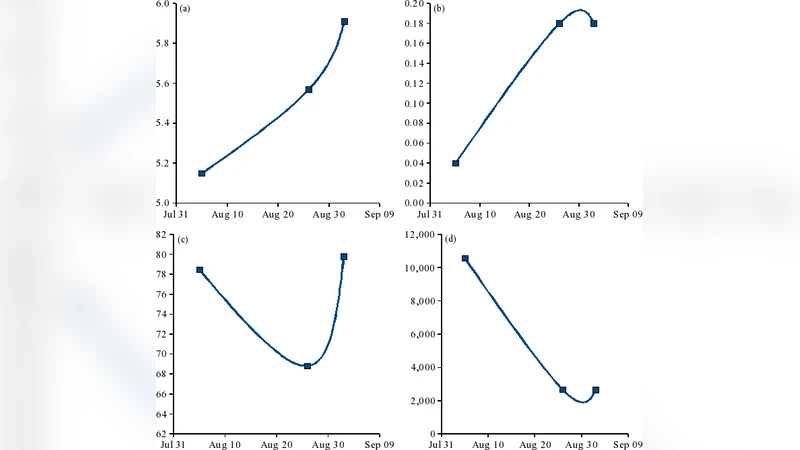
Temporal analysis reveals several additional trends. The average separation of nodes increases over time (from about 4.5 to values approaching 5–6), indicating that the network becomes less compact as it expands; new members join with relatively few connections, thereby stretching the overall diameter. The clustering coefficient declines sharply from 0.1824 to 0.0352, suggesting that friends of a user are increasingly unlikely to be friends with each other, i.e., the network’s local cohesiveness weakens. Correspondingly, the size of the largest connected component (the “giant component”) shrinks, a pattern the authors attribute partly to accounts becoming private or being deleted, which fragments the graph. Average degree also drops, meaning that on average users lose more friendships than they gain, reinforcing the picture of a network that is both expanding and diluting its internal connectivity.
The authors discuss the implications of these findings for several domains. In marketing, political campaigning, or information diffusion, the identified hubs (high‑degree users) represent strategic targets because preferential attachment makes them natural conduits for rapid spread. Conversely, the observed reduction in clustering and increase in path length may impair the efficiency of information propagation and reduce the robustness of the social fabric. From a platform‑design perspective, the results suggest a need for mechanisms that encourage new users to form multiple connections and that help preserve existing ties, thereby counteracting the observed trend toward fragmentation.
Methodologically, the study showcases a practical approach to longitudinal social‑network analysis using publicly available web data, without requiring cooperation from the service provider. However, the authors acknowledge limitations: the observation window spans only three weeks, the geographic focus is narrow, and the analysis does not control for external factors such as changes in Friendster’s policies or the emergence of competing platforms. Future work is proposed to extend the time horizon, incorporate multiple regions and platforms, and to model how exogenous events influence the dynamics of preferential attachment and overall network topology.
In conclusion, the research provides empirical confirmation that Friendster users in Los Baños exhibit preferential attachment—new users tend to connect to already well‑connected individuals—and that, over the short observation period, the network’s average distance grows, clustering diminishes, the giant component contracts, and average degree falls. These dynamics have practical relevance for the design of online social systems, the planning of viral marketing or public‑information campaigns, and the development of strategies to mitigate the spread of spam or malware within evolving social graphs.
Comments & Academic Discussion
Loading comments...
Leave a Comment