Symbolic and Asynchronous Semantics via Normalized Coalgebras
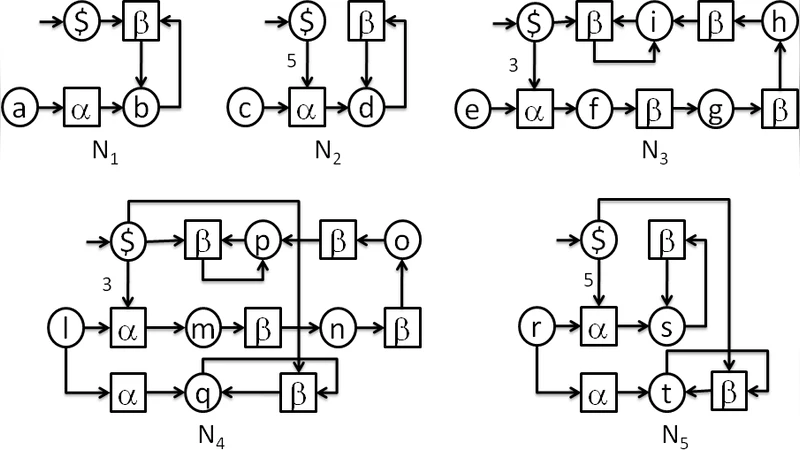
The operational semantics of interactive systems is usually described by labeled transition systems. Abstract semantics (that is defined in terms of bisimilarity) is characterized by the final morphism in some category of coalgebras. Since the behaviour of interactive systems is for many reasons infinite, symbolic semantics were introduced as a mean to define smaller, possibly finite, transition systems, by employing symbolic actions and avoiding some sources of infiniteness. Unfortunately, symbolic bisimilarity has a different shape with respect to ordinary bisimilarity, and thus the standard coalgebraic characterization does not work. In this paper, we introduce its coalgebraic models. We will use as motivating examples two asynchronous formalisms: open Petri nets and asynchronous pi-calculus. Indeed, as we have shown in a previous paper, asynchronous bisimilarity can be seen as an instance of symbolic bisimilarity.
💡 Research Summary
The paper addresses a fundamental mismatch between the traditional coalgebraic treatment of system semantics and the needs of symbolic semantics for interactive systems. In the classic setting, a labeled transition system (LTS) is modeled as a coalgebra for a suitable endofunctor B, and bisimilarity coincides with the kernel of the unique morphism into the final B‑coalgebra. This works well when the transition system is finite, but many realistic systems have infinite state spaces, prompting the introduction of symbolic semantics. Symbolic transition systems annotate each transition with a minimal context c and a symbolic action α, written p c,α → p′, and they are equipped with a derivation relation ⊢ that captures logical consequences among transitions.
Symbolic bisimilarity, however, is not a symmetric relation in the usual sense: when one player proposes a transition, the opponent may answer with a transition bearing a different label, and the game then continues from a state that has been transformed by the context (e.g., a name substitution). Because of this asymmetry, the ordinary coalgebraic framework (Coalg B) cannot capture symbolic bisimilarity as the kernel of a final morphism.
To overcome this, the authors introduce structured coalgebras (Coalg H), where the carrier of a coalgebra is an object of an algebraic category (e.g., terms modulo α‑conversion, parallel composition, name restriction) and the transition map respects the algebraic structure. Within this setting they define two important subcategories:
-
Saturated coalgebras (Coalg ST) – these contain all transitions that are logical consequences of the symbolic ones, i.e., the saturated transition system. In this category, ordinary bisimilarity on the saturated LTS coincides with the intended saturated bisimilarity ∼ S. Coalg ST has a final object, and its final morphism yields exactly ∼ S. However, the saturated system is heavily redundant: many transitions are derivable from others, making minimisation infeasible.
-
Normalized coalgebras (Coalg NT) – the authors define redundant transitions (those derivable via ⊢) and semantically redundant transitions (those derivable up to bisimilarity). A normalized coalgebra is a coalgebra that contains no semantically redundant transitions. The category Coalg NT is shown to be isomorphic to Coalg ST, thus also possessing a final object. Crucially, the final NT‑coalgebra is free of redundant behaviour, and its final morphism characterises a normalized bisimilarity that coincides with ∼ S. Moreover, minimisation in Coalg NT is exactly the symbolic minimisation algorithm previously introduced by the authors (reference
Comments & Academic Discussion
Loading comments...
Leave a Comment