Complexity of a Tetris variant
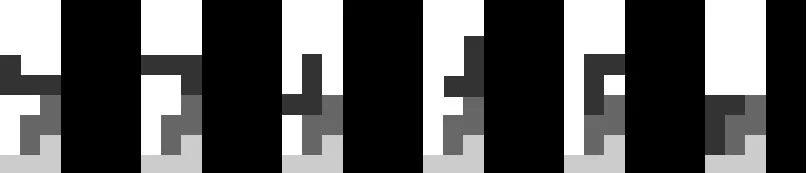
In this paper we are going to solve an open problem about the game tetris. We are going to give the first results in the complexity of a variant of offline tetris introduced by Erik Demaine, Susan Hohenberger and David Liben Nowell in their paper “Tetris is hard, even to approximate”. In this variant, that follows a model of movements introduced by John Brzustowsky, we can move and rotate a piece the number of times we want in the first row. But then, when we left the piece fall, we cannot move it or rotate it anymore. We are going to demonstrate that the problem of maximizing the number of cleared lines of this variant on a particular game board, is NP-hard by reducing the 3-partition problem to the problem of clearing the board in this variant of tetris
💡 Research Summary
The paper investigates a restricted version of the classic falling‑block puzzle Tetris, where the player is allowed unlimited horizontal moves and rotations only while a piece resides in the topmost row. Once the piece is dropped one row lower, it becomes immobile for the remainder of its descent. This model, originally introduced by John Brzustowski, differs from the standard Tetris mechanics and from earlier hardness results that assumed unrestricted falling and rotation.
The authors aim to prove that the decision problem “Can the given board be completely cleared?” for this variant is NP‑hard. To achieve this, they construct a polynomial‑time reduction from the strongly NP‑complete 3‑Partition problem. An instance of 3‑Partition consists of 3s positive integers a₁,…,a₃ₛ and a target sum B such that each aᵢ satisfies B/4 < aᵢ < B/2 and the total sum equals s·B. The goal is to partition the multiset into s disjoint triples each summing exactly to B.
The reduction maps each triple‑partition instance to a specially designed Tetris board. The board width is set to 4·s + 3 cells; the height is 16 + 4·T + 5 rows, where T equals the target sum B. The board contains s “buckets”, each a vertical chamber of width three cells bounded by left and right separator columns. At the bottom of every bucket two pre‑placed pieces—a right‑facing gun (RG) and a left‑facing snake (LS)—occupy the first two rows, creating a fixed scaffold.
For each integer aᵢ the reduction generates a deterministic sequence of tetrominoes:
- Open the bucket – a left‑facing gun (LG) is placed at the top of a chosen bucket, creating an entry point.
- Encode a digit – each unit of the integer is represented by a block consisting of two T‑shaped pieces followed by a right‑facing gun (RG). Thus aᵢ = k requires k such blocks, stacking a total height of 4·k cells.
- Close the bucket – after all blocks for aᵢ have been placed, a right‑facing gun (RG) and a left‑facing snake (LS) are inserted to seal the bucket.
Repeating this pattern for all 3s numbers fills each bucket to exactly the height 16 + 4·T. After the bucket‑filling phase, the only remaining pieces are a collection of I‑tetrominoes. Because the rightmost column of the board is a single‑cell‑wide “fill region”, the I‑pieces can be placed vertically, one atop another, to clear that region and consequently remove all lines, provided the buckets have been filled correctly.
The core of the hardness proof consists of ten lemmas that exhaustively rule out any deviation from the prescribed placement:
- Lemma 1 shows that only I‑pieces can occupy the single‑cell fill region; any other shape would create an unremovable gap.
- Lemma 2 proves that using an I‑piece inside a bucket would deprive the fill region of the necessary I‑pieces, preventing full clearance.
- Lemma 3 argues that placing any piece above the height 16 + 4·T forces the player to clear more lines than the available pieces allow.
- Lemma 4–7 examine each tetromino type (RG, T, LS) placed inside a closed bucket, demonstrating that each creates gaps that cannot be later filled without violating Lemma 2.
- Lemma 8 and Lemma 9 analyze incorrect encodings of a digit and incorrect closing sequences, respectively, showing that any alternative ordering inevitably generates irreparable holes.
- Lemma 10 establishes that there is exactly one way to open a bucket without creating a gap.
Collectively, these lemmas guarantee a one‑to‑one correspondence between a feasible 3‑Partition and a successful clearing of the constructed Tetris board. If the original instance admits a partition, the player can follow the unique legal sequence of moves and clear the board; otherwise, any attempt will violate at least one lemma, leaving an unfillable gap and making full clearance impossible.
Consequently, the decision problem for this Tetris variant is at least as hard as 3‑Partition, establishing NP‑hardness. The paper contributes to the literature by showing that even under severe movement restrictions—unlimited manipulation only in the top row and a fixed piece inventory—the line‑clearing optimization remains computationally intractable. While the reduction is conceptually sound, the manuscript suffers from numerous typographical errors, insufficiently labeled figures, and informal proof sketches. A more rigorous formalization of the lemmas and a clearer presentation of the construction would strengthen the result, but the central claim—that clearing the board in this variant is NP‑hard—remains valid.
Comments & Academic Discussion
Loading comments...
Leave a Comment