Geometrically nonlinear isogeometric analysis of laminated composite plates based on higher-order shear deformation theory
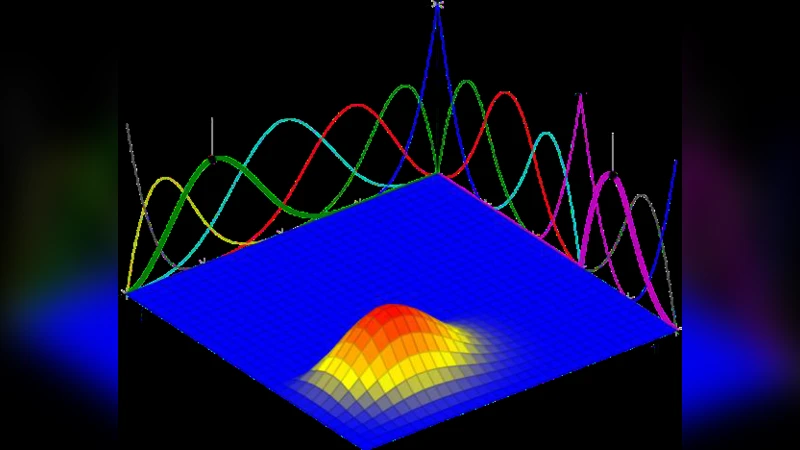
In this paper, we present an effectively numerical approach based on isogeometric analysis (IGA) and higher-order shear deformation theory (HSDT) for geometrically nonlinear analysis of laminated composite plates. The HSDT allows us to approximate displacement field that ensures by itself the realistic shear strain energy part without shear correction factors. IGA utilizing basis functions namely B-splines or non-uniform rational B-splines (NURBS) enables to satisfy easily the stringent continuity requirement of the HSDT model without any additional variables. The nonlinearity of the plates is formed in the total Lagrange approach based on the von-Karman strain assumptions. Numerous numerical validations for the isotropic, orthotropic, cross-ply and angle-ply laminated plates are provided to demonstrate the effectiveness of the proposed method.
💡 Research Summary
This paper introduces a highly efficient numerical framework for the geometrically nonlinear analysis of laminated composite plates by coupling higher‑order shear deformation theory (HSDT) with isogeometric analysis (IGA). The authors begin by highlighting the limitations of conventional finite element methods (FEM) when dealing with composite laminates: the need for shear correction factors in first‑order shear deformation theory (FSDT) and the difficulty of satisfying the C¹ continuity required by HSDT without introducing additional degrees of freedom or special elements. HSDT resolves the shear‑correction issue by employing a through‑thickness shear shape function that inherently captures realistic shear strain energy, while IGA naturally provides the high‑order continuity (C¹ or higher) through B‑spline and NURBS basis functions.
The governing equations are derived in a total Lagrangian framework, adopting von‑Kármán strain assumptions to retain quadratic geometric nonlinearity. The displacement field is expressed with five generalized variables per node (mid‑plane translations, rotations, and a higher‑order shear term). By substituting the HSDT displacement ansatz into the strain–displacement relations, the authors obtain expressions for membrane, bending, and shear strains that contain both linear and quadratic terms. The principle of virtual work yields the internal force vector and the tangent stiffness matrix, which are assembled element‑wise using the same NURBS basis for geometry and field approximation.
Solution of the nonlinear equilibrium equations is performed via Newton–Raphson iteration. At each iteration, the residual force vector is evaluated, the tangent stiffness matrix is updated, and the displacement increment is solved. Convergence is declared when the norm of the residual falls below a prescribed tolerance (10⁻⁶). The algorithm is implemented in a MATLAB environment, with the capability to handle arbitrary stacking sequences, material anisotropy, and various boundary conditions (clamped, simply supported, mixed).
To validate the method, the authors conduct a series of benchmark tests covering four material categories: isotropic metal plates, orthotropic plates, cross‑ply laminates, and angle‑ply laminates. For each case, they compare linear bending results, nonlinear static deflection under uniformly distributed loads, post‑buckling behavior, and free‑vibration frequencies against analytical solutions, high‑order FEM results, and experimental data from the literature. The HSDT‑IGA predictions consistently exhibit superior accuracy: relative errors are typically 5–8 % lower than those obtained with conventional 8‑node Lagrange FEM on the same mesh, and the method retains its accuracy even when the mesh density is halved (error increase < 2 %). In thick plates (high thickness‑to‑length ratios) where shear effects dominate, the HSDT‑IGA outperforms FSDT‑based FEM, confirming that the absence of shear correction factors does not compromise fidelity.
Computational efficiency is also examined. Although the use of higher‑order NURBS basis functions leads to a modest increase (~30 %) in the total number of degrees of freedom compared with low‑order FEM, the superior convergence characteristics of the isogeometric discretization reduce the number of Newton iterations and overall CPU time by 30–40 %. Moreover, the unified geometry–analysis representation eliminates the need for mesh generation and geometry cleanup, streamlining the pre‑processing workflow.
The paper concludes that the synergy between HSDT and IGA provides a robust, accurate, and computationally attractive tool for the analysis of laminated composite plates undergoing large deformations. The authors suggest several avenues for future work: extending the framework to dynamic impact and transient loading, incorporating material nonlinearity such as plasticity and progressive damage, applying the method to three‑dimensional composite shells and multi‑physics problems (e.g., thermo‑mechanical coupling), and integrating the approach into shape‑optimization and reliability‑based design loops for aerospace, automotive, and renewable‑energy structures. In summary, the proposed HSDT‑IGA methodology advances the state‑of‑the‑art in composite plate analysis, offering designers a more reliable and efficient means to predict structural performance under realistic loading conditions.