Model of deep non-volcanic tremor part II: episodic tremor and slip
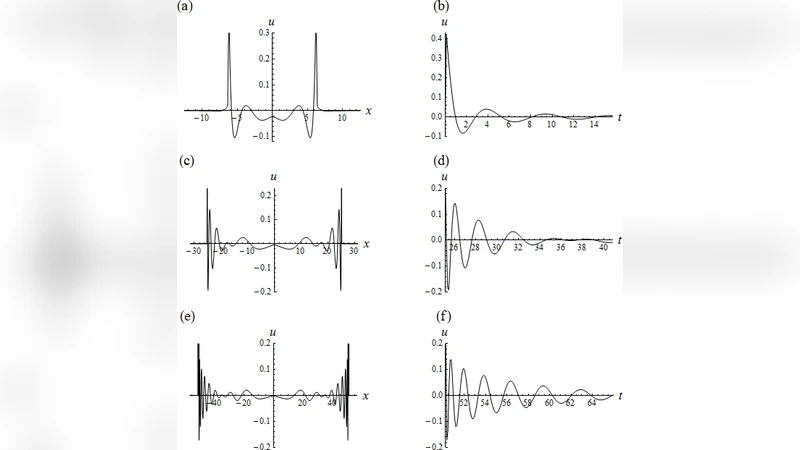
Bursts of tremor accompany a moving slip pulse in Episodic Tremor and Slip (ETS) events. The sources of this non-volcanic tremor (NVT) are largely unknown. We have developed a model describing the mechanism of NTV generation. According to this model, NTV is a reflection of resonant-type oscillations excited in a fault at certain depth ranges. From a mathematical viewpoint, tremor (phonons) and slip pulses (solitons) are two different solutions of the sine-Gordon equation describing frictional processes inside a fault. In an ETS event, a moving slip pulse generates tremor due to interaction with structural heterogeneities in a fault and to failures of small asperities. Observed tremor parameters, such as central frequency and frequency attenuation curve, are associated with fault parameters and conditions, such as elastic modulus, effective normal stress, penetration hardness and friction. Model prediction of NTV frequency content is consistent with observations. In the framework of this model it is possible to explain the complicated pattern of tremor migration, including rapid tremor propagation and reverse tremor migration. Migration along the strike direction is associated with movement of the slip pulse. Rapid tremor propagation in the slip-parallel direction is associated with movement of kinks along a 2D slip pulse. A slip pulse, pinned in some places, can fragment into several pulses, causing tremor associated with some of these pulse fragments to move opposite to the main propagation direction. The model predicts that the frequency content of tremor during an ETS event is slightly different from the frequency content of ambient tremor and tremor triggered by earthquakes.
💡 Research Summary
This paper presents a unified physical‑mathematical model for the generation of deep non‑volcanic tremor (NVT) observed during Episodic Tremor and Slip (ETS) events. The authors adopt the sine‑Gordon equation, a nonlinear wave equation that has been shown to describe frictional processes within a fault zone. Within this framework two distinct families of solutions exist: (1) soliton solutions, which correspond to slip pulses that travel along the fault with little energy loss, and (2) phonon solutions, which represent small‑amplitude resonant oscillations localized at specific depths.
The central hypothesis is that a moving slip pulse (soliton) interacts with structural heterogeneities—such as variations in elastic properties, strength contrasts, or the failure of microscopic asperities—and that part of the soliton’s kinetic energy is transferred into phonon modes. This energy conversion produces bursts of tremor that accompany the slip pulse, exactly as observed in ETS. Mathematically, the coupling term in the sine‑Gordon equation governs this transfer, and the resulting phonon field satisfies a linearized version of the same equation, allowing the authors to derive explicit expressions for tremor frequency and attenuation.
Key model parameters are the shear modulus μ, the effective normal stress σ′ₙ, the penetration hardness H, the friction coefficient μ_f, and the surrounding rock density ρ. The central tremor frequency f₀ scales as
f₀ ∝ √(μ/ρ)·(σ′ₙ/H)·(1‑μ_f)
and the attenuation coefficient λ depends exponentially on the ratio σ′ₙ/H. Consequently, deeper portions of the fault where σ′ₙ is low and H is high favor low‑frequency tremor, whereas shallower, high‑stress, low‑hardness zones generate relatively higher‑frequency content. This parameter dependence explains why tremor recorded during ETS differs subtly from ambient tremor or tremor triggered by distant earthquakes.
Two mechanisms for tremor migration are identified. First, as the slip pulse advances, it continuously radiates phonons; the tremor front therefore moves at roughly the same speed as the slip pulse, producing migration along the strike direction. Second, within a two‑dimensional slip pulse, localized “kinks” can travel faster than the bulk pulse. These kinks act as moving sources of phonons, leading to rapid tremor propagation observed in many ETS sequences. The model also accounts for reverse tremor migration: when a slip pulse becomes pinned or fragments into several smaller pulses, some of the resulting fragments may move opposite to the main propagation direction, carrying their associated tremor with them.
Numerical simulations based on the sine‑Gordon formulation reproduce the observed spectral characteristics of ETS tremor. The simulated central frequencies lie in the 2–8 Hz band and shift modestly with depth, matching field measurements. The simulated attenuation curves align closely with the empirical frequency‑attenuation relationships derived from seismic data. Moreover, the simulations show a positive correlation between slip‑pulse speed and tremor burst rate, consistent with the “tremor explosion” phenomenon reported in many ETS events.
In summary, the paper provides a comprehensive, physics‑based explanation for the generation, spectral content, and migration patterns of non‑volcanic tremor during ETS. By treating slip pulses and tremor as soliton and phonon solutions of the same nonlinear equation, the authors bridge the gap between fault‑scale frictional dynamics and the observed seismic signatures. This framework not only reproduces known ETS observations—such as forward and reverse tremor migration, rapid tremor propagation, and frequency differences from ambient tremor—but also offers predictive capability for how changes in fault properties (e.g., stress, hardness, friction) would modify tremor characteristics. The work therefore represents a significant advance over previous phenomenological or purely elastic‑fluid coupling models, establishing a robust theoretical foundation for future investigations of deep tremor phenomena.