Influence of autocorrelation on the topology of the climate network
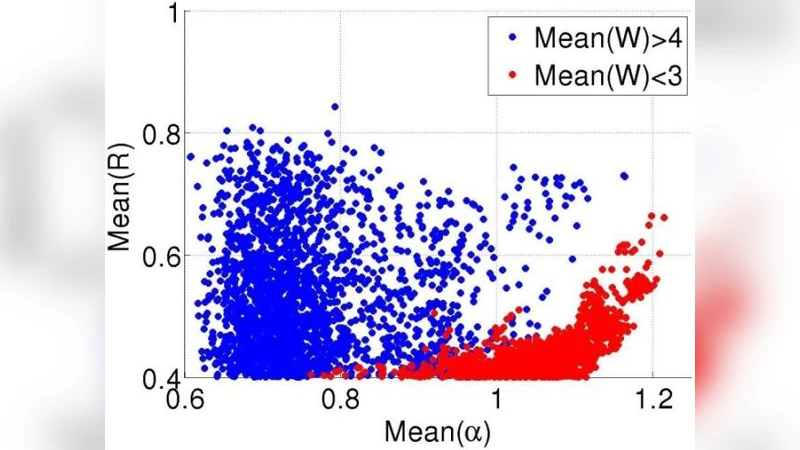
Different definitions of links in climate networks may lead to considerably different network topologies. We construct a network from climate records of surface level atmospheric temperature in different geographical sites around the globe using two commonly used definitions of links. Utilizing detrended fluctuation analysis, shuffled surrogates and separation analysis of maritime and continental records, we find that one of the major influences on the structure of climate networks is due to the auto-correlation in the records, that may introduce spurious links. This may explain why different methods could lead to different climate network topologies.
💡 Research Summary
The paper investigates how autocorrelation—persistent temporal memory within individual climate time series—affects the topology of climate networks constructed from surface‑level atmospheric temperature records worldwide. Two widely used link‑definition schemes are examined: (1) a simple Pearson correlation threshold, where a link is drawn if the absolute correlation between two sites exceeds a preset value, and (2) a lag‑maximization approach, where the maximum correlation over a range of time lags is compared to the same threshold. Both methods have been employed in numerous previous studies, yet they typically ignore the fact that each temperature series exhibits strong long‑range dependence, which can artificially inflate inter‑site correlations even when no physical coupling exists.
To quantify this effect, the authors first apply Detrended Fluctuation Analysis (DFA) to every site’s daily temperature series, obtaining Hurst exponents predominantly in the range 0.7–0.9. Such high H values indicate pronounced long‑range autocorrelation. Next, they generate surrogate data by randomly shuffling the temporal order of each series, thereby destroying autocorrelation while preserving the marginal distribution. When the two link‑definition schemes are applied to these shuffled surrogates, the resulting networks collapse: link density drops by more than 80 % for the Pearson‑threshold method and by a comparable amount for the lag‑maximization method. This dramatic reduction demonstrates that a substantial fraction of the links observed in the original networks are spurious, arising solely from the internal memory of the individual records.
The study further separates maritime and continental stations to explore geographic heterogeneity. Oceanic sites, buffered by the large heat capacity of water, display weaker autocorrelation and consequently fewer false links. Continental sites, subject to heterogeneous land‑surface processes, show stronger autocorrelation and a higher proportion of spurious connections—approximately 30 % more than their oceanic counterparts. This geographic disparity suggests that a one‑size‑fits‑all network construction may misrepresent the underlying climate dynamics, and that region‑specific preprocessing could be beneficial.
To mitigate the influence of autocorrelation, the authors propose several practical strategies. First, apply time‑series detrending or differencing (e.g., ARIMA modeling) to each record before computing inter‑site statistics, thereby reducing long‑range memory. Second, replace simple Pearson correlation with more sophisticated measures such as partial correlation, transfer entropy, or phase‑synchronization metrics, which are less sensitive to shared autocorrelation and can capture directed, nonlinear interactions. Third, after network construction, perform rigorous statistical validation—bootstrapping, false‑discovery‑rate correction, or surrogate‑based significance testing—to filter out links that are not statistically distinguishable from those generated by autocorrelated noise.
Overall, the paper makes a compelling case that autocorrelation is a primary source of topological distortion in climate networks. By systematically demonstrating how autocorrelation inflates link density, varies across land and sea, and can be curtailed through preprocessing and robust statistical testing, the authors provide a clear roadmap for future climate‑network research. Incorporating these recommendations will lead to networks that more faithfully reflect genuine atmospheric teleconnections, improve the reliability of network‑based climate diagnostics, and enhance the predictive skill of models that rely on network topology as an input.