Soliton Turbulence in Shallow Water Ocean Surface Waves
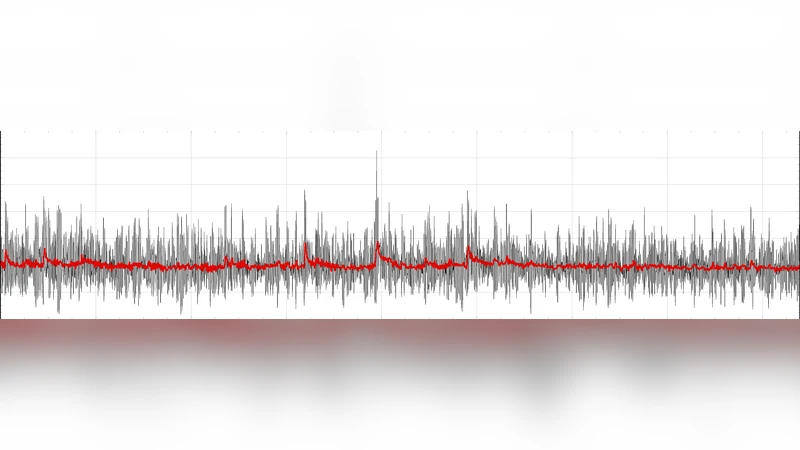
We analyze shallow water wind waves in Currituck Sound, North Carolina and experimentally confirm, for the first time, the presence of $soliton$ $turbulence$ in ocean waves. Soliton turbulence is an exotic form of nonlinear wave motion where low frequency energy may also be viewed as a $dense$ $soliton$ $gas$, described theoretically by the soliton limit of the Korteweg-deVries (KdV) equation, a $completely$ $integrable$ $soliton$ $system$: Hence the phrase “soliton turbulence” is synonymous with “integrable soliton turbulence.” For periodic/quasiperiodic boundary conditions the $ergodic$ $solutions$ of KdV are exactly solvable by $finite$ $gap$ $theory$ (FGT), the basis of our data analysis. We find that large amplitude measured wave trains near the energetic peak of a storm have low frequency power spectra that behave as $\sim\omega^{-1}$. We use the linear Fourier transform to estimate this power law from the power spectrum and to filter $densely$ $packed$ $soliton$ $wave$ $trains$ from the data. We apply FGT to determine the $soliton$ $spectrum$ and find that the low frequency $\sim\omega^{-1}$ region is $soliton$ $dominated$. The solitons have $random$ $FGT$ $phases$, a $soliton$ $random$ $phase$ $approximation$, which supports our interpretation of the data as soliton turbulence. From the $probability$ $density$ $of$ $the$ $solitons$ we are able to demonstrate that the solitons are $dense$ $in$ $time$ and $highly$ $non$ $Gaussian$.
💡 Research Summary
The paper presents the first experimental confirmation of soliton turbulence in ocean surface waves, using data collected in Currituck Sound, North Carolina, a shallow water environment (depth ≈ 2.63 m). The authors focus on the low‑frequency part of the wave spectrum, where they observe a power‑law decay proportional to ω⁻¹, in stark contrast to the ω⁻⁴ law predicted by classical weak‑wave turbulence theory for high‑frequency cascades.
The theoretical framework rests on the Korteweg‑de Vries (KdV) equation, which is completely integrable and solvable via the Inverse Scattering Transform (IST). For periodic or quasi‑periodic boundary conditions, the ergodic solutions of KdV are exactly described by Finite‑Gap Theory (FGT). The authors exploit this property to decompose the measured time series into soliton modes and to extract the associated spectral information.
A 28‑minute surface elevation record (8192 samples, Δt = 0.2048 s) was first analyzed with a fast Fourier transform (FFT) to obtain the overall power spectrum. The spectrum clearly separates into three regimes: (i) a low‑frequency region (f < 0.22 Hz) dominated by a ω⁻¹ slope, (ii) a narrow intermediate band (0.34–0.56 Hz) where nonlinear Schrödinger (NLS) dynamics are relevant, and (iii) a high‑frequency tail (f > 0.7 Hz) following the ω⁻⁴ cascade typical of wind‑driven gravity waves.
To isolate the soliton component, the authors applied a low‑pass filter (cut‑off at 0.22 Hz) and then performed an FGT analysis on the filtered signal. The FGT identifies each mode with an elliptic modulus close to unity as a soliton and provides its amplitude, width, and phase. Across the storm‑peak interval, roughly 120 solitons are detected per hour, with an average full‑width at half‑maximum of about 10.5 s and a mean height of 6.3 cm. The soliton phases are uniformly distributed over (0, 2π), confirming the “soliton random phase approximation” (SRPA) that underlies the statistical description of integrable soliton turbulence.
Statistical analysis of the soliton amplitudes reveals a strongly non‑Gaussian probability density function, characterized by heavy tails. Moreover, the largest solitons tend to appear beneath energetic wave packets, indicating that soliton formation is linked to the modulation of the broader wind‑wave field.
The authors argue that the observed ω⁻¹ low‑frequency spectrum is entirely accounted for by the dense soliton gas, rather than by linear wave components or weak turbulence. This conclusion is supported by the fact that the soliton modes saturate the low‑frequency part of the spectrum in the FGT representation, and by the measured random phase distribution.
In summary, the study demonstrates that in shallow water under strong wind forcing, the wave field can transition to a regime where a dense gas of interacting solitons governs the dynamics. This “integrable soliton turbulence” exhibits distinct spectral scaling, random phase statistics, and non‑Gaussian amplitude distributions, challenging the conventional weak‑turbulence paradigm and opening new avenues for modeling energy transfer and extreme events in coastal seas.
Comments & Academic Discussion
Loading comments...
Leave a Comment