How do life, economy and other complex systems escape the heat death?
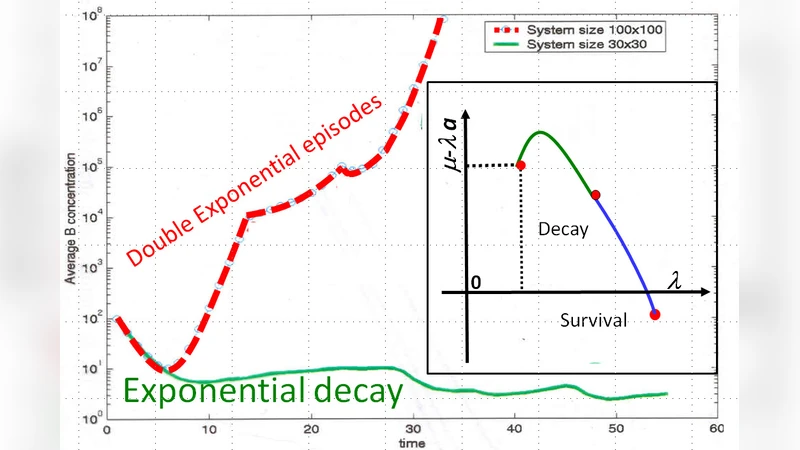
The primordial confrontation underlying the existence of our universe can be conceived as the battle between entropy and complexity. The law of ever-increasing entropy (Boltzmann H-theorem) evokes an irreversible, one-directional evolution (or rather involution) going uniformly and monotonically from birth to death. Since the 19th century, this concept is one of the cornerstones and in the same time puzzles of statistical mechanics. On the other hand, there is the empirical experience where one witnesses the emergence, growth and diversification of new self-organized objects with ever-increasing complexity. When modeling them in terms of simple discrete elements one finds that the emergence of collective complex adaptive objects is a rather generic phenomenon governed by a new type of laws. These ’emergence’ laws, not connected directly with the fundamental laws of the physical reality, nor acting ‘in addition’ to them but acting through them were called by Phil Anderson ‘More is Different’, ‘das Maass’ by Hegel etc. Even though the ’emergence laws’ act through the intermediary of the fundamental laws that govern the individual elementary agents, it turns out that different systems apparently governed by very different fundamental laws: gravity, chemistry, biology, economics, social psychology, end up often with similar emergence laws and outcomes. In particular the emergence of adaptive collective objects endows the system with a granular structure which in turn causes specific macroscopic cycles of intermittent fluctuations.
💡 Research Summary
The paper confronts a fundamental paradox in contemporary physics and the study of complex systems: on the one hand, the second law of thermodynamics, encapsulated in Boltzmann’s H‑theorem, predicts an inexorable increase of entropy that drives any isolated system toward a homogeneous “heat death.” On the other hand, empirical observation across a wide spectrum of domains—biology, economics, sociology, chemistry, and astrophysics—reveals the spontaneous emergence, growth, and diversification of highly organized structures that seem to defy this monotonic trend. The authors argue that this apparent contradiction is resolved not by invoking new fundamental forces, but by recognizing a distinct layer of “emergence laws” that operate through, rather than beside, the microscopic physical laws governing individual agents.
The concept of emergence laws is traced back to Philip Anderson’s famous dictum “More is Different” and to Hegel’s notion of “das Maass,” both of which emphasize that collective behavior can generate qualitatively new regularities. The paper systematically surveys five representative fields to illustrate how similar emergence patterns arise despite radically different underlying micro‑physics:
-
Astrophysics – Gravitational collapse of diffuse gas clouds produces stars and galaxies. While individual atoms obey Newtonian or relativistic dynamics, the resulting macroscopic “granules” (stellar clusters, galactic halos) exhibit ordered energy flows (nuclear fusion) that locally reduce entropy and create long‑lived structures.
-
Chemistry – Autocatalytic reaction networks generate self‑replicating molecular clusters. The microscopic collision rules are unchanged, yet the network self‑organizes into reaction pathways that sustain a higher degree of order, effectively converting chemical entropy into a structured “information” substrate.
-
Biology – Cells assemble metabolic and genetic circuits that give rise to multicellular organisms. The genetic code stores information that is replicated with high fidelity, allowing the system to maintain low “biological entropy” even as the surrounding environment trends toward higher thermodynamic entropy.
-
Economics – Individual agents (consumers, firms) engage in market transactions that aggregate into price, supply, and demand fields. These macroscopic variables form a granulated market structure that displays boom‑bust cycles, a hallmark of nonlinear feedback and critical dynamics.
-
Social Psychology – Personal opinions and emotions spread through social networks, producing cultural norms and collective identities. The emergent “social granules” (norms, institutions) act as repositories of shared information, thereby reducing social entropy while the underlying individual interactions remain stochastic.
Across all these domains, the authors identify a three‑stage hierarchy: (i) microscopic agents, (ii) intermediate granules (clusters, institutions, organisms), and (iii) macroscopic collective objects. Granulation is pivotal because it partitions the system into subsystems that can locally maintain low entropy while the overall entropy of the universe continues to rise. This partitioning gives rise to characteristic macroscopic cycles of intermittent fluctuations—periods of relative stability punctuated by rapid re‑organization events. The paper calls these “intermittent fluctuation cycles” and links them to two key dynamical features:
-
Non‑linear feedback loops – Small perturbations can be amplified through positive feedback within a granule, while negative feedback between granules stabilizes the overall system.
-
Self‑organized criticality – The system naturally evolves toward a critical state where a minor disturbance can trigger a cascade that reshapes the entire granulated architecture.
These dynamics allow complex systems to continuously convert the inexorable increase of microscopic entropy into structured, low‑entropy configurations—what the authors term “structural entropy.” In doing so, they effectively create a dynamic equilibrium that is distinct from the static thermodynamic equilibrium envisioned by classical statistical mechanics. The paper concludes that emergence laws provide a universal explanatory framework for why life, economies, societies, and even cosmic structures can “escape” the heat death. By continually generating and preserving information, complex systems maintain a form of ordered entropy that coexists with the overall trend toward disorder.
Finally, the authors outline future research directions: developing quantitative mathematical models of emergence laws, designing laboratory and computational experiments to test the predicted intermittent cycles, and employing machine‑learning‑driven simulations to explore the parameter space of granulation and feedback. Such work could deepen our understanding of the bridge between microscopic physics and macroscopic complexity, and perhaps reveal new strategies for managing engineered systems—such as sustainable economies or resilient ecosystems—so that they too can avoid the ultimate fate of thermal equilibrium.
Comments & Academic Discussion
Loading comments...
Leave a Comment