A node-capacitated Okamura-Seymour theorem
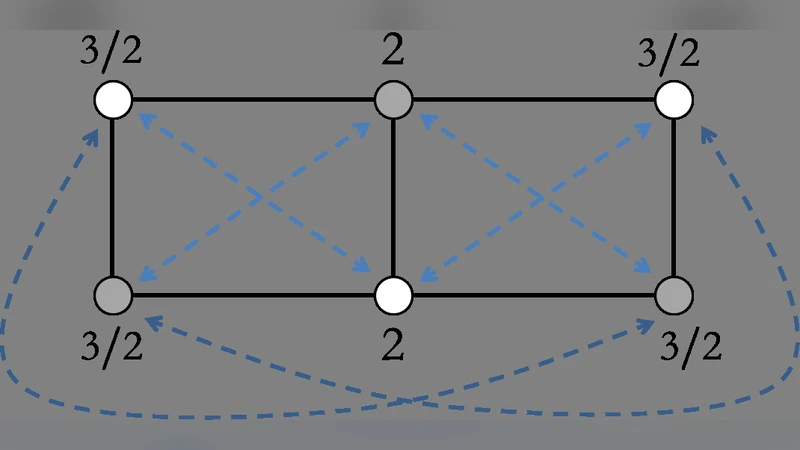
The classical Okamura-Seymour theorem states that for an edge-capacitated, multi-commodity flow instance in which all terminals lie on a single face of a planar graph, there exists a feasible concurrent flow if and only if the cut conditions are satisfied. Simple examples show that a similar theorem is impossible in the node-capacitated setting. Nevertheless, we prove that an approximate flow/cut theorem does hold: For some universal c > 0, if the node cut conditions are satisfied, then one can simultaneously route a c-fraction of all the demands. This answers an open question of Chekuri and Kawarabayashi. More generally, we show that this holds in the setting of multi-commodity polymatroid networks introduced by Chekuri, et. al. Our approach employs a new type of random metric embedding in order to round the convex programs corresponding to these more general flow problems.
💡 Research Summary
The paper tackles the long‑standing gap between the classical Okamura‑Seymour theorem for edge‑capacitated planar multi‑commodity flow and its counterpart for node‑capacitated networks. The original theorem guarantees that, when all terminals lie on a single face of a planar graph, the cut conditions are both necessary and sufficient for the existence of a feasible concurrent flow. Simple counter‑examples show that the same exact statement fails for node capacities: satisfying all node‑cut inequalities does not ensure a feasible flow.
The authors answer an open question posed by Chekuri and Kawarabayashi by proving an approximate flow‑cut theorem for node‑capacitated planar instances. Specifically, they show that there exists a universal constant (c>0) such that, if the node‑cut conditions hold, one can simultaneously route at least a (c)-fraction of every demand pair. The result is not limited to plain node capacities; it extends to the more general framework of multi‑commodity polymatroid networks introduced by Chekuri et al. In this model each vertex (v) is equipped with a submodular capacity function (\rho_v) that limits the total flow on any subset of incident edges, thereby capturing a wide range of combinatorial constraints (e.g., different commodities sharing a node, priority classes, or joint capacity budgets).
The technical contribution rests on two pillars:
-
Convex programming formulation – The authors write the routing problem as a convex program whose variables represent commodity‑specific edge flows. The constraints encode the polymatroid capacities at each vertex, the demand requirements, and non‑negativity. Although the program is not linear, its convexity allows the use of interior‑point methods to obtain an optimal fractional solution (F^*).
-
A novel random metric embedding – To round the fractional solution to an integral (or at least integral‑on‑paths) routing, the paper introduces a new probabilistic embedding of the planar graph into a line metric that respects node‑cut values. For each vertex a random scalar (d(v)\in
Comments & Academic Discussion
Loading comments...
Leave a Comment