GPU Enhancement of the Trigger to Extend Physics Reach at the Large Hadron Collider
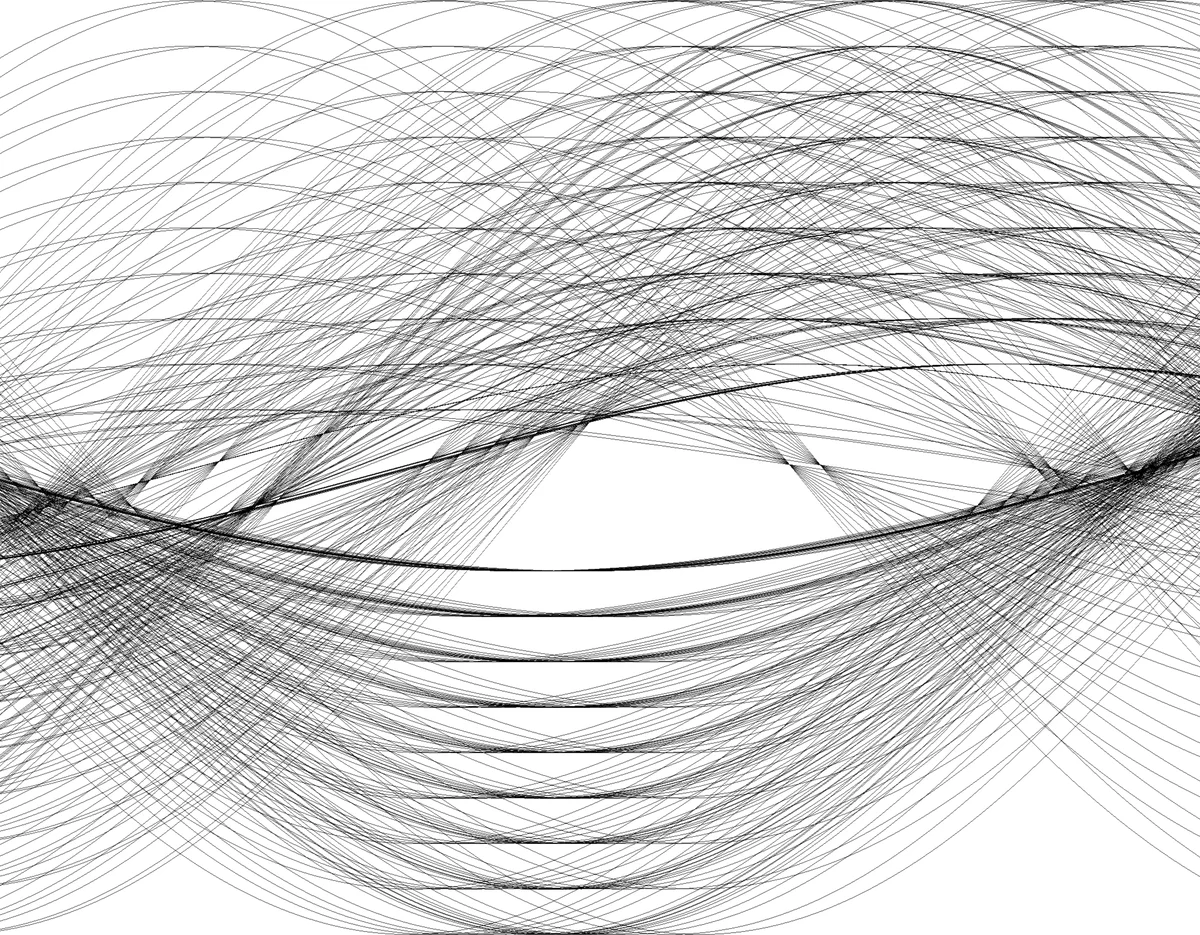
At the Large Hadron Collider (LHC), the trigger systems for the detectors must be able to process a very large amount of data in a very limited amount of time, so that the nominal collision rate of 40 MHz can be reduced to a data rate that can be stored and processed in a reasonable amount of time. This need for high performance places very stringent requirements on the complexity of the algorithms that can be used for identifying events of interest in the trigger system, which potentially limits the ability to trigger on signatures of various new physics models. In this paper, we present an alternative tracking algorithm, based on the Hough transform, which avoids many of the problems associated with the standard combinatorial track finding currently used. The Hough transform is also well-adapted for Graphics Processing Unit (GPU)-based computing, and such GPU-based systems could be easily integrated into the existing High-Level Trigger (HLT). This algorithm offers the ability to trigger on topological signatures of new physics currently not practical to reconstruct, such as events with jets or black holes significantly displaced from the primary vertex. This paper presents, for the first time, an implementation and preliminary performance results using NVIDIA Tesla C2075 and K20c GPUs.
💡 Research Summary
The paper addresses a fundamental bottleneck in the High‑Level Trigger (HLT) of the Large Hadron Collider experiments: the inability of the current combinatorial track finder (CTF) to efficiently reconstruct tracks that are highly displaced from the primary vertex, especially under the high‑pile‑up conditions expected in future LHC runs. Because the CTF algorithm’s runtime grows faster than linearly with the number of detector hits, the HLT must impose strict cuts—most notably a transverse impact‑parameter limit of about 1 cm—to keep processing times within the tens‑of‑milliseconds budget. This restriction blinds the trigger to a wide class of beyond‑Standard‑Model signatures, such as long‑lived neutral particles from hidden‑valley models, R‑parity‑violating supersymmetry, displaced black holes, boosted jets, or Z′ models with delayed decays.
To overcome these limitations, the authors propose a completely different tracking paradigm based on the Hough transform, a technique originally developed for feature detection in image processing. In the Hough approach each detector hit votes for all possible track parameters that could pass through it; after all hits have voted, the parameter space is examined for local maxima, which correspond to candidate tracks. The key advantage is that the computational cost scales with the number of hits rather than with the combinatorial explosion of hit‑pairings, making the algorithm naturally suited to massively parallel hardware.
The authors implement the Hough‑based tracker on two NVIDIA Tesla GPUs: the older C2075 (448 CUDA cores, 1.15 GHz, 6 GB memory) and the more recent K20c (2 496 cores, 706 MHz, 5 GB memory). A multithreaded CPU version is also built on an Intel Core i7‑3770 for baseline comparison. The GPU code assigns one CUDA thread per hit, each thread independently filling a shared histogram that represents the discretized parameter space. Optimisations such as shared‑memory tiling, atomic‑add operations, and careful memory coalescing are employed to minimise contention and maximise throughput.
Performance measurements show that, for event topologies containing from a few hundred up to several thousand tracks, the K20c processes an event in roughly 2 ms, while the C2075 does it in about 3 ms. By contrast, even the optimised CPU implementation requires on the order of 10–20 ms for the same workload, confirming a speed‑up factor of 5–10×. The authors also demonstrate an 86 % track‑finding efficiency in a simplified 2‑D simulation that models a cylindrical detector with ten evenly spaced layers and a hit resolution of 0.4 mm.
Beyond simple track reconstruction, the paper illustrates how a second Hough transform applied to the set of reconstructed tracks can locate displaced vertices. In a simulated event with four jets, each originating from a vertex displaced from the beam line, the two‑stage Hough pipeline successfully recovers both the individual tracks and the four vertex positions, highlighting the method’s potential for triggering on exotic signatures that involve secondary decay vertices.
The authors acknowledge several limitations. The current implementation works only in the transverse (x‑y) plane and assumes circular trajectories that pass through the origin; fully displaced curved tracks would require a three‑parameter (or higher) Hough space, which dramatically increases memory usage and computational load. Moreover, realistic detector effects—non‑uniform magnetic fields, material interactions, and complex geometry—are not yet incorporated. Scaling the algorithm to full 3‑D tracking, handling higher‑dimensional parameter spaces efficiently, and validating the approach with full‑detector simulation and real data are identified as essential next steps.
In conclusion, the study demonstrates that GPU‑accelerated Hough‑transform tracking can dramatically reduce per‑event processing time while extending the trigger’s physics reach to signatures previously inaccessible due to computational constraints. By enabling real‑time reconstruction of highly displaced tracks and vertices, this technique opens new avenues for searches for long‑lived particles, displaced black holes, and other exotic phenomena at the LHC. Future work will focus on extending the method to full 3‑D tracking, optimizing memory footprints for high‑dimensional Hough spaces, and integrating the algorithm into the actual HLT farm for physics‑driven commissioning.
Comments & Academic Discussion
Loading comments...
Leave a Comment