From Public Outrage to the Burst of Public Violence: An Epidemic-Like Model
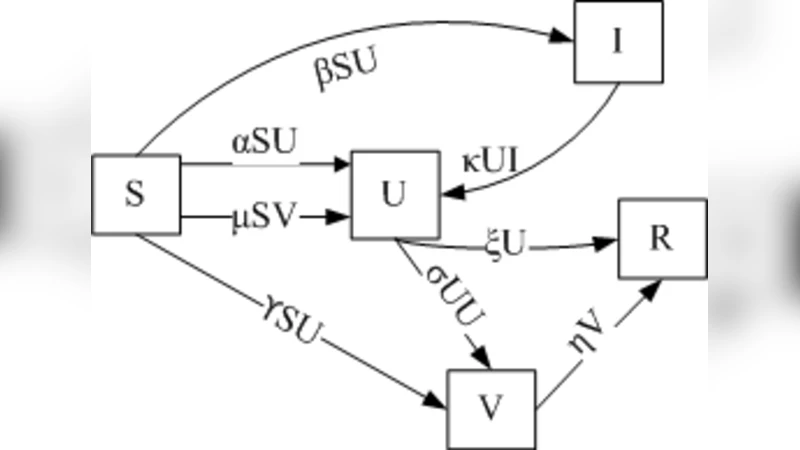
This study extends classical models of spreading epidemics to describe the phenomenon of contagious public outrage, which eventually leads to the spread of violence following a disclosure of some unpopular political decisions and/or activity. Accordingly, a mathematical model is proposed to simulate from the start, the internal dynamics by which an external event is turned into internal violence within a population. Five kinds of agents are considered: “Upset” (U), “Violent” (V), “Sensitive” (S), “Immune” (I), and “Relaxed” (R), leading to a set of ordinary differential equations, which in turn yield the dynamics of spreading of each type of agents among the population. The process is stopped with the deactivation of the associated issue. Conditions coinciding with a twofold spreading of public violence are singled out. The results shed a new light to understand terror activity and provides some hint on how to curb the spreading of violence within population globally sensitive to specific world issues. Recent world violent events are discussed.
💡 Research Summary
The paper proposes a novel mathematical framework that extends classic epidemic models to capture the dynamics of public outrage and its possible escalation into violence following a politically or culturally provocative event. Building on the well‑known SIR (Susceptible‑Infectious‑Recovered) structure, the authors introduce five distinct agent categories: Sensitive (S), Upset (U), Immune (I), Violent (V), and Relaxed (R). Each category corresponds to a social state: S represents individuals unaware of the issue but potentially susceptible; U denotes those who have become upset and actively spread the grievance; I are individuals who, after exposure, become “immune” (i.e., they do not get upset); V are agents who have turned their upset into violent action; and R are agents who have ceased to be upset or violent after a finite period.
The model’s core is a system of ordinary differential equations (ODEs) that describe the rates of transition between these states. The basic S→U transition occurs at rate α (contact between upset and sensitive individuals). Simultaneously, a fraction of contacts leads to immunity at rate β, creating I agents. Immune agents are not permanently protected; they can revert to the upset state at rate κ when encountering upset individuals, reflecting “failed immunization.” Upset agents relax to the R state after an average time 1/ξ.
Violent agents arise through two pathways: (i) direct conversion of a sensitive individual to violent when contacted by an upset agent at rate γ, and (ii) conversion of an upset individual to violent through interaction with another upset individual at rate σ. Violent agents can also provoke sensitive individuals to become upset at rate μ, and they themselves relax to the R state after an average time 1/η.
The resulting five‑equation system (Eqs. 8‑11) is:
dS/dt = −αSU − βSU − γSU − μSV
dU/dt = αSU − ξU + κSI − σUU + μSV
dI/dt = βSU − κSI
dV/dt = γSU + σUU − ηV
dR/dt = ξU + ηV
Initial conditions are set such that a small fraction of the population is already upset (U₀) or immune (I₀) after the external shock, while the remainder is sensitive (S₀ = 1 − U₀ − I₀). No violent or relaxed agents are present initially. The authors explore a parameter space inspired by real‑world contexts (e.g., α = 0.5–5, β = 0.5, γ = 0.2, μ = 0.1, ξ = 1–30, η = 1–20, κ = 0.5, σ = 0.5).
Numerical simulations reveal two distinct regimes of violence spread. In the first wave, the upset population grows rapidly, generating an initial burst of violent agents. If the rates γ and σ are sufficiently high relative to the relaxation rates ξ and η, a second wave emerges: violent agents, by interacting with upset individuals, trigger additional conversions, producing a second peak in V(t). The authors identify the combination of high transmission (α, β, γ, σ) and low relaxation (ξ, η) as the condition for this “double‑spike” phenomenon.
The model predicts that, over time, all upset and violent agents transition to either the relaxed or immune states, leading to a steady state where S∞ = 1 − R∞ − I∞. The sum R∞ + I∞ represents the total fraction of the population that ever became aware of the issue, either by becoming upset/violent or by acquiring immunity.
In the discussion, the authors argue that the framework provides a quantitative lens for understanding how localized provocations can cascade into global unrest, and they suggest policy implications: early mitigation of upset (e.g., rapid communication, counter‑narratives) could suppress the first wave, while strengthening “immunity” through education or exposure may reduce the likelihood of a second wave.
Limitations are acknowledged. The parameters are not calibrated against empirical data, so predictive power remains speculative. The mean‑field assumption ignores network topology and spatial heterogeneity that are crucial in real social media diffusion. Moreover, the violent state is treated as a single homogeneous category, overlooking the spectrum from peaceful protest to lethal terrorism. The paper calls for future work incorporating real interaction networks, data‑driven parameter estimation, and a richer taxonomy of violent behaviors.
Overall, the study offers an innovative extension of epidemic modeling to the sociopolitical domain, highlighting how mathematical tools can illuminate the pathways from public outrage to collective violence and suggesting avenues for both theoretical refinement and practical intervention.
Comments & Academic Discussion
Loading comments...
Leave a Comment